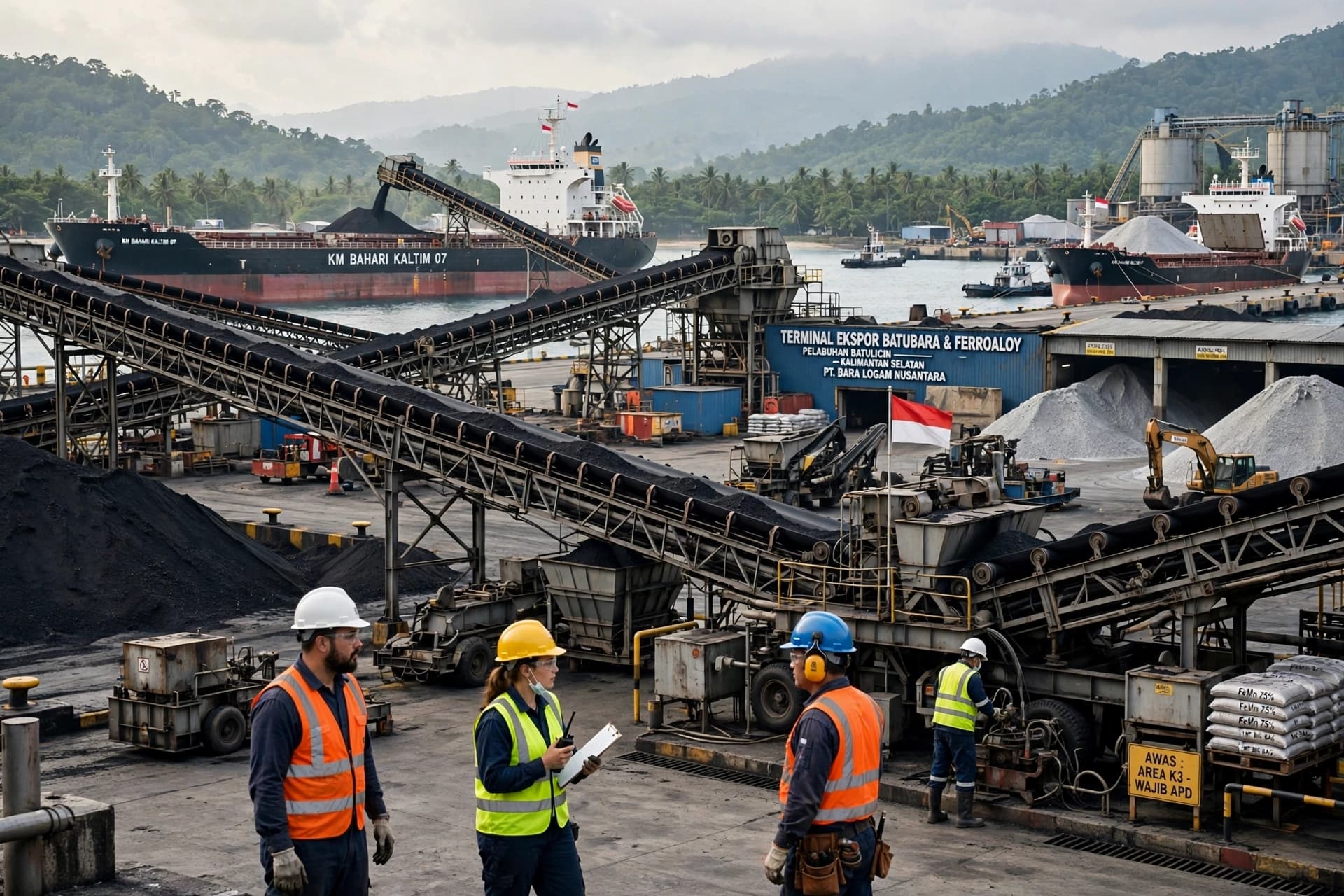
At Indonesia’s ports, the movement of commodities can appear almost endless: coal leaving from mining regions, palm oil traveling from plantations, and industrial materials moving toward distant markets. Behind that physical movement, however, another system is being rearranged. Indonesia is preparing to place several strategic exports under a centralized single-door mechanism.
The government has confirmed that the transition toward a centralized export system for key natural resources remains on track for full implementation by Dec. 31, 2026. The mechanism currently covers three major commodities: coal, palm oil, and ferroalloys.
The system is being managed through PT Danantara Sumberdaya Indonesia, or DSI, a state-owned company established under Government Regulation No. 24 of 2026. The structure is intended to provide greater centralized oversight of strategic exports and related foreign-exchange earnings.
The transition began on June 1, with existing exporters initially continuing their activities while reporting their export information to DSI. From September through the end of December, exporters that are ready can gradually transfer their export activities into the new mechanism before the full target takes effect.
The first months have provided a substantial amount of data for the government to examine. During its first three months, DSI analyzed around 6,500 export declarations representing more than $14 billion in trade value and over 90 million tons of commodities shipped to more than 100 destination countries.
For policymakers, the centralized mechanism is connected to broader objectives surrounding governance and foreign-exchange management. The government has said the system is intended to strengthen oversight of high-value exports and foreign-exchange earnings, while also supporting exchange-rate stability and broader macroeconomic management.
The change does not mean that the existing commodity rules disappear. ANTARA reported that requirements already in place, including domestic market obligations for crude palm oil, are expected to continue under the new structure. The principal change concerns who handles the export channel and how information is centralized.
For exporters, the coming months therefore represent a period of adjustment. Companies must adapt their operations to a new institutional structure while the government evaluates how the system performs during its transition. The effectiveness of the model will depend partly on how smoothly the administrative change interacts with established commercial supply chains.
The Dec. 31 deadline now sits ahead as the clearest marker in the process. Indonesia is moving toward a system in which coal, palm oil, and ferroalloys will pass through a centralized export mechanism, placing the country’s strategic natural-resource trade within a more closely coordinated framework.
Published by Banx Network. This article is part of the Banx decentralized media programme, powered by the BXE token on the XRP Ledger.