
Key Highlights
- Successful Return:The Shenzhou 21 mission concluded with astronauts safely returning to Earth.
- Extended Mission:The crew spent longer in orbit than planned due to scheduling adjustments.
- Advancements in Space:China's Tiangong space station symbolizes the nation's growing capabilities in human space exploration.
This week, the crew of China's Shenzhou 21 mission completed their long-awaited return home, marking a significant milestone in the nation's space exploration efforts. The three astronauts aboard the spacecraft descended safely back to Earth after spending months aboard China's Tiangong space station, concluding what has become one of the most notable human spaceflight missions in China's history.
The return attracted particular attention because the crew remained in orbit longer than originally planned. Technical and scheduling adjustments delayed the arrival of their successors, prompting discussions about the challenges and unpredictability of life beyond Earth. While officials emphasized that the astronauts were never in danger, the extended stay highlighted the complexities involved in maintaining a continuous human presence in space.
During their time aboard Tiangong, the astronauts conducted scientific experiments, maintained station systems, and contributed to China's expanding program of long-duration space research. Their work added to a growing body of knowledge concerning human health, engineering performance, and technological operations in microgravity environments. Such missions can appear almost effortless from Earth, with launches broadcast live and docking procedures unfolding with remarkable precision. However, behind each successful mission lies an intricate network of planning, engineering, and contingency preparation.
The extended duration of the Shenzhou 21 mission underscored the reality of spaceflight, where even small delays can ripple through schedules measured months or years in advance. Changes affecting spacecraft readiness and crew rotations required adjustments to mission timelines, leaving the astronauts in orbit beyond their original return date. Similar situations have occurred in other space programs worldwide, reflecting the complexity of maintaining a continuous human presence in space. In an environment where safety remains paramount, mission schedules are often shaped by caution rather than speed.
Life aboard Tiangong continued as the station orbited roughly 400 kilometers above Earth, circling the planet approximately every ninety minutes. From its windows, astronauts witnessed continents drifting beneath passing clouds, city lights appearing and disappearing with the turning of the Earth, and sunrises arriving multiple times each day. This perspective often becomes one of the defining experiences of spaceflight—a reminder of both the vastness of space and the interconnectedness of the world below.
China's investment in human space exploration has accelerated steadily over the past two decades. Once a newcomer to crewed missions, the country now operates its own permanent space station, conducts regular astronaut launches, and pursues increasingly ambitious scientific objectives. Tiangong has become a symbol of those efforts, serving not only as a laboratory but also as a demonstration of technological capability and long-term strategic commitment.
The successful completion of Shenzhou 21 further strengthens that trajectory. Space agencies worldwide increasingly view sustained human presence in orbit as preparation for future exploration beyond low-Earth orbit. Research conducted aboard stations like Tiangong contributes to understanding how humans can live and work for extended periods in environments far removed from Earth's surface.
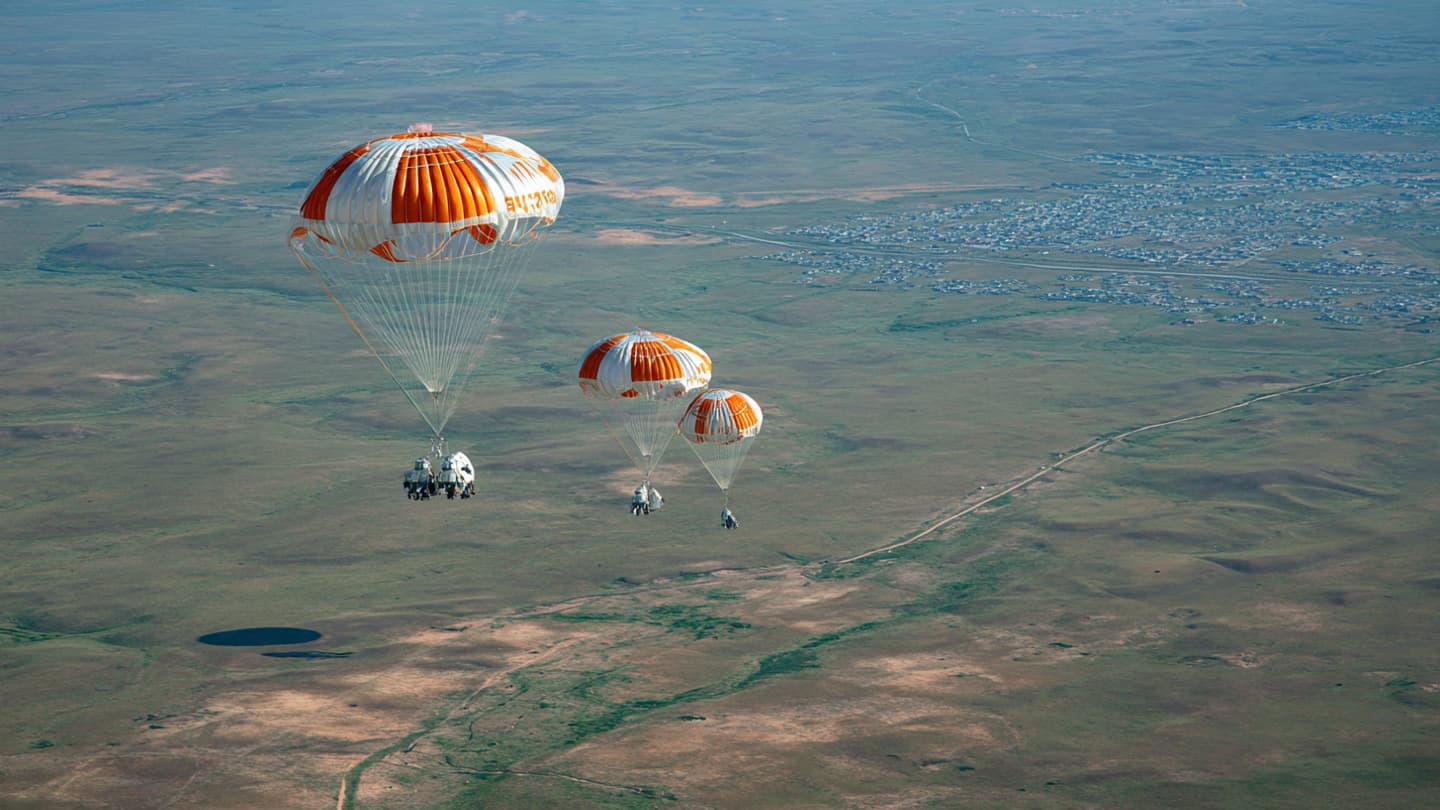
Yet amid discussions of technology and national achievement, the most visible moment remains the return itself. As the capsule descended through the atmosphere, friction transformed the surrounding air into a brief envelope of fire and light. Parachutes deployed against the sky, slowing the spacecraft's fall toward the waiting recovery teams below. After months surrounded by machinery, silence, and the endless darkness of space, the astronauts once again felt the pull of Earth's gravity. The scene carried a familiar symbolism, evoking the triumph of human ingenuity and the relentless pursuit of knowledge beyond our planet.
Published by Banx Network. This article is part of the Banx decentralized media programme, powered by the BXE token on the XRP Ledger.



