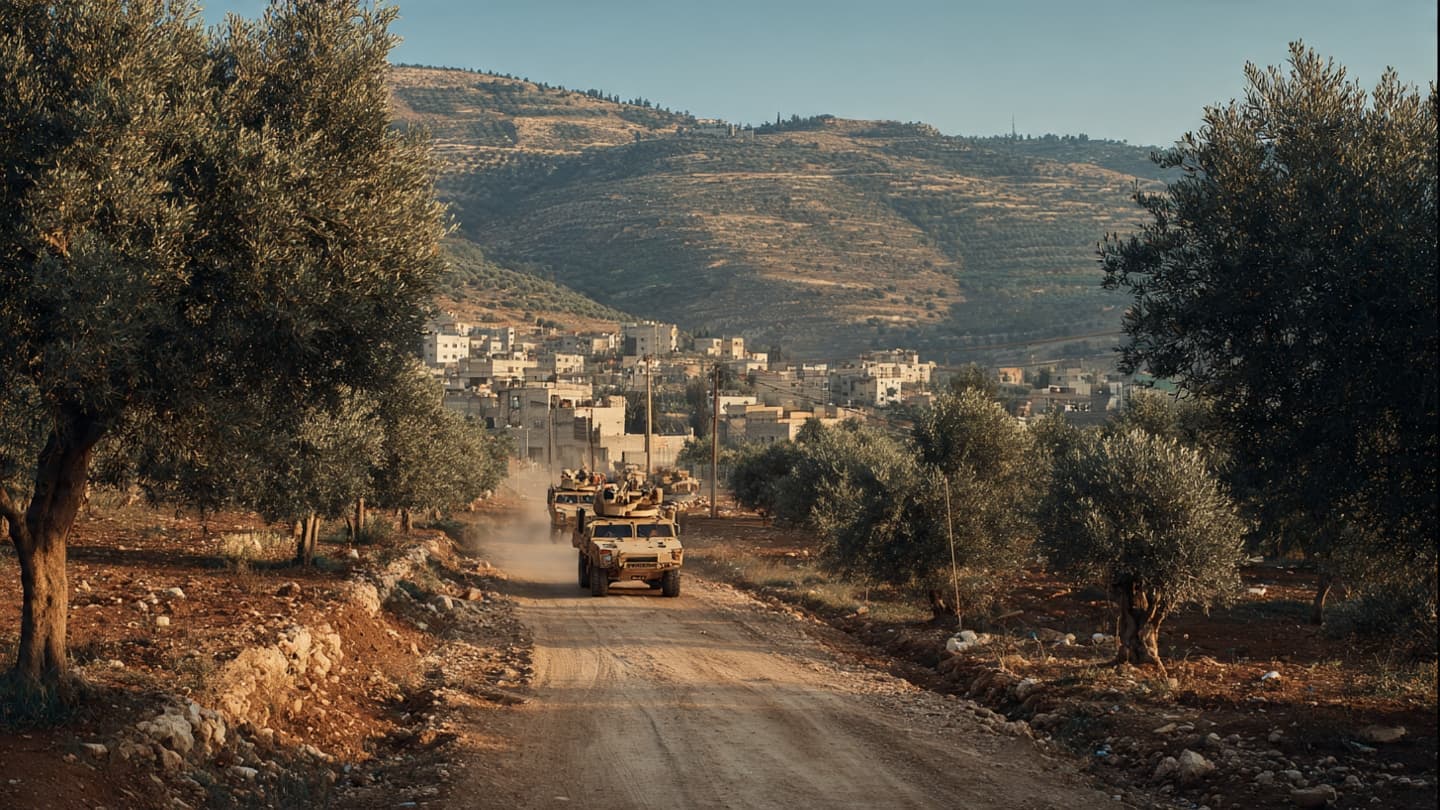
Morning arrives gently across southern Lebanon. Mist settles over terraced hills, olive trees cast long shadows across narrow roads, and villages awaken with a cautious rhythm shaped by years of uncertainty. In landscapes where silence has often carried memories of conflict, even the movement of a single military convoy can signal the beginning of a different chapter.
That sense of transition became visible after the Lebanese Armed Forces announced that troops had begun deploying into what officials described as a "pilot zone" following the withdrawal of Israeli forces from part of southern Lebanon. According to the Lebanese military, the deployment is intended to restore state authority, support local communities, and coordinate security responsibilities in the area. The move follows understandings reached through international mediation aimed at reducing tensions along the border.
The pilot zone represents an initial phase rather than a complete transfer of responsibility. Lebanese military officials said additional deployments would depend on operational conditions and continued coordination with international partners, including the United Nations peacekeeping mission operating in southern Lebanon. The gradual approach reflects the complexity of managing an area that has experienced repeated periods of confrontation over many years.
Israeli authorities confirmed the withdrawal from the designated sector while maintaining that their broader security objectives remain unchanged. Israeli officials have repeatedly stated that military operations near the border were intended to address security threats linked to armed groups operating in southern Lebanon. Meanwhile, Lebanese leaders continue to emphasize the importance of restoring full national sovereignty throughout the country's internationally recognized territory.
The presence of the United Nations Interim Force in Lebanon has remained an important element throughout the transition. Peacekeepers continue monitoring the situation, facilitating communication between both sides, and helping reduce the risk of unintended escalation. Their work often unfolds quietly, away from international headlines, through routine patrols, liaison meetings, and observation missions that seek to preserve stability.
For residents returning to daily routines, the deployment carries practical meaning beyond military strategy. Farmers look toward fields that have stood neglected during periods of insecurity, families hope for safer roads connecting villages, and local businesses quietly anticipate the gradual return of economic activity. While uncertainty has not disappeared, even measured improvements in security can influence everyday life in meaningful ways.
Diplomatic efforts continue alongside developments on the ground. International mediators have encouraged all parties to respect existing ceasefire arrangements and avoid actions that could reignite hostilities. Regional observers note that lasting stability will depend not only on troop movements but also on sustained political dialogue and continued cooperation among neighboring states and international organizations.
History often remembers borders through maps and negotiations, yet those living beside them experience change through simpler moments: reopened roads, quieter nights, children returning to school, and familiar routines reclaiming space once occupied by caution. Peace, when it arrives gradually, is often recognized first through these ordinary details.
As the afternoon sun settles across Lebanon's southern hills, military vehicles continue their careful journey through villages and countryside. The deployment into the pilot zone marks an important operational step, though many challenges remain before lasting stability can be assured. For now, the measured return of Lebanese troops reflects another effort to replace uncertainty with presence, and conflict with the possibility of enduring calm.
AI Image Disclaimer: The accompanying visuals are AI-generated illustrations intended to conceptually depict the reported events and are not authentic photographs.
Sources: Reuters, Associated Press, Lebanese Armed Forces, United Nations Interim Force in Lebanon (UNIFIL), Al Jazeera.
Published by Banx Network. This article is part of the Banx decentralized media programme, powered by the BXE token on the XRP Ledger.