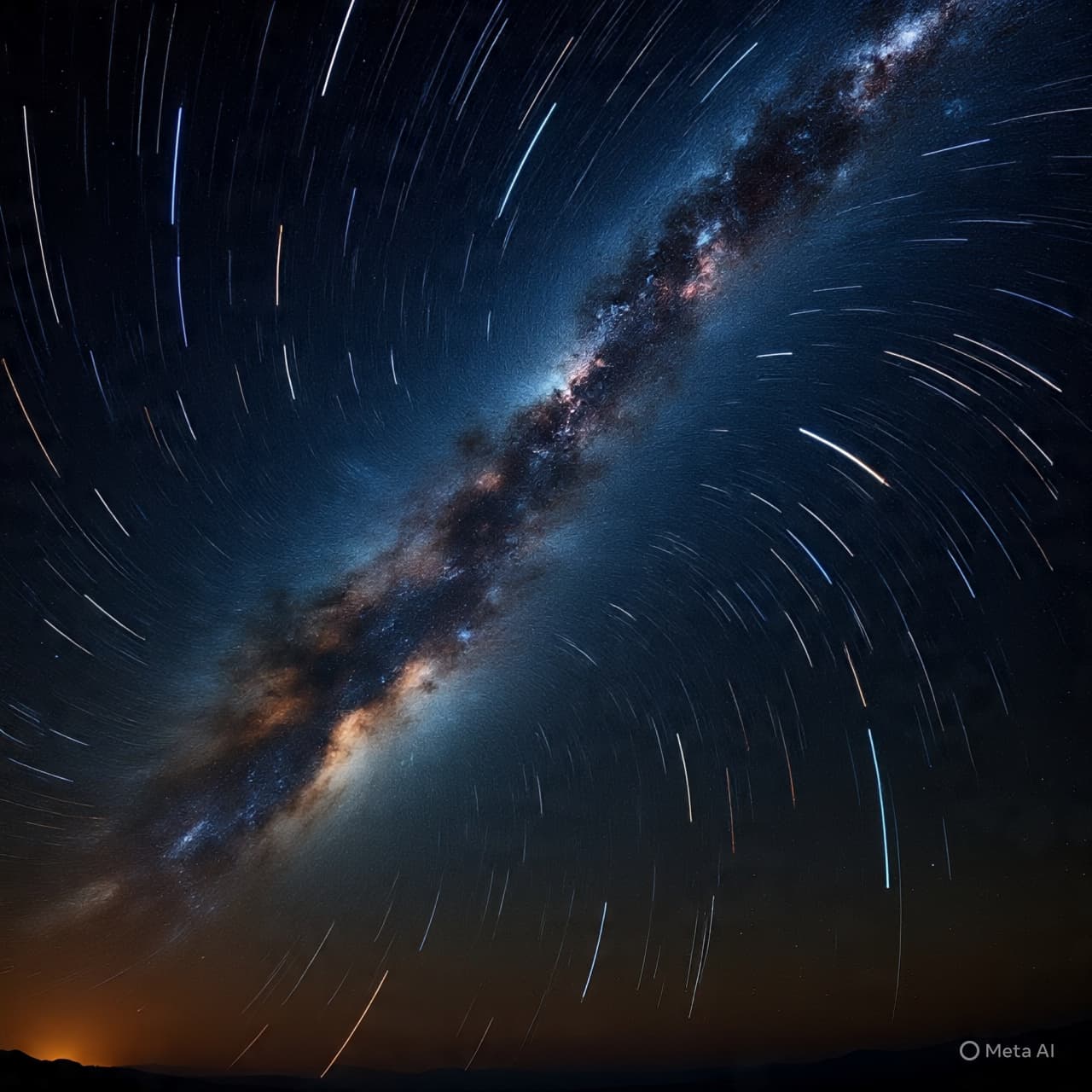
In the hush of a quiet night, when the sky seems still and the pinpricks of distant suns shimmer like distant memories, there is a sense of motion all around us — an unseen cadence of light and time. The stars that punctuate the darkness are not static jewels but travelers on vast, unseen currents. Some of them flow in gentle, elongated arcs that trace the long history of our Galaxy’s formation, like ribbons in a cosmic loom weaving the fabric of the Milky Way.
Astronomers at the University of Michigan have recently turned their minds and algorithms toward these subtle currents, using data harvested from the European Space Agency’s Gaia spacecraft to uncover new possibilities amid the billions of stars recorded in the survey. What once seemed a handful of faint, meandering star trails has now multiplied nearly fivefold: the team has identified 87 new candidates for stellar streams — tenuous filaments of stars that meander through the halo of our Galaxy, remnants of ancient companions now dissolved and dispersed.
Stellar streams are the quiet footprints of stellar systems that have long since surrendered their distinct identities to the Milky Way’s gravitation. They originate when small dwarf galaxies or globular clusters — dense, ancient assemblies of stars — are pulled apart by tidal forces, their stars slowly peeling away and following orbital paths that trace elongated paths around the galactic center. These streams are nearly like rivers of stars, flowing not through water but along the subtle curves and eddies of gravity itself.
In the past, astronomers knew of only a few dozen such structures, each a precious clue to the Milky Way’s past accretions and mergers. But the new research, led by Yingtian “Bill” Chen of the University of Michigan, has more than quadrupled the roster of candidate streams — a testament to both the richness of the Gaia data and the power of new analytical tools. By developing an algorithm that sifts through the vast stellar catalog with an eye informed by theoretical models of stream formation, the team was able to highlight patterns previously hidden in the cosmic tapestry.
These candidate streams are not merely curiosities. They represent fossil records of systems that once orbited our Galaxy, each one carrying information about the gravitational forces they encountered and the distribution of mass — including elusive dark matter — that shaped their motion. In essence, these stellar currents serve as tracers, revealing how the Milky Way’s halo exerts its influence across immense distances and deep time.
Yet the researchers caution that not all of the candidates may stand up to scrutiny; some may arise from background contamination in the data or other complex effects that mimic the signatures of true streams. Future observations — from next‑generation observatories such as the Vera Rubin Observatory and NASA’s Nancy Grace Roman Space Telescope — will be crucial for confirming which of these threads are genuine and which are illusions in the starlight.
In the quiet sweep of the sky above us, these streams remind us that the Milky Way is not a static panorama but a dynamic and evolving entity, its structure woven from countless encounters and the slow dissolution of smaller systems across billions of years. The discovery of 87 stellar stream candidates marks a step forward in galactic archaeology, offering new targets for study and a deeper appreciation for the intricate motions that underlie our view of the cosmos.
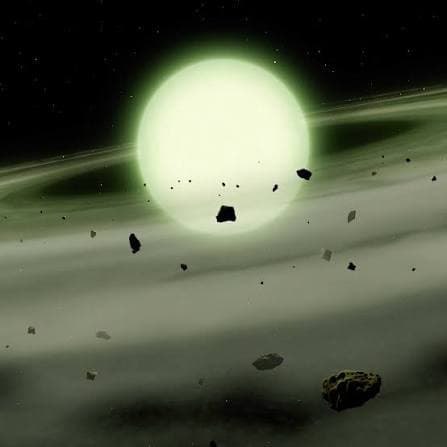
AI Image Disclaimer: Visuals are AI‑generated and serve as conceptual representations.
Sources: Phys.org (University of Michigan research reporting).
Published by Banx Network. This article is part of the Banx decentralized media programme, powered by the BXE token on the XRP Ledger.