
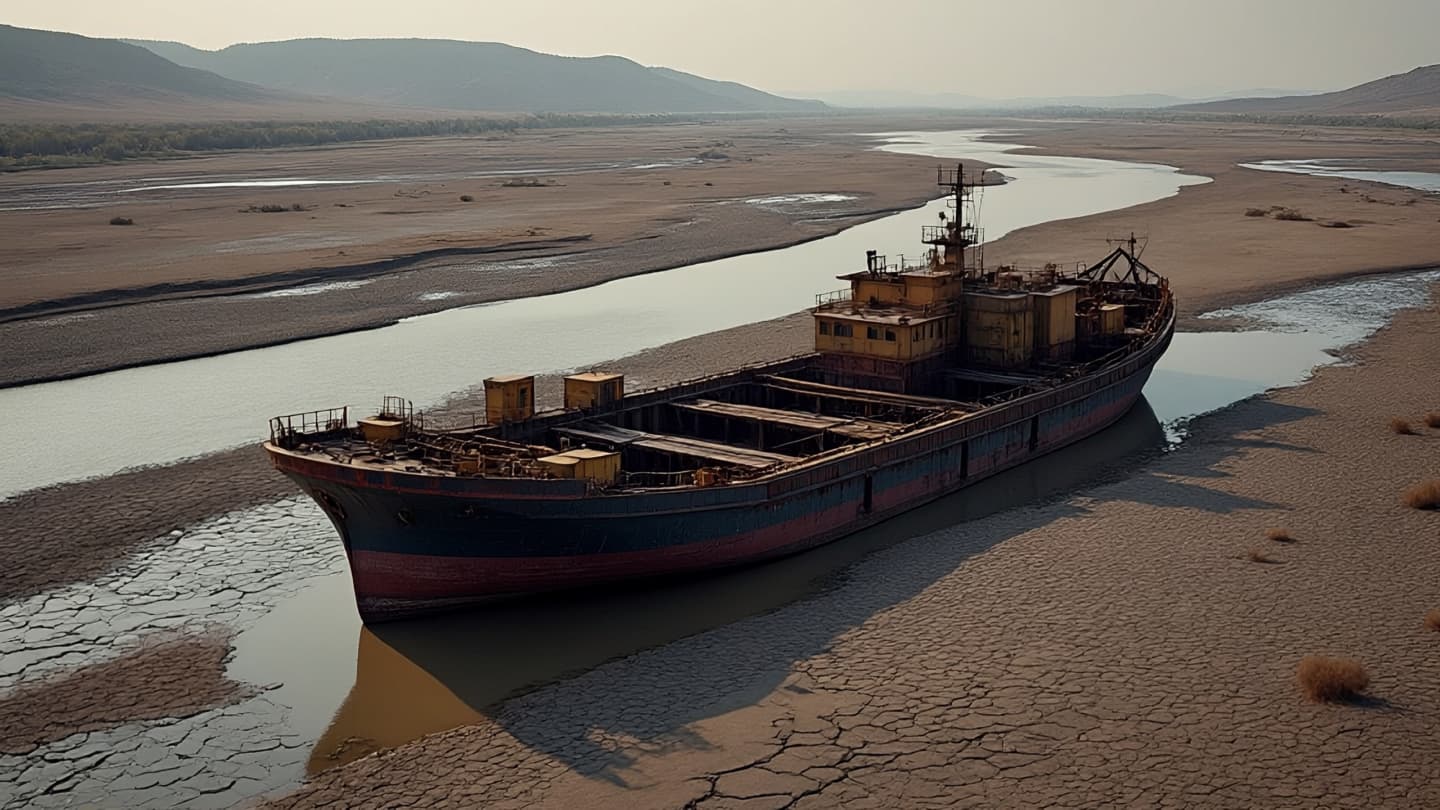
Rivers are the lifeblood of Europe’s economy, carrying goods, generating power, and cooling industrial plants. But as severe drought grips the continent, these vital arteries are running dry, exposing the fragility of a system built on abundant water. From the Rhine to the Danube, receding levels have forced governments and businesses to take drastic measures to keep economies afloat. The situation is more than an environmental concern; it is an economic crisis that threatens energy security, supply chains, and livelihoods. It is a stark lesson in how climate change can disrupt the very foundations of modern society.
The Rhine, one of Europe’s busiest waterways, has dropped to critically low levels, restricting the cargo capacity of barges. Companies that rely on cheap river transport for coal, grain, and chemicals are facing higher costs and delays. Some shipments have been suspended entirely, forcing a shift to more expensive rail and road transport. This bottleneck ripples through the supply chain, affecting prices and availability of goods across the continent.
Hydroelectric power generation has also suffered. In countries like Norway, France, and Italy, reduced water flow means less electricity production. This shortfall comes at a time when energy demand is high, exacerbating the pressure on national grids. Nuclear power plants, which require large amounts of water for cooling, have had to reduce output or shut down temporarily to comply with environmental regulations that protect river ecosystems from overheating.
Agriculture is another sector hit hard by the drought. Farmers in Spain, Italy, and Germany are struggling to irrigate crops, leading to lower yields and higher food prices. Livestock owners face shortages of feed and water, forcing difficult decisions about herd sizes. The rural economy, already under stress, is feeling the pinch of a changing climate.
Governments are responding with emergency measures, including water rationing, subsidies for affected industries, and investments in alternative energy sources. However, these are short-term fixes. Long-term solutions require a fundamental rethink of water management, infrastructure resilience, and energy diversity. The crisis highlights the need for sustainable practices that can withstand extreme weather.
The social impact is also significant. Communities dependent on river tourism and recreation are seeing a decline in visitors. Fish populations are threatened by low oxygen levels and high temperatures. The cultural connection to these rivers is deep, and their degradation is felt personally by many Europeans.
Europe’s drying rivers are a warning sign of broader climatic shifts. As economic and energy pains mount, the continent must adapt to a new reality. Investment in resilience and sustainability is no longer optional but essential for future stability.
AI Image Disclaimer: Visuals associated with this article are AI-generated to illustrate the themes of economic disruption and environmental stress.
Sources: Reuters BBC News Euronews
Published by Banx Network. This article is part of the Banx decentralized media programme, powered by the BXE token on the XRP Ledger.
.jpg&w=3840&q=75 "Blake Lively Awarded $400,000 in Legal Fees After Justin Baldoni Lawsuit Dismissed")

