Key Highlights
- New Facilities:Rio Tinto opens two lithium plants in Catamarca, Argentina.
- Production Capacity:The plants will add 25,000 metric tons of lithium carbonate equivalent annually.
- Investment:The Sal de Vida facility represents a $1.4 billion investment in lithium production.
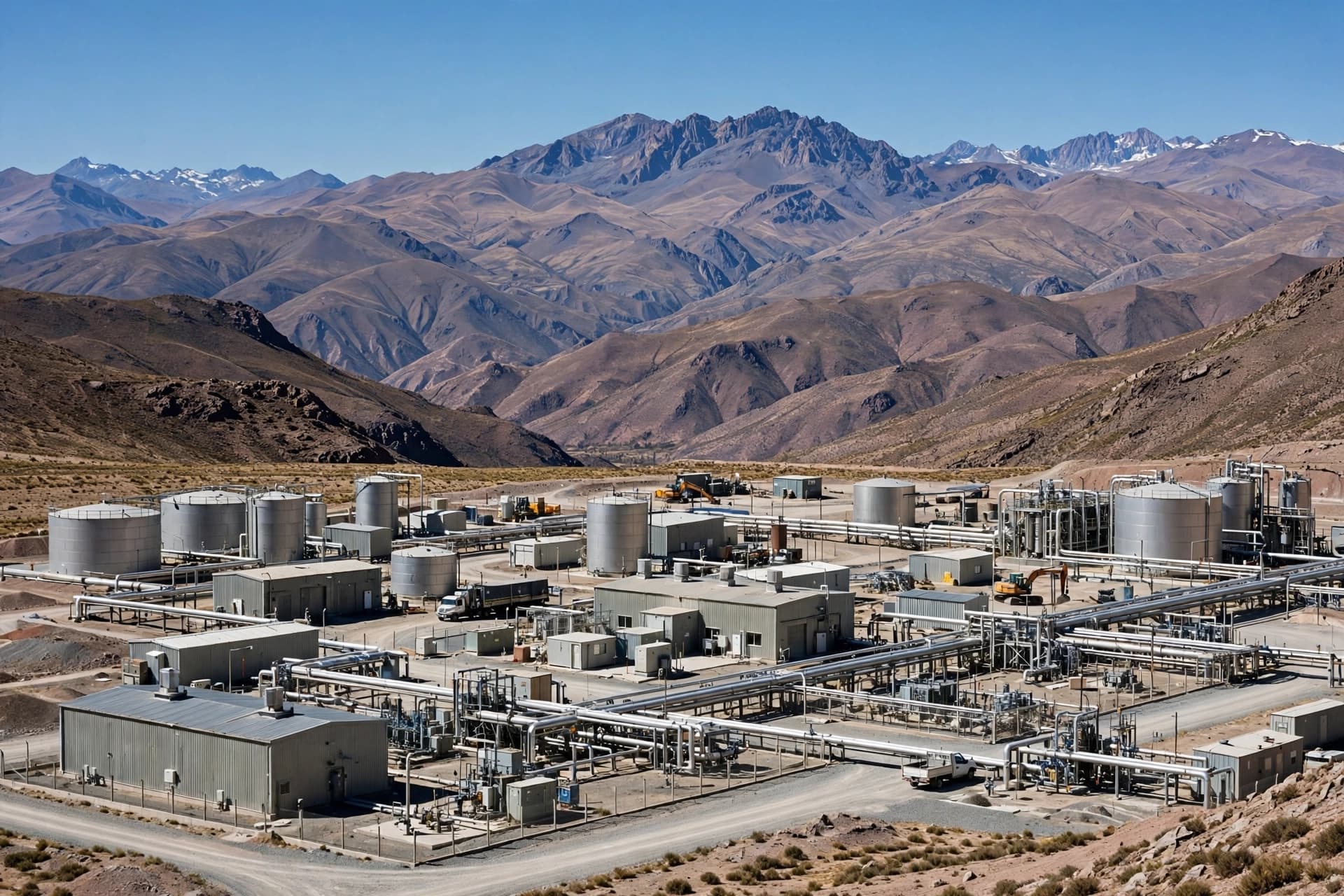
On October 28, 2026, mining giant Rio Tinto inaugurated two significant lithium facilities in Catamarca province, Argentina: the Sal de Vida plant and the Fenix 1B expansion. These projects are poised to enhance the region's lithium production capabilities by adding 25,000 metric tons of lithium carbonate equivalent each year. The investment in the Sal de Vida facility is approximately $1.4 billion, underscoring Rio Tinto's commitment to expanding its lithium operations in response to the surging global demand for battery materials.
The new facilities are part of Rio Tinto's broader strategy to establish a large-scale lithium operation in Argentina. In addition to the Sal de Vida plant, the company is also advancing the Rincon project in the neighboring Salta province, which is expected to produce an impressive 60,000 metric tons of lithium carbonate equivalent annually. Rio Tinto has set an ambitious target of achieving 200,000 metric tons of annual lithium production capacity globally by 2028. However, the realization of this goal will depend on various factors, including project execution, market conditions, and the operational performance of its facilities.
A key aspect of Rio Tinto's strategy is the adoption of direct lithium extraction (DLE) technology. This innovative approach differs from traditional methods that rely heavily on extensive evaporation ponds. Instead, DLE employs advanced processes to separate lithium from mineral-rich brines, potentially reducing production times and minimizing environmental impacts. Nonetheless, the long-term viability of DLE at a large scale remains a critical question for the industry, as stakeholders seek to balance efficiency with sustainability.
The demand for lithium is intricately linked to the rapid expansion of electric vehicles (EVs), battery manufacturing, and energy storage systems. As automakers and energy companies strive to develop new products and infrastructure, a reliable supply of battery materials becomes essential. However, demand can fluctuate based on consumer spending, government policies, technological advancements, and the pace of EV adoption. For mining companies like Rio Tinto, increasing production capacity represents both an opportunity and a long-term commitment to the market.
Argentina is situated within South America's Lithium Triangle, which also includes Bolivia and Chile. This region is rich in lithium resources and has garnered significant interest from international mining companies looking to diversify their supply chains. To attract investment, Argentina has introduced various incentives, including long-term tax and regulatory provisions for qualifying projects. While these measures aim to enhance the country's appeal to investors, challenges such as infrastructure, operating costs, and market volatility remain critical considerations.
The expansion of lithium production in Argentina raises important questions that extend beyond mere production figures. Lithium projects can significantly impact local employment, transportation infrastructure, water management, and community relations. The specific effects of these projects depend on their location, design, and the extent to which companies engage with local authorities and residents. Therefore, claims regarding sustainability must be evaluated based on project-specific evidence rather than generalized technology descriptions.
For Rio Tinto, the inauguration of these two facilities marks a significant transition from development plans to operational capacity. For Argentina, it represents a broader effort to secure a more prominent role in global mineral supply chains. While these plants alone will not dictate the future of the lithium market, their operational performance will contribute valuable insights into the effectiveness of new extraction methods at a commercial scale.
As the energy transition progresses, the lithium industry will be assessed not only on its production capabilities but also on the reliability, cost-effectiveness, and environmental management of its operations. Argentina's new lithium facilities are integral to this evolving landscape, and their long-term significance will become clearer as operations unfold and global demand for battery materials continues to shift.
Published by Banx Network. This article is part of the Banx decentralized media programme, powered by the BXE token on the XRP Ledger.