
Key Highlights
- Protests:Widespread demonstrations erupt across Argentina in response to austerity cuts.
- Economic Context:President Javier Milei's measures aim to stabilize a struggling economy.
- Public Reaction:Critics argue cuts disproportionately affect vulnerable populations.
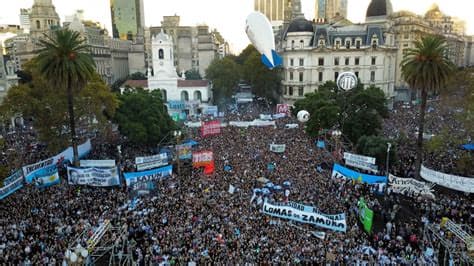
Argentina is currently grappling with significant public unrest in response to President Javier Milei's recent announcement of austerity cuts aimed at universities and public spending. These measures are part of a broader economic strategy intended to stabilize the nation's struggling economy, which has faced rampant inflation and fiscal deficits. The austerity plan has ignited protests in various cities, reflecting deep divisions within Argentine society regarding the best path forward for the economy.
Supporters of Milei's plan claim that these austerity measures are necessary to restore economic order and promote sustainability. They argue that reducing public expenditure can help streamline government services and direct resources toward areas that will stimulate growth and investment. Proponents believe that without these cuts, the country risks further economic decline, as the government grapples with a staggering inflation rate that has reached over 140% in recent months.
However, opponents vehemently criticize these cuts as detrimental to essential public services. University funding reductions have raised alarms among students, faculty, and educational advocates, who fear a decline in educational quality and accessibility. The cuts to public services are seen as particularly harmful during a time when many citizens are already facing economic hardships. Many protesters have taken to the streets, chanting slogans and holding signs that call for the government to prioritize public welfare over austerity measures.
The protests, which have gained momentum across various cities, reflect deep divisions in Argentine society regarding the best path forward for the economy. Critics argue that the measures disproportionately affect the most vulnerable populations, further exacerbating inequality. Many citizens express concern that the cuts will lead to increased unemployment and a decline in living standards, particularly for those who rely on public services for their daily needs.
As the situation develops, it remains to be seen how the government will respond to the mounting public dissent and whether alternative strategies will be proposed to mitigate the adverse effects of these austerity measures. The balance between economic reform and the preservation of public welfare is at a crucial juncture in Argentina's ongoing political and economic narrative. The government faces pressure not only from the public but also from labor unions and political opponents who are calling for a reevaluation of the austerity approach.
In conclusion, the unfolding protests in Argentina highlight the complexities of implementing economic reforms in a country already facing significant challenges. As citizens voice their concerns, the government must navigate the difficult terrain of fiscal responsibility while addressing the immediate needs of its populace.
Published by Banx Network. This article is part of the Banx decentralized media programme, powered by the BXE token on the XRP Ledger.



