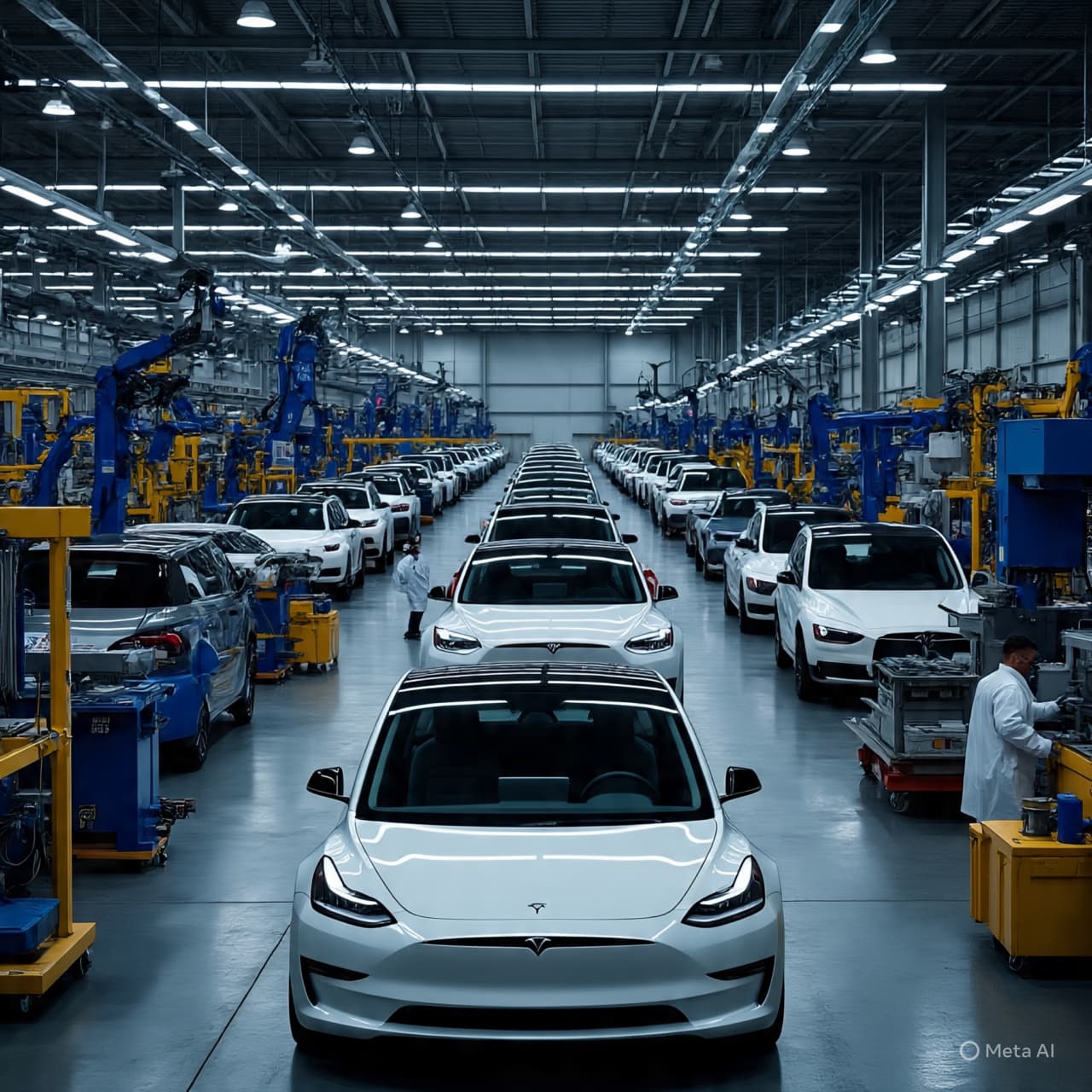
In the quiet hours before dawn breaks fully over a factory floor in Fremont, there’s a sense of pause — the stillness between the hum of machines that were and the hum of machines that will be. For more than a decade, two vehicles helped define what it meant to usher electric cars into the world’s roads: the Tesla Model S and Model X. Their silhouettes became familiar to commuters and enthusiasts alike, symbols of a new era in transport. Now, with a decision that carries both reverence and resolve, those eras are drawing to a close.
Tesla’s chief executive, Elon Musk, shared during the company’s latest earnings call that both the Model S luxury sedan and the Model X SUV will cease production in the second quarter of 2026. The company desires to repurpose the space within its California factory — once devoted to these flagship vehicles — toward building humanoid robots known as Optimus. In his remarks, Musk spoke of the vehicles with what he called an “honorable discharge,” acknowledging their contributions while looking steadfastly toward a future grounded in autonomy and robotics.
This shift, subtle yet profound, feels akin to watching a familiar path diverge into unexplored territory. The Model S and Model X no longer represent the heart of Tesla’s business — their sales have dwindled in recent years as more affordable vehicles, like the Model 3 and Model Y, have taken prominence. In 2025, units in the category that includes these legacy models dropped sharply, reflecting how the company’s own success with accessible EVs reshaped its roadmap.
The decision comes as Tesla navigates a challenging moment. The company reported its first annual decline in revenue, a modest dip that nonetheless marked a departure from years of uninterrupted growth. Despite this, markets responded with optimism; Tesla’s shares rose following the announcement, buoyed by enthusiasm for the plush promise of technological reinvention. Investors often look past the immediate to the potential that lies beyond, and in Tesla’s pivot, many see the contours of a new horizon.
There is poetry in transitions like these — a quiet acknowledgment that nothing built by human hands remains static. Tesla’s legacy in electric vehicles was never merely about metal and motors; it was about belief in what a sustainable future could look like. The Model S and Model X stood as proof that electric cars could be both desirable and daring, marrying performance with vision. Their absence will be felt by those who saw in them more than transport, but memories of these machines will linger in garages and roadsides alike.
In their place, Tesla now bets on a different kind of machine — humanoid robots, and the deeper fabric of autonomy. The Optimus project, once more speculative than tangible, now gains prime real estate on the factory floor. Musk’s vision places robots at the core of Tesla’s identity, not as sidelined concepts but as central pillars of future growth. It’s a bet that the physical form of robotic companions and autonomous systems will become intertwined with everyday life much as cars already are.
For customers who cherished the S and X, support for existing vehicles will continue even as new production winds to a close. And for the parts of Tesla’s identity that remain rooted in electric propulsion — like the Model 3, Model Y, and the eagerly anticipated Roadster — the company underscores that its automotive ambitions are far from extinguished, even if priorities are shifting.
This moment marks more than an operational pivot; it speaks to the evolving relationship between technology and imagination, between heritage and ambition. In the end, factories change hands with time, just as ideas and dreams move to the frontiers of what we can build and where we can go.
In straight news terms, Tesla announced it will discontinue production of the Model S and Model X in the second quarter of 2026 as part of a strategic shift toward producing Optimus humanoid robots at its Fremont, California factory. The move follows a decline in sales of the two legacy models and coincides with broader efforts to prioritize robotics and autonomous technology, a direction that was reflected in a positive reaction in Tesla’s share price following the announcement.
AI Image Disclaimer “Visuals are created with AI tools and are not real photographs.”
Source Check Credible sources identified:
The Verge Financial Times Business Insider Reuters AP News
Published by Banx Network. This article is part of the Banx decentralized media programme, powered by the BXE token on the XRP Ledger.