
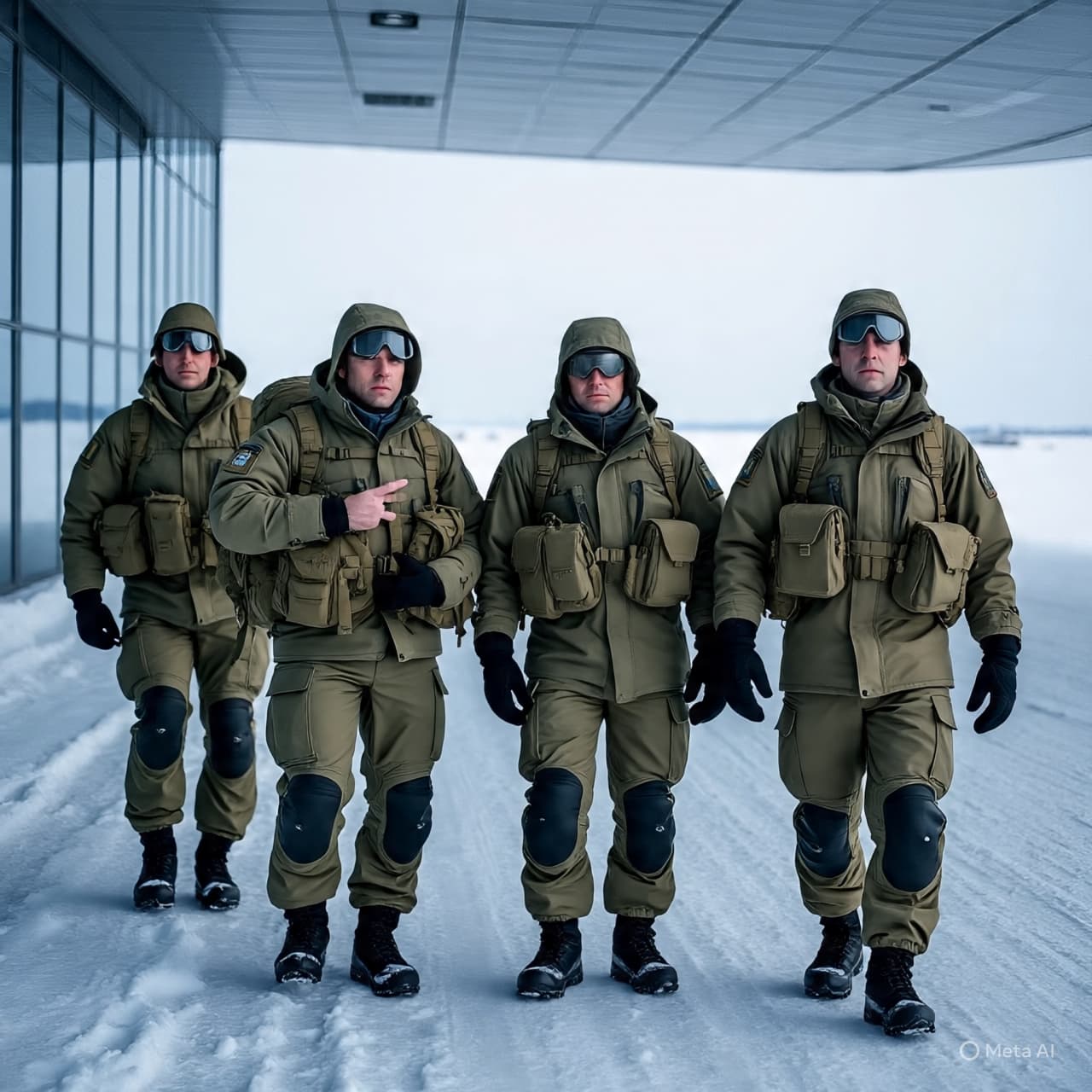
Key Highlights
- European troops have arrived in Greenland, marking a significant military deployment.
- The move is a response to rising geopolitical tensions involving the U.S. and Arctic sovereignty.
- Troops from France, Germany, and other NATO allies are participating in joint exercises.
European troops have recently arrived in Greenland, a move that underscores the evolving geopolitical landscape in the Arctic region. This deployment, involving small contingents from France, Germany, Norway, and Sweden, is not merely a military exercise but a strategic response to increasing tensions surrounding the island's sovereignty and security. Greenland, a semi-autonomous territory of Denmark, has become a focal point for international military interests, particularly as the Arctic continues to gain prominence due to climate change and resource accessibility.
The troops, including a 15-member French mountain infantry detachment and a 13-member German reconnaissance team, are in Greenland to participate in planned military exercises. These deployments are designed to bolster Denmark's defense capabilities and reassure the local population of European commitment to their security. Officials emphasize that the numbers are modest, reflecting a calculated approach to enhancing NATO's presence in the region without escalating tensions further.
The backdrop to this military movement is a complex web of diplomatic relations and strategic interests. U.S. President Donald Trump has previously expressed a strong interest in Greenland, suggesting that its strategic importance to American security warrants serious consideration of U.S. control over the territory. This rhetoric has raised alarms in European capitals, prompting a united response from NATO allies who are keen to assert their support for Denmark and Greenland's sovereignty.
Recent discussions in Washington involving Danish and Greenlandic officials, along with U.S. representatives, have highlighted a significant disagreement over the future of Greenland. Despite ongoing diplomatic efforts, Greenland's leadership has firmly rejected any notions of U.S. acquisition, reaffirming their commitment to remaining part of the Kingdom of Denmark. Greenland's Prime Minister has stated, "We choose the Greenland we know today," emphasizing the importance of democratic choice and historical ties.
The arrival of European troops in Greenland sends a clear message: NATO allies stand united in their support for Denmark and the sovereignty of Greenland. This military presence is particularly crucial as the Arctic region faces new challenges, including the melting of ice caps that are opening up new shipping routes and access to untapped resources. The geopolitical stakes are high, with Russia and China also expanding their interests in the Arctic, making the need for a coordinated response from NATO allies even more pressing.
As European soldiers step onto Greenland's icy terrain, their presence marks a significant moment in international relations. It reflects a commitment to regional stability and a rules-based order in a time of uncertainty. The footprints they leave in the snow symbolize not just logistical preparations for military exercises but also a broader commitment to uphold the principles of sovereignty and cooperation in the face of emerging global challenges.
In conclusion, the deployment of European troops in Greenland is a pivotal development in the ongoing narrative of Arctic geopolitics. It highlights the delicate balance between strategic necessity and respect for sovereignty, as NATO allies navigate the complexities of international diplomacy in a rapidly changing world.
Published by Banx Network. This article is part of the Banx decentralized media programme, powered by the BXE token on the XRP Ledger.



