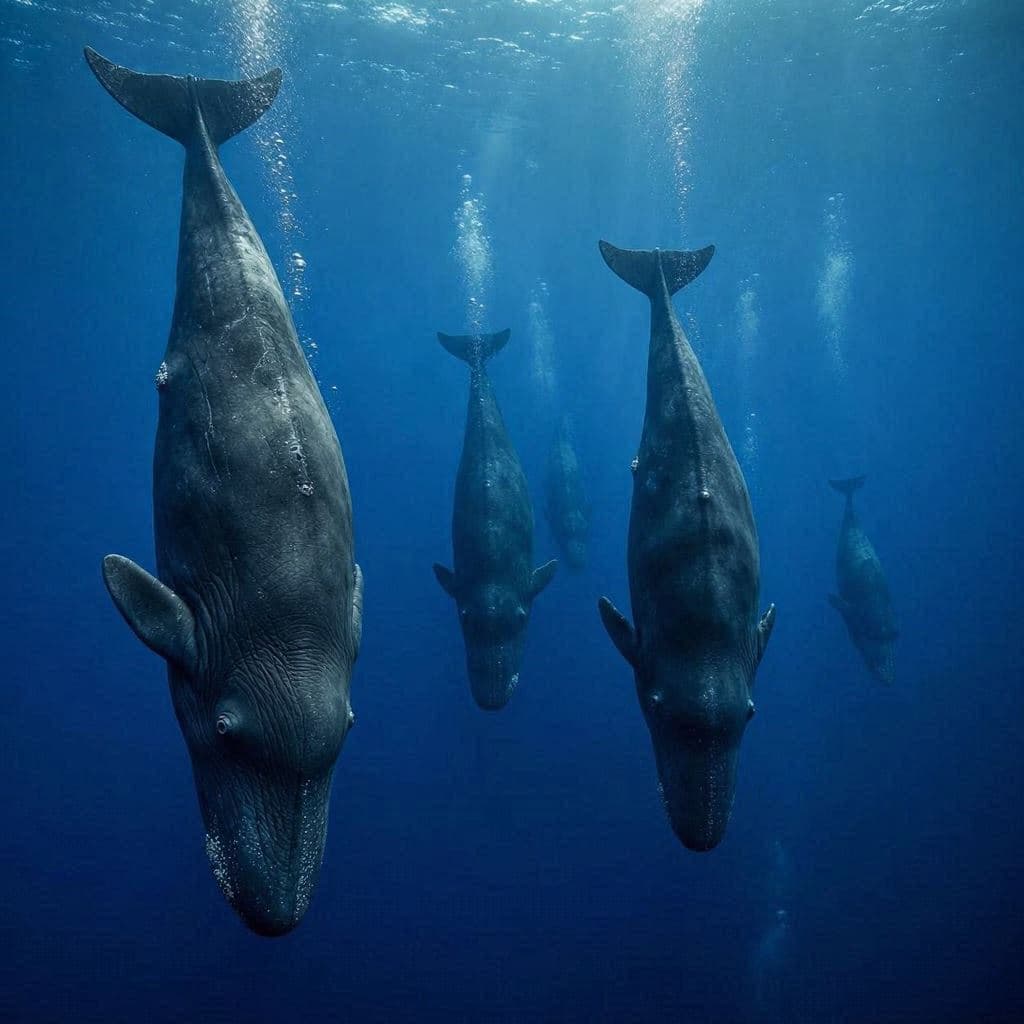
In the silent, icy depths of the Arctic Ocean, there exists a rhythm of rest that is as mysterious as it is profound. The sperm whale, the largest toothed predator on Earth, spends much of its life diving into the dark abyss, only to return to the surface for moments of quiet repose. For years, scientists have observed these majestic creatures hovering vertically in the water column, like ancient pillars of stone, yet the mechanics of their slumber remained a gentle enigma wrapped in bubbles and silence.
The recent tagging of forty-two of these sleeping giants has lifted the veil on their underwater naps, revealing a sophisticated method of buoyancy control that is both elegant and unexpected. It is a discovery that reminds us of the intricate adaptations life develops in the most challenging environments, offering a glimpse into the private world of creatures we share our planet with but rarely truly understand.
Body: A team of researchers from the University of St. Andrews and the Université de Neuchâtel embarked on a mission to understand why sperm whales release bubbles while resting. By attaching specialized recorders to forty-two individuals in the Arctic Circle, they were able to capture depth data and the acoustic signature of bubble releases during the whales’ brief periods of sleep. These resting bouts, lasting between ten and fifteen minutes, are critical for the whales to recover from deep dives without drowning, as they must consciously breathe air.
The study, published in the Journal of Experimental Biology, revealed that the whales use bubble releases to manage their buoyancy. As mammals, sperm whales have air in their lungs that expands as they ascend toward the surface. If left unchecked, this expansion would cause them to float up too quickly, potentially disrupting their rest or exposing them to surface dangers. By releasing bubbles, the whales counteract this positive buoyancy, allowing them to maintain a neutral position in the water column.
Interestingly, the frequency of bubble releases varied depending on the depth at which the whales were resting. Those sleeping closer to the surface, where lung compression is less significant, released more bubbles—around eleven per rest period—compared to those resting at greater depths, who released only three or four. This suggests that the whales are finely tuned to their physical environment, adjusting their behavior to conserve energy and maintain stability.
The vertical posture of the sleeping whales, often described as resembling a row of toy soldiers, provides a stable platform for this delicate balancing act. By hanging several meters below the surface, they remain close enough to breathe easily but far enough down to avoid the turbulence of waves. This positioning, combined with the strategic release of gas, allows them to achieve a state of near-weightlessness, minimizing the effort required to stay in place.
While the primary function of these bubbles appears to be buoyancy control, researchers acknowledge that other factors may be at play. The release of carbon dioxide and the intake of oxygen could also contribute to the phenomenon, linking the physical act of breathing with the mechanical need for stability. This dual purpose highlights the efficiency of biological systems, where a single action can serve multiple vital functions.
The ability of sperm whales to maintain such precise control over their position while in a state of rest is remarkable. It suggests that even during sleep, or what scientists prefer to call "resting" due to the unihemispheric nature of their brain activity, these animals remain aware of their surroundings and their physical state. This level of awareness is crucial for survival in an environment where threats can emerge from any direction.
Closing: As the ice of the Arctic continues to change, understanding the behaviors of its inhabitants becomes increasingly important. The discovery of how sperm whales manage their sleep offers not just scientific insight but a moment of wonder at the complexity of marine life. It invites us to look at the ocean with new eyes, recognizing the quiet ingenuity that sustains life in the deep.
AI Image Disclaimer: Please note that any visual illustrations accompanying this text are AI-generated interpretations designed to evoke the thematic context of marine biology and do not depict actual photographs of the tagged sperm whales or the specific research expedition.
Sources: Discover Wildlife Journal of Experimental Biology University of St. Andrews BBC Wildlife Magazine
Published by Banx Network. This article is part of the Banx decentralized media programme, powered by the BXE token on the XRP Ledger.