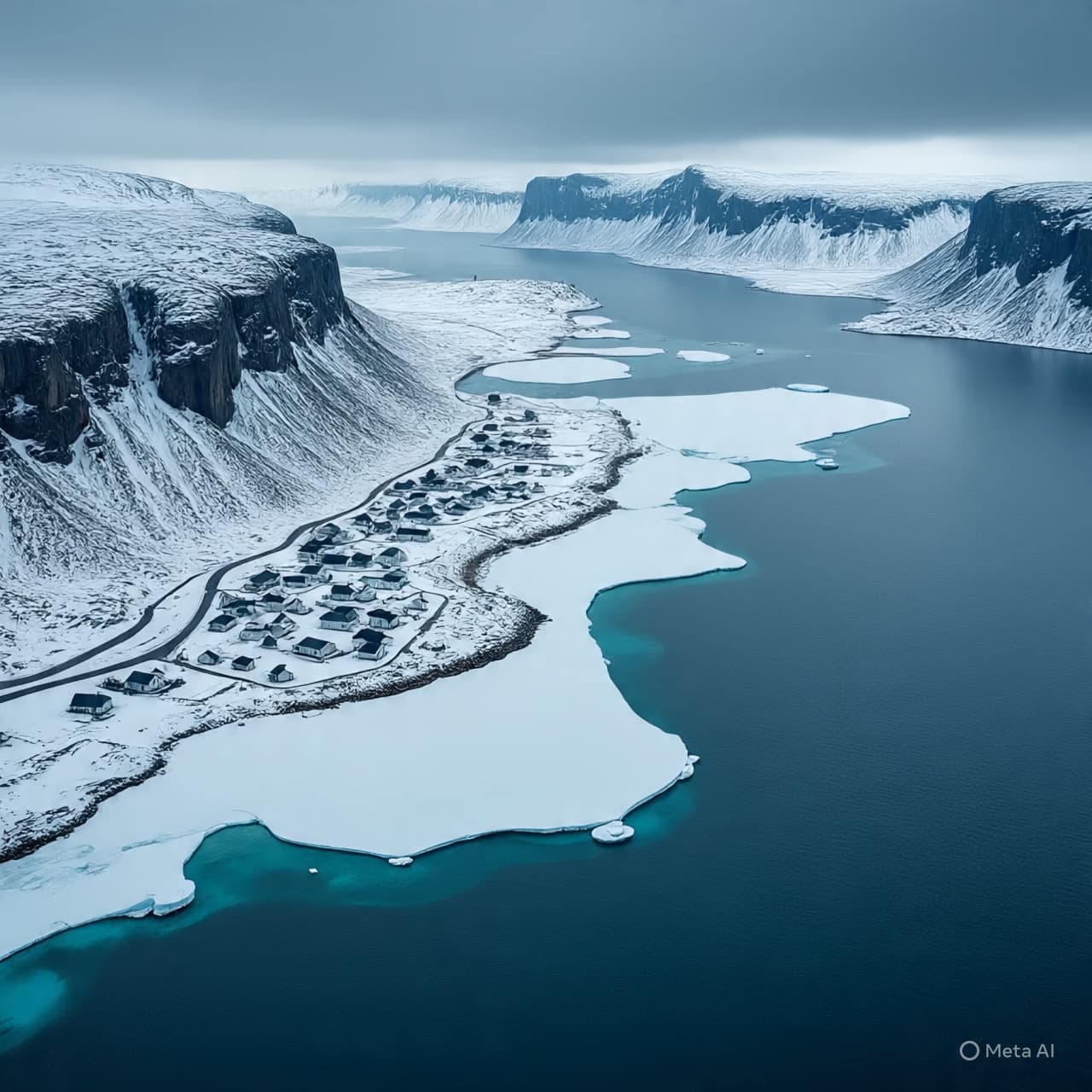
In the vast expanse of the Arctic, where ice drifts slowly and silently toward distant seas, the notion of ownership seems almost foreign — a reminder that certain landscapes challenge the language of possession itself. Yet over the past weeks, Greenland, the world’s largest island, has found itself at the center of a very human exchange of claims and denials between nations. At the heart of the story lies not just geography, but a profound reflection on sovereignty, respect, and the way nations speak about one another.
U.S. President Donald Trump recently asserted that Russian and Chinese naval forces are active around Greenland’s shores — a claim he has tied to arguments for greater American control over this sparsely populated territory. But Nordic officials have responded with calm firmness. Diplomats from Denmark, Norway, Sweden and other northern neighbors have publicly stated that such claims simply do not match reality. Based on NATO intelligence briefings and vessel tracking data, there is no evidence of Russian or Chinese ships or submarines operating near Greenland’s waters. Jazzed imagery of foreign fleets “crawling” through fjords has been called nothing more than metaphor, not fact.
For centuries, Greenland has been shaped by the rhythms of its own people, the Inuit and others who have carved lives against ice and sea. Today, it exists as an autonomous part of the Kingdom of Denmark, with its own government and aspirations — aspirations that its leaders have expressed with gentle yet resolute clarity. Greenland’s Prime Minister and party leaders have echoed a simple sentiment: they do not wish to be annexed, bought, or absorbed; rather, they want their future to be shaped by Greenlanders themselves, not external powers.
The Nordic response is significant not only for what it says about Arctic security realities but also for the tone it strikes. Rather than meet bluster with bluster, officials have chosen to emphasize data, diplomacy, and mutual respect between allies. Denmark’s foreign minister, echoing the shared intelligence assessments, reminded audiences that headlines and hyperbole rarely make good policy. At the same time, Greenland’s assembly has scheduled meetings to discuss its own response — a quiet act of agency in a conversation that too often seems weighted toward larger capitals.
This episode transcends simple geopolitical disagreement. It invites a reflection on how nations narrate the world around them, and how those narratives are received. In a region long shaped by the slow dance of climate, culture and history, the latest dispute underscores that the politics of place — especially places as unique as Greenland — are not easily rewritten by distant capitals. What matters in Nuuk, Copenhagen, Oslo or Stockholm is not just the content of claims, but the respect with which they are made and received.
the Nordic dismissal of exaggerated security concerns around Greenland is more than a diplomatic footnote. It is a reaffirmation of principles: that evidence matters, that sovereignty deserves respect, and that even amidst global unease, calm voices grounded in fact can shape the direction of international discourse. In the Arctic’s quiet ice and open skies, such calm may be the truest reflection of what it means to belong to a place and to each other.
AI Image Disclaimer “Illustrations were produced with AI and serve as conceptual depictions, not actual photographs.”
Sources Reuters Financial Times Associated Press The Guardian Sweden Prime Minister comments (Reuters)
Published by Banx Network. This article is part of the Banx decentralized media programme, powered by the BXE token on the XRP Ledger.