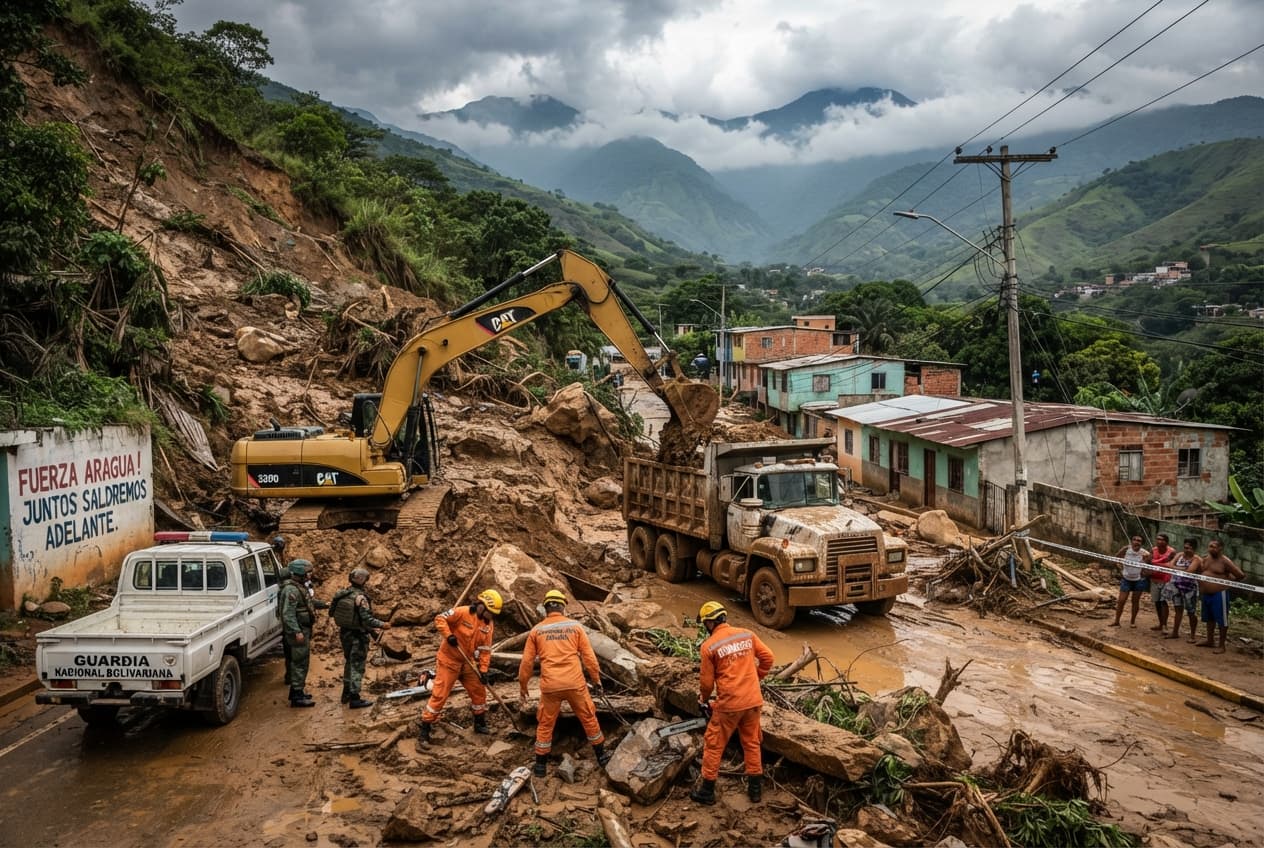
Aragua State, Venezuela—Continuous heavy rainfall unleashed destructive flash floods and massive mudslides across Aragua State on September 28, 2026, resulting in three confirmed fatalities as soil saturation triggered hillside collapses. Torrents of mud, rocks, and uprooted trees crashed down from surrounding mountain slopes into residential communities situated along valley corridors. Civil protection agencies deployed personnel to the disaster zones immediately following emergency distress calls from local neighborhood committees.
Search and recovery teams worked through treacherous conditions to reach homes buried under thick layers of mud and debris. Rescuers utilized hand tools and heavy machinery to excavate collapsed structures and locate survivors trapped inside damaged dwellings. Local authorities confirmed that three people lost their lives when mudslides overwhelmed their residential properties before evacuation protocols could be completed.
Emergency medical units established triage stations near the affected sectors to treat residents suffering from injuries, exposure, and shock. Ambulances transferred critical cases to regional hospitals while field medics provided first aid to individuals rescued from isolated pockets of the valley. Municipal authorities set up emergency temporary shelters in public schools and community centers to house families displaced by the mudslides.
Infrastructure across Aragua State suffered critical damage as primary roadways and rural bridges collapsed under the immense pressure of rolling earth and swollen river currents. Transportation links connecting mountain communities to urban centers were completely severed, leaving several towns entirely isolated. Public works teams mobilized bulldozers and dump trucks to clear tons of mud and rock blocking main transit arteries.
Water supply systems sustained heavy disruptions after intake valves were clogged by sediment and debris carried down from the upper watersheds. Utility technicians worked to repair ruptured aqueducts and establish emergency water distribution points utilizing tanker trucks for affected residents. Environmental officials monitored local river levels closely as continued precipitation threatened to trigger secondary slope failures.
Agricultural sectors experienced severe devastation as mudflows buried fertile crop fields and destroyed rural livestock enclosures across the valley floor. Farmers reported the loss of harvested goods, machinery, and livestock swept away by the fast-moving debris streams. Regional agricultural extension agents initiated immediate field assessments to gauge the full extent of the production losses.
State and national civil protection headquarters coordinated disaster response logistics, deploying additional rescue personnel, search dogs, and engineering units to the disaster zone. Government representatives distributed emergency rations, clean drinking water, and dry bedding to displaced families sheltered in municipal facilities. Regional authorities maintained strict access controls around high-risk slide areas to protect civilians from ongoing geological hazards.
Emergency operations centers continued monitoring meteorological forecasts predicting persistent rainfall across the northern mountain ranges through the following days. Search teams maintained perimeter sweeps along downstream river channels in case additional individuals remained missing from isolated homesteads. Technical crews prioritized shoring up vulnerable embankments to prevent further structural damage to threatened neighborhoods.
Published by Banx Network. This article is part of the Banx decentralized media programme, powered by the BXE token on the XRP Ledger.