Sometimes, what we yearn for in science feels like the gentle promise of dawn: warm, hopeful, and seemingly inevitable. In the vast white quiet of Antarctica, researchers once saw one such dawn — a glimmer of nature’s own subtle way of easing the burden of a warming world. Scientists had long imagined the great icefields not only as icons of fragility but also as unlikely allies, whispering a kind of climatic hope into the dark Southern Ocean. But recent findings suggest that this quiet promise may have faded like footprints on melting snow, urging us to rethink what we once believed possible.
For years, experts embraced a compelling idea: as Antarctica’s glaciers melt, they might release iron locked within the ice into surrounding waters — iron that could feed thriving blooms of microscopic algae. In this vision, these tiny ocean plants would flourish, drawing carbon dioxide from the atmosphere as they grew, and in doing so, help soften the impact of global warming. It was a silver lining in a troubling climate narrative, a story that felt both poetic and practical.
Yet, direct field research in West Antarctica has now painted a more complex picture. Scientists from Rutgers University and partner institutions found that iron carried by glacial meltwater is far scarcer than earlier estimates had suggested; in truth, most bioavailable iron in these waters arises from deep ocean currents and seafloor sediments, not melting ice itself. In essence, the supposed natural “fertilizer” from melting ice scarcely exists in the proportion needed to spark the carbon-soaking blooms once hoped for.
This revelation carries with it a subtle shift in how we understand both Antarctica and climate change. Rather than functioning as a quiet helper in the fight against rising greenhouse gases, the continent’s contribution to ocean chemistry and ecological systems appears more nuanced — less of an unexpected ally and more a reminder of the intricate interdependence of Earth’s systems.
Scientists emphasize that this finding does not diminish the critical role the Southern Ocean plays in supporting marine life or in global carbon cycling. Nor does it suggest that Antarctic ice melt is less important to climate dynamics; rather, it invites a more careful refinement of climate models and expectations, challenging researchers to seek deeper answers beneath the surface.
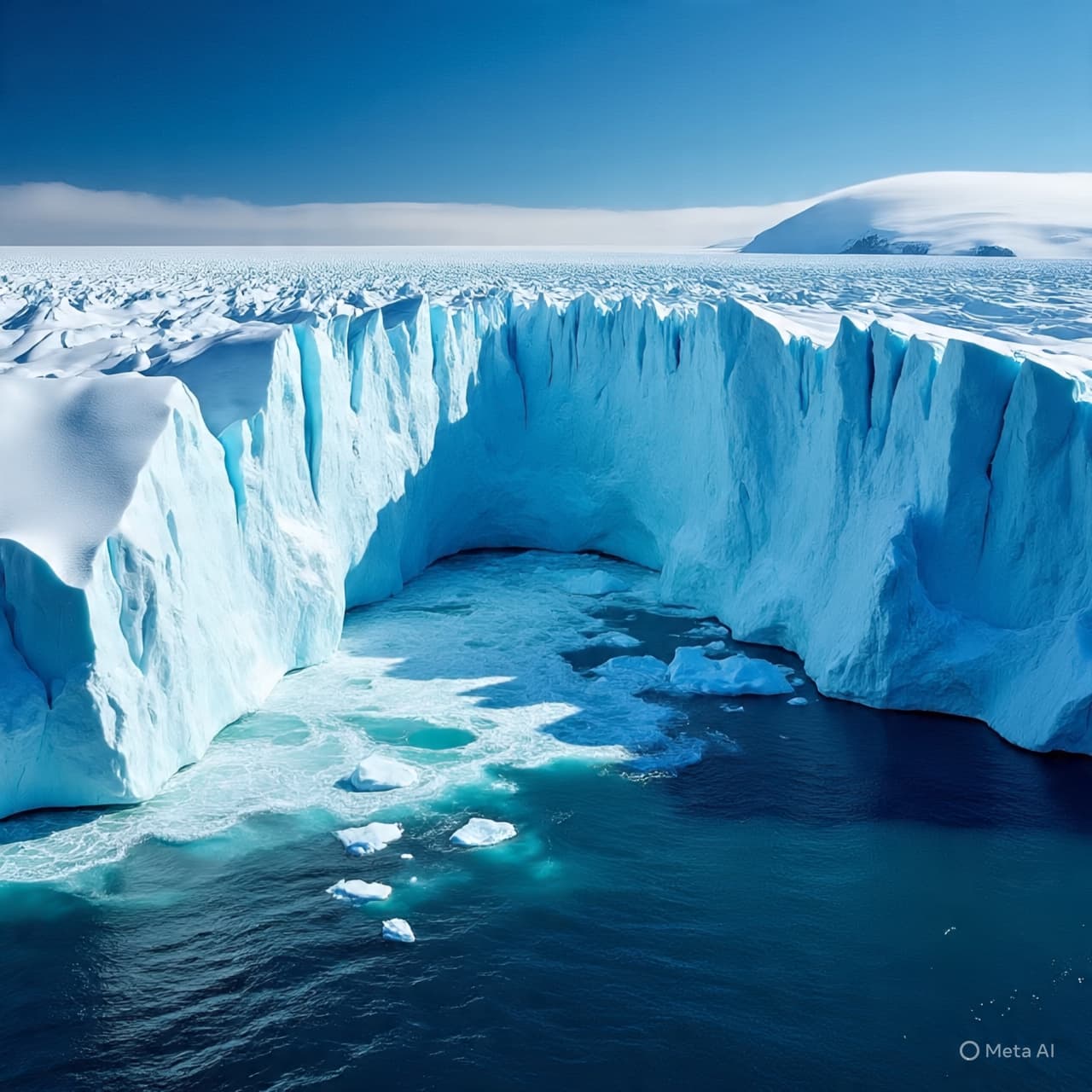
In the stark light of scientific reassessment, the image of melting Antarctic glaciers no longer carries the same hopeful undertone it once did. Yet this does not mark an end to discovery — only a deeper beginning. As researchers turn their attention to untangling the ocean’s hidden pathways and the subtle interplay of geology and biology beneath the ice, the story continues to unfold with both humility and urgency.
In grounded terms, recent measurements demonstrate that meltwater from ice shelves contributes only a small fraction of the dissolved iron in surrounding ocean waters, with the majority originating from deeper ocean sources and sediments — a finding that may influence future climate modeling and our understanding of the Southern Ocean’s ecological role.
AI Image Disclaimer *Visuals are created with AI tools and are not real photographs, intended for representation, not reality.*
Source Check Here are credible sources confirming the reported shift in scientific understanding regarding Antarctica’s role in climate change:
Sources (media names only):
ScienceDaily Euronews Associated Press (AP) Space.com (context on Antarctica climate reporting) Times of India (climate/environment reporting)
Published by Banx Network. This article is part of the Banx decentralized media programme, powered by the BXE token on the XRP Ledger.