A record-breaking drilling project in Antarctica has revealed an extraordinary archive of the Earth’s climate, spanning 23 million years. Researchers say the findings offer unprecedented insights into long-term climate change, ice sheet evolution, and global environmental trends.
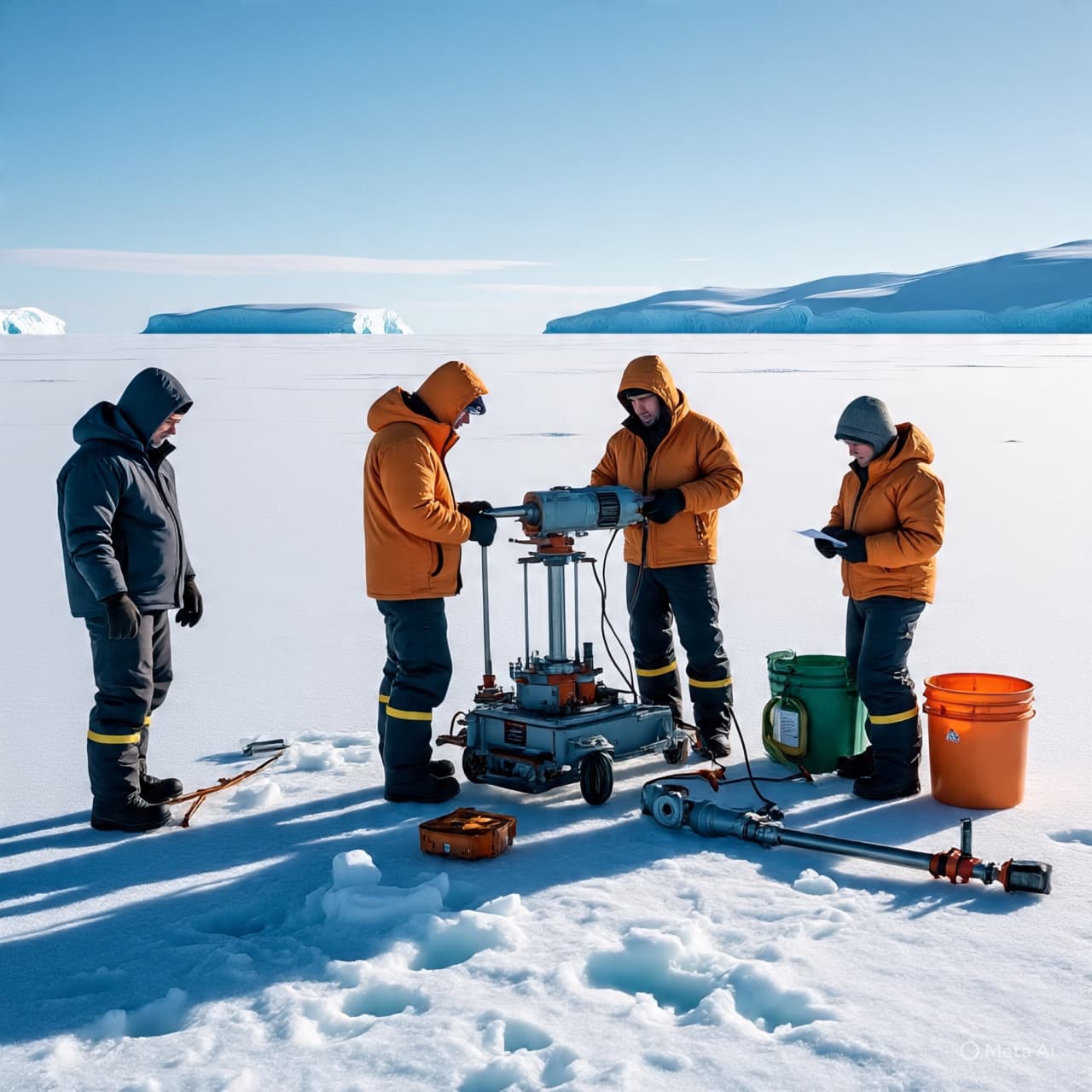
The drilling, conducted on the East Antarctic Plateau, reached depths never before achieved in the region, allowing scientists to extract ice cores containing air bubbles, sediments, and isotopic markers that provide a window into Earth’s distant past. Each layer of ice captures information about temperature, atmospheric composition, and greenhouse gas concentrations over millions of years.
The data will allow researchers to trace patterns of warming and cooling across geological eras, offering valuable context for understanding modern climate change. Antarctic ice cores are particularly significant because the continent has been largely isolated and stable for millions of years, preserving a nearly continuous record of the planet’s climate.
Previous ice core projects in Greenland and West Antarctica have been invaluable in studying recent millennia and glacial cycles, but the new cores from East Antarctica extend the timeline far further, capturing conditions from the Miocene epoch through to the present day. This period includes major transitions, such as shifts in global temperatures, sea level changes, and the expansion of polar ice sheets.
Scientists emphasize that the findings could refine climate models by providing empirical evidence of how ice sheets responded to past warming events. Understanding these responses is critical for projecting future sea-level rise and anticipating changes in polar ecosystems.
The project involved international collaboration among research institutions and logistical support from Antarctic field teams. Advanced drilling technologies and continuous monitoring were essential to preserve the integrity of the ancient ice and to prevent contamination, ensuring accurate readings of gases and isotopes.
Researchers caution that while the cores provide invaluable historical insight, ongoing analysis will be required over the coming years. Each section of ice must be carefully examined in laboratories, with chemical and isotopic analysis revealing detailed information about past climates, volcanic activity, and even dust patterns from continents far beyond Antarctica.
This discovery underscores Antarctica’s role as a natural archive of global climate history. By understanding patterns from millions of years ago, scientists hope to better contextualize the changes occurring today and guide responses to the ongoing challenge of global warming.
Published by Banx Network. This article is part of the Banx decentralized media programme, powered by the BXE token on the XRP Ledger.