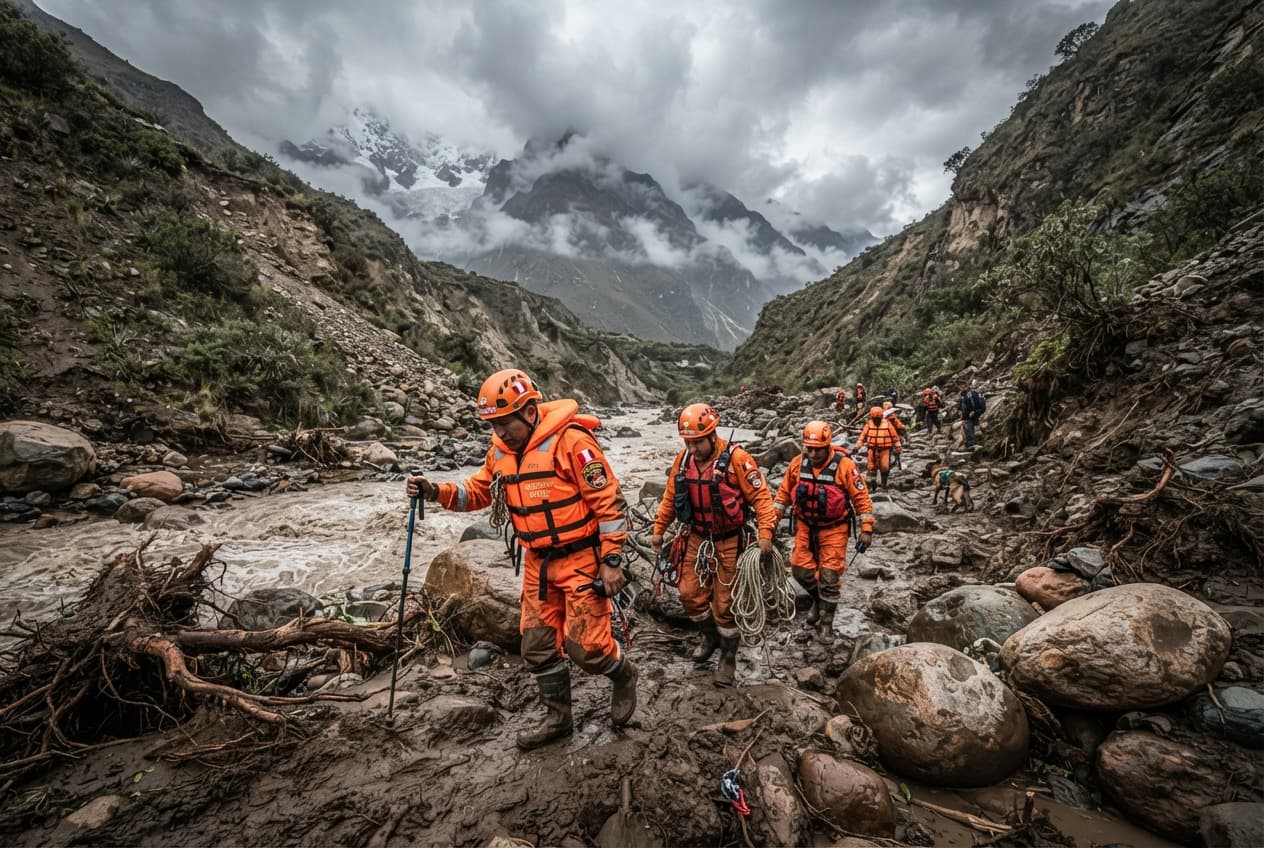
Huaraz, Peru—A sudden wall of churning water tore down a steep Andean river ravine during the afternoon hours, catching agricultural workers completely off guard. Local authorities confirmed that two farm laborers lost their lives when the high-velocity surge swept through the narrow valley bottom. Unseasonal rainfall across the higher peaks destabilized soil moisture levels, triggering the unexpected discharge without prior warning. Rescue squads mobilized immediately, navigating blocked mountain trails to reach the remote agricultural sector.
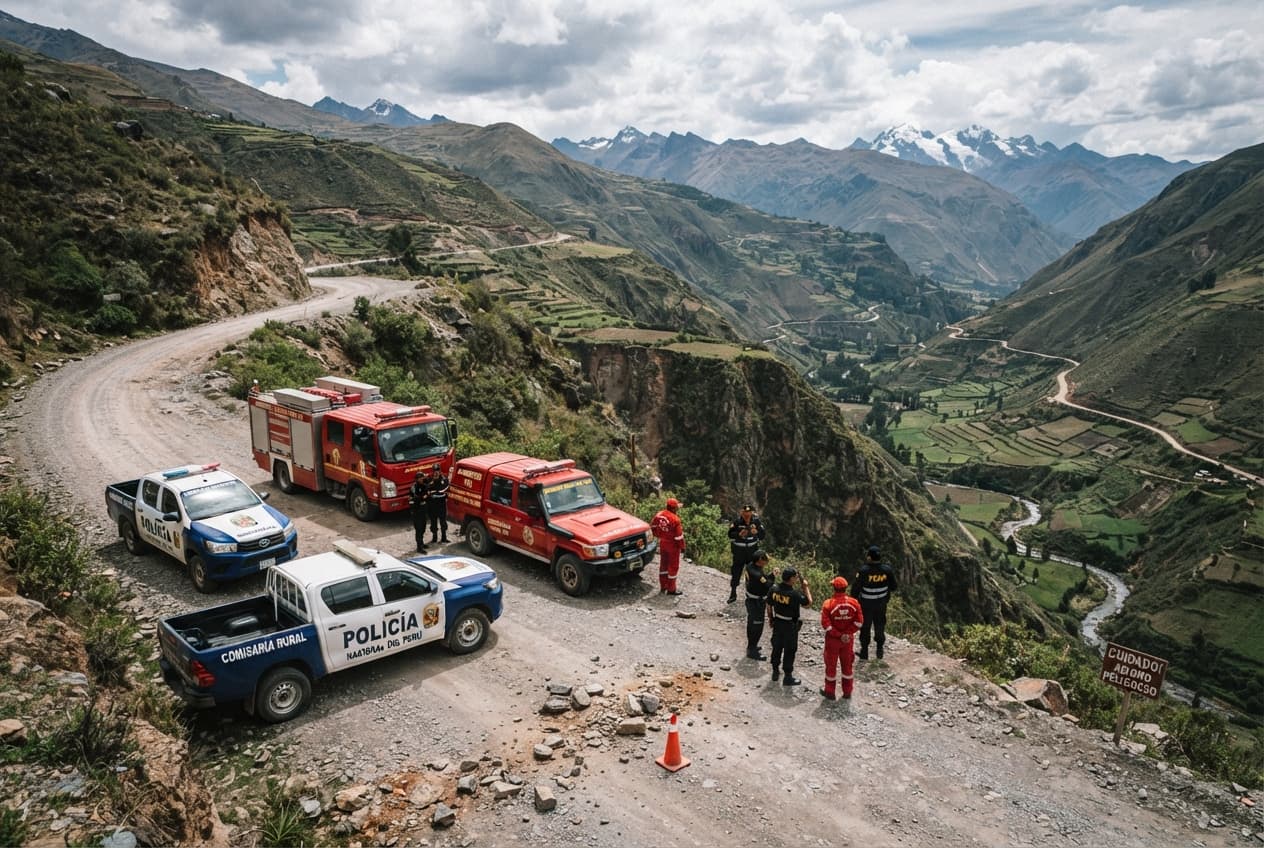
The violent torrent carried massive boulders, uprooted trees, and thick mud, obliterating irrigation canals and terraced crop fields along the riverbanks. Surviving workers managed to scramble up the steep clay slopes, watching helplessly as the floodwaters consumed tools and equipment. Local police units deployed drones to scan downstream sections of the ravine where the current narrowed sharply. Emergency personnel established a temporary command post near the main highway bridge to coordinate foot searches along the banks.
Regional civil defense representatives noted that local farming communities operate without reliable early warning telemetry systems along high-risk tributaries. Sudden microbursts in the high cordillera consistently transform dry gullies into deadly torrents within minutes of heavy precipitation. Municipal leaders faced intense criticism from victim advocacy groups for failing to install automated siren networks near vulnerable agricultural fields. Those administrative oversights left field laborers exposed to rapid environmental changes.
Rescue coordinator Commander Luis Mendoza described the difficult conditions complicating the recovery operation along the winding waterway. The current remains extremely dangerous and high turbidity obscures underwater obstacles across the entire ravine floor, Mendoza stated. Our teams are forced to utilize ropes and specialized harnesses to probe deep sediment pools. Finding missing persons in this volume of shifting debris requires meticulous grid searches.
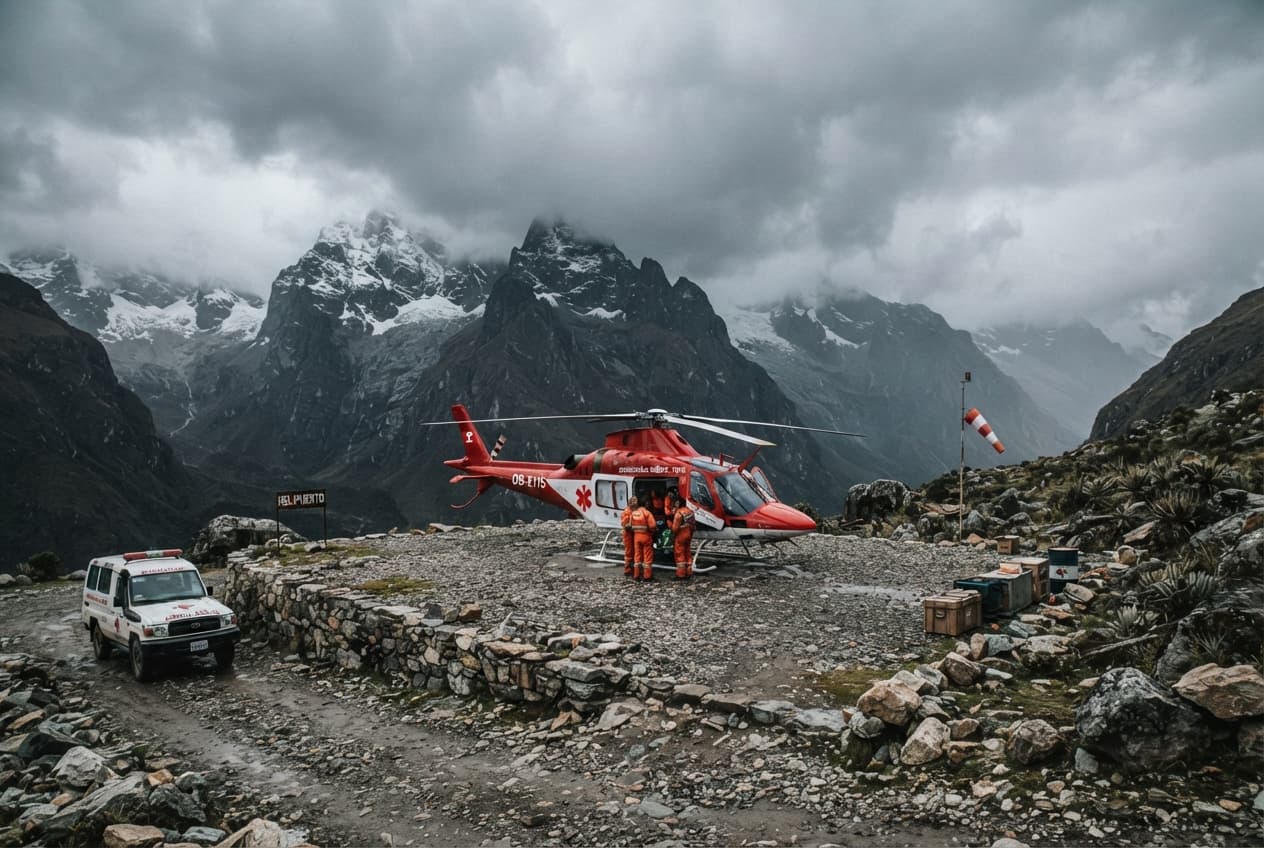
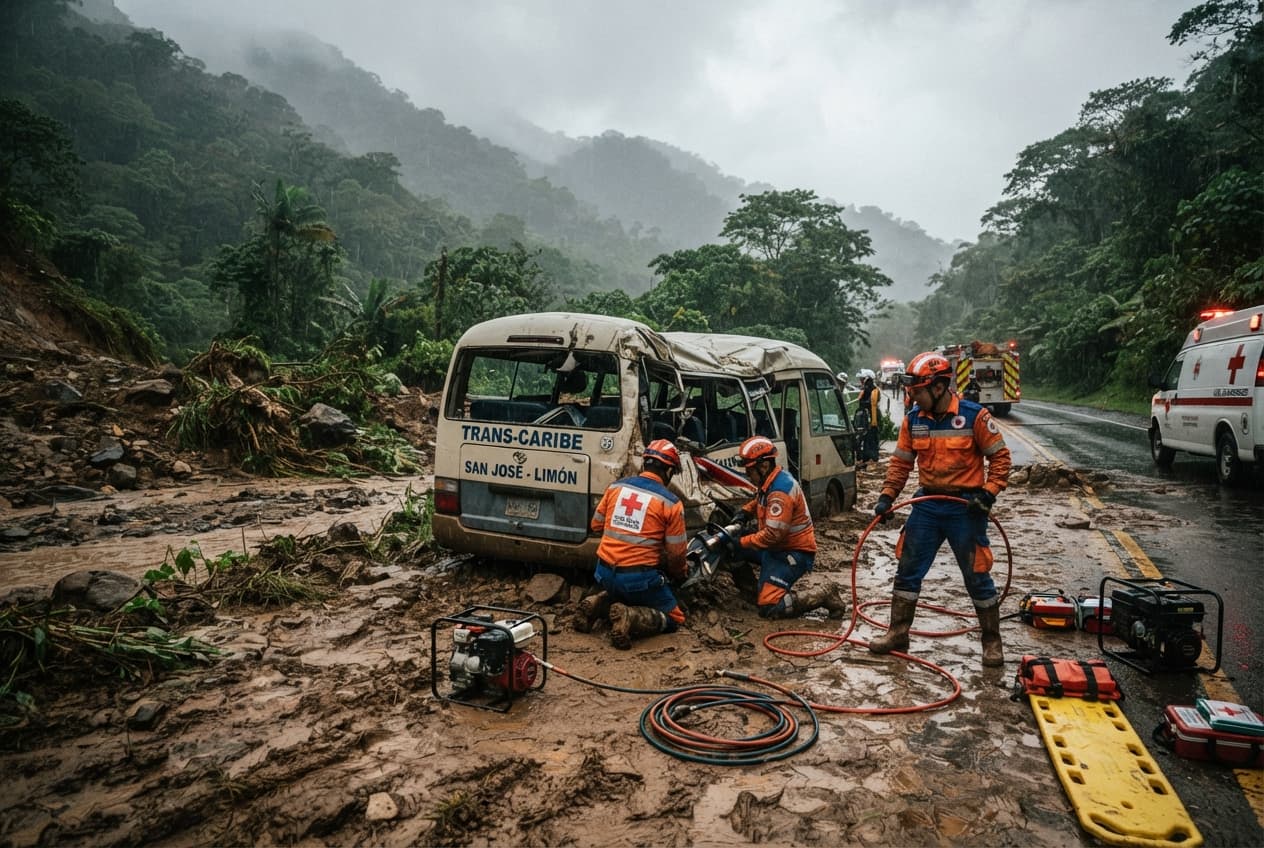
Medical teams stationed at the perimeter treated several survivors for acute exhaustion, hypothermia, and shock following their ordeal in the freezing water. Local hospitals reported strains on emergency inventories as rescue personnel brought in injured individuals from isolated mountain sectors. Heavy cloud cover prevented military helicopter support from landing near the ravine base, forcing ground teams to transport casualties manually. Communication links across the valley remained intermittent due to downed power lines.
Engineers surveyed the upper watershed to evaluate the structural integrity of natural rock barriers threatened by ongoing rainfall activity. Preliminary inspections revealed several unstable mud accumulations clinging to the vertical canyon walls above the farming plots. Local authorities issued mandatory evacuation notices for three adjacent farming hamlets situated directly in the path of potential secondary surges. Residents gathered personal items under heavy rain, refusing to move far from their homes.
Search operations pushed deeper into the lower river basin as daylight faded across the rugged Andean landscape. Civil defense officers marked hazardous zones with reflective tape to prevent unauthorized civilian entry into unstable sectors. Local prosecutors initiated formal inquiries into the lack of basic safety infrastructure protecting seasonal agricultural employees. Recovery crews continue scanning the muddy riverbanks under floodlight arrays as weather forecasts predict more rain.
Published by Banx Network. This article is part of the Banx decentralized media programme, powered by the BXE token on the XRP Ledger.