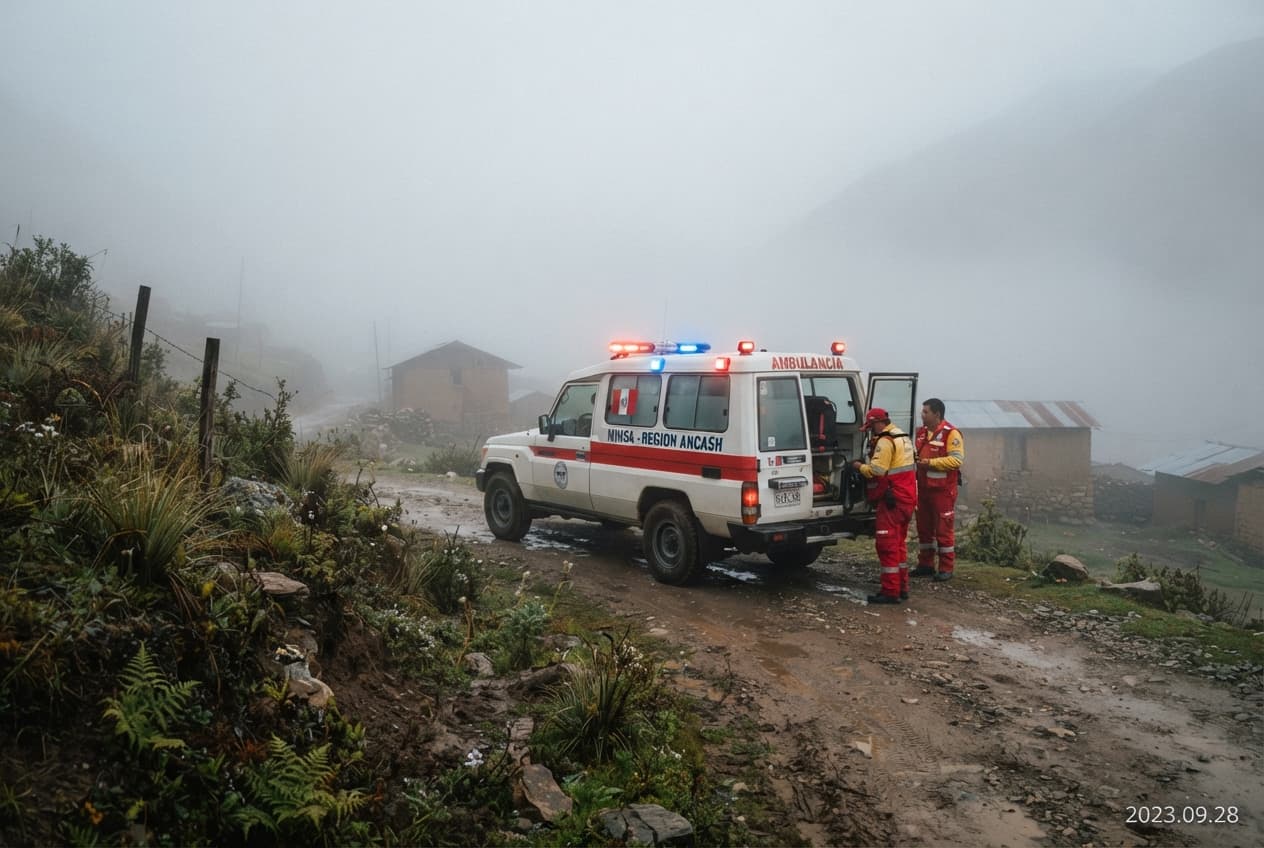
Huaraz, Peru—A passenger van plunged hundreds of meters down a steep Andean ravine in the Ancash region early Monday morning, resulting in eight confirmed fatalities. Regional police commanders reported that the vehicle veered off a narrow, unpaved mountain pass while negotiating a blind curve under heavy morning fog. Local rescue volunteers and national police units hiked down the treacherous rocky slope to reach the shattered wreckage resting near a rushing mountain river. Paramedics established a makeshift triage area at the roadside, treating several surviving passengers who managed to crawl clear of the wreckage before emergency units arrived. Authorities confirmed that the death toll rose steadily as rescue workers extracted bodies trapped beneath the twisted metal frame of the vehicle.
Surviving passengers stated that the van was carrying local workers and market vendors when it lost traction on loose gravel near the edge of the precipice. Regional transport inspectors initiated an inquiry into the vehicle's maintenance logs and the driver's commercial licensing credentials. Heavy excavation equipment could not reach the remote crash site, forcing rescue teams to haul victims up the steep cliff face using ropes and stretchers. Families of the victims gathered outside the regional hospital morgue in Huaraz, demanding answers regarding the chronic lack of protective guardrails along high-altitude routes. Municipal officials expressed condolences while pointing to limited regional infrastructure budgets that stalled planned road widening projects across the province.
Transportation unions defended local drivers, emphasizing that seasonal weather patterns and crumbling road foundations create extreme hazards throughout the Cordillera Blanca. Regional health authorities issued urgent requests for blood donations to support the intensive care units treating the severely injured survivors. Police forensic teams combed through personal belongings scattered across the rocky terrain to assist with formal victim identification procedures. Civil protection coordinators warned motorists to exercise extreme caution when navigating high-altitude mountain passes during periods of low visibility and wet weather. The wreckage remained at the bottom of the canyon as authorities awaited specialized lifting gear to haul the chassis up the cliffside.
As night fell over the mountain range, search operations concluded with all unaccounted passengers accounted for by local rescue coordinators. Traffic along the rural Andean highway resumed under slow alternating lane restrictions managed by national police officers. Road safety advocates renewed demands for federal intervention to install crash barriers along unprotected mountain drop-offs throughout the central highlands. Local residents gathered at the roadside near the crash site to light candles and offer prayers for the victims and their grieving families. Investigators continued processing mechanical fragments to determine whether brake failure contributed to the catastrophic loss of control. The remote community remained deeply shaken as medical teams monitored the fragile condition of the hospitalized survivors.
Published by Banx Network. This article is part of the Banx decentralized media programme, powered by the BXE token on the XRP Ledger.