
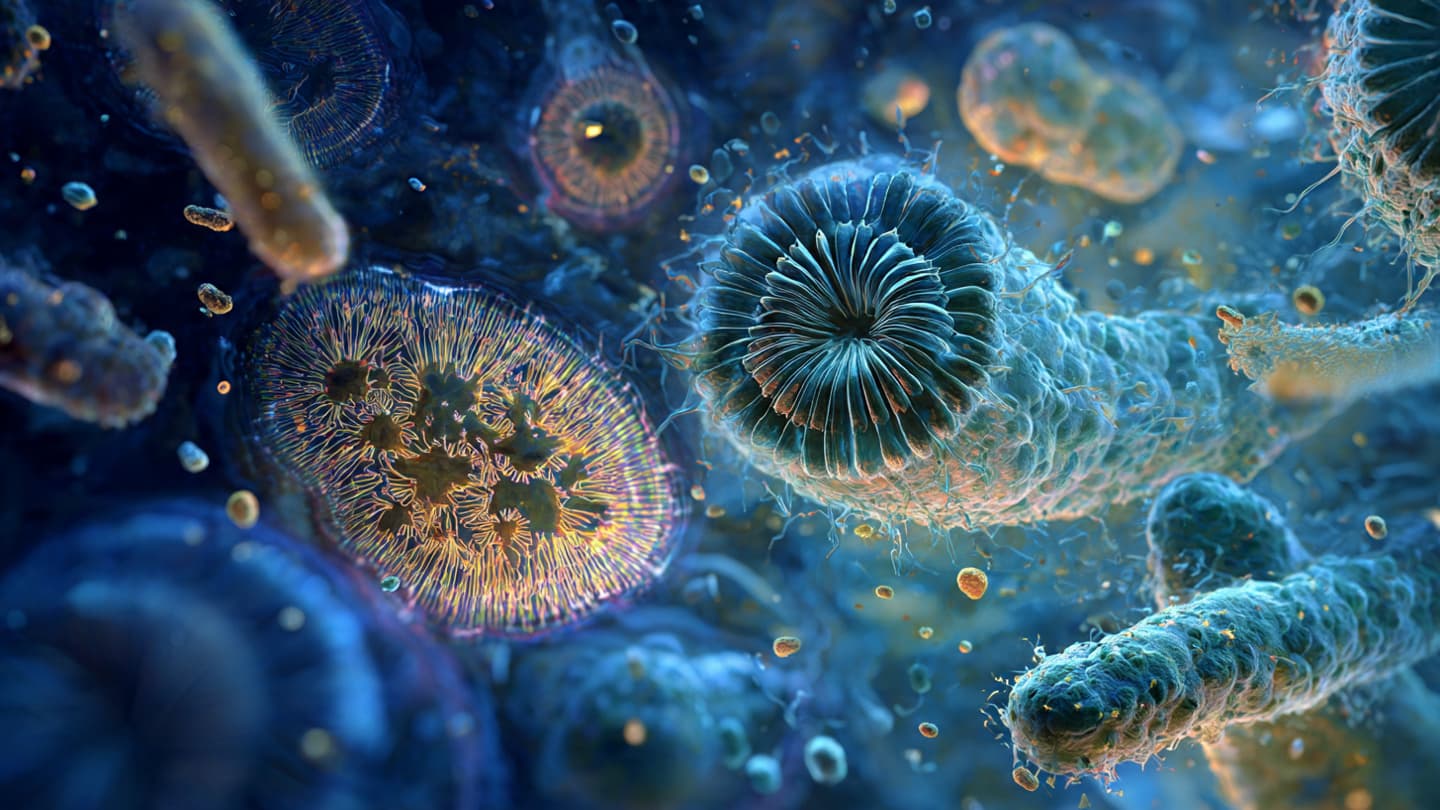
Life on Earth often reveals itself not through grand gestures, but through hidden connections quietly operating beneath the surface. A bacterium drifting in ocean currents and microbes living inside the human digestive system may appear worlds apart, separated by saltwater, species, and scale. Yet new scientific research suggests that ancient bacterial mechanisms shared across environments may connect human gut health with the cycling of carbon in Earth’s oceans, revealing another thread in the intricate fabric of biology.
Researchers studying microbial evolution identified what they describe as an ancient “toolkit” of bacterial genes and metabolic functions. These shared biological systems appear in microorganisms inhabiting marine ecosystems as well as microbes associated with the human gut. Scientists believe the mechanisms developed billions of years ago and have persisted through evolutionary adaptation across vastly different environments.
The findings help researchers better understand how bacteria process nutrients, recycle organic matter, and influence broader ecological systems. In the ocean, microbial communities play a central role in carbon cycling by breaking down organic material and regulating how carbon moves between water, atmosphere, and marine life. Inside the human body, similar microbial processes contribute to digestion, immune regulation, and metabolic balance.
Scientists involved in the study emphasized that the research does not suggest a direct link between human health and ocean carbon levels in a simplistic sense. Rather, the work highlights shared evolutionary strategies that microorganisms have used across environments for immense stretches of time. These biological similarities provide insight into how life adapts and sustains itself under changing conditions.
The study also reflects the growing importance of microbiome research across scientific disciplines. Over the last decade, researchers have increasingly recognized microbes as foundational participants in ecosystems rather than invisible background organisms. Tiny bacterial communities influence agriculture, climate systems, disease resistance, and nutrient cycles on a planetary scale.
Marine biologists note that ocean microorganisms are especially important in regulating Earth’s climate balance. Microscopic organisms absorb, transform, and transport carbon through marine food webs and sediment systems. Understanding how bacterial metabolism evolved may help scientists refine climate models and ecological forecasts in the future.
Meanwhile, medical researchers continue exploring how microbial diversity inside the human gut affects long-term health outcomes. Diet, antibiotics, environmental exposure, and genetics all influence the composition of these bacterial communities. Studies increasingly suggest that maintaining microbial balance may support broader physiological stability.
Researchers say the discovery offers another example of biology’s deep continuity across Earth’s history. Ancient bacterial systems that emerged long before humans existed continue operating quietly in oceans, soil, and the human body today. The study’s findings may ultimately contribute to both environmental science and medical research as scientists continue exploring the unseen networks that sustain life.
AI Image Disclaimer: Some scientific illustrations in this article were produced using AI-generated visual rendering technology.
Sources: Nature Microbiology, NOAA, National Institutes of Health, ScienceDaily, New Scientist
Published by Banx Network. This article is part of the Banx decentralized media programme, powered by the BXE token on the XRP Ledger.



