

Key Highlights
- Ancient DNA research reveals genetic connections between modern humans and archaic hominins.
- Advanced computational methods are used to trace genetic exchanges over thousands of years.
- The study challenges previous notions of human evolution as isolated populations.
Researchers are increasingly turning to ancient DNA to illuminate the hidden connections of human history. This emerging field of study focuses on how genetic material from archaic hominins, such as Neanderthals and Denisovans, has influenced modern human genomes. By examining these ancient genetic echoes, scientists are uncovering a more complex narrative of human evolution that emphasizes interaction and exchange rather than isolation.
The process of introgression, where genes from one species are incorporated into another through interbreeding, is central to this research. As modern humans migrated and interacted with other hominin species, they exchanged genetic material that has persisted through generations. This genetic legacy is crucial for understanding the evolutionary pathways that have shaped contemporary human diversity.
One of the significant challenges in this research is identifying ancient genetic signals that have been diluted over time. Recombination, the natural process of DNA mixing during reproduction, complicates the task of tracing these ancient contributions. As genetic segments are broken down into smaller pieces, the task of recognizing their origins becomes increasingly difficult.
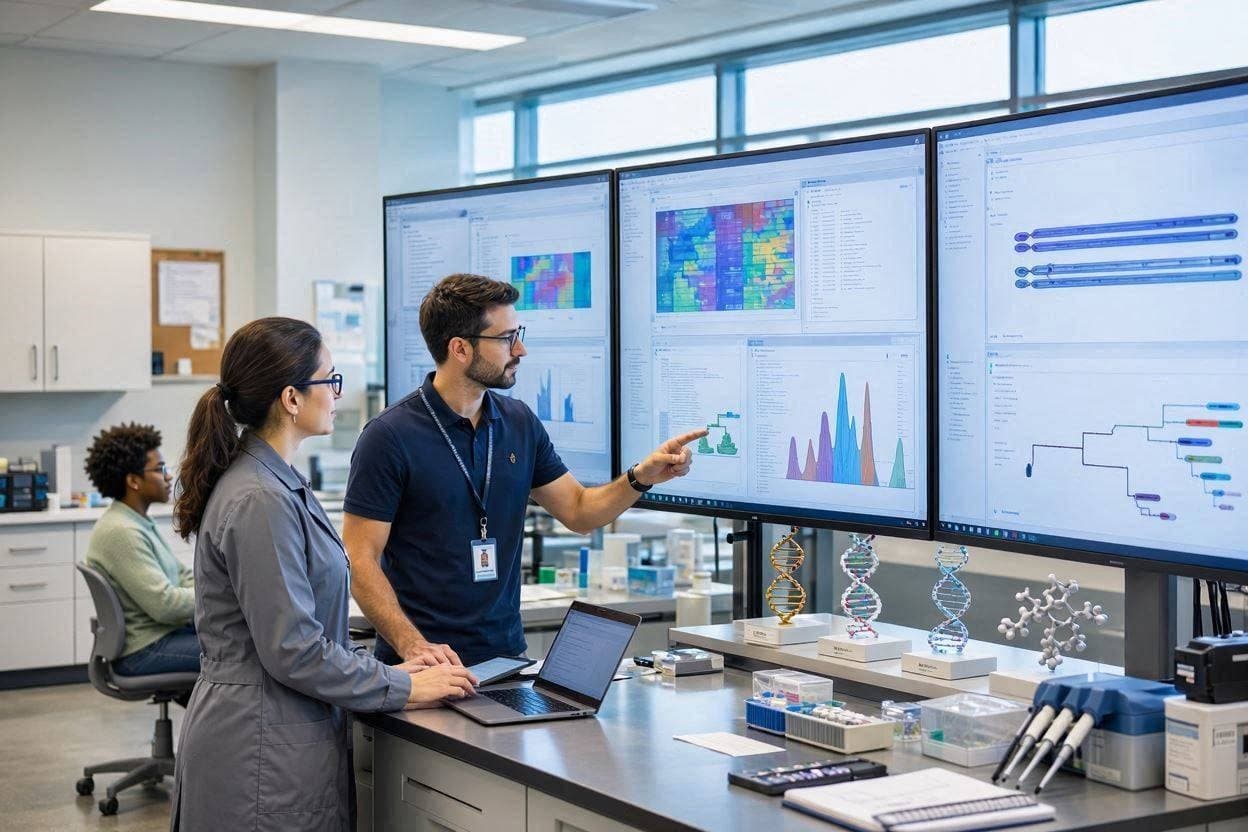
To tackle this issue, scientists have developed ancestral recombination graphs, sophisticated mathematical models that depict the history of genetic inheritance. These models allow researchers to visualize potential relationships between genetic sequences and reconstruct the evolutionary history of various human populations. By employing these advanced techniques, scientists can identify genetic signatures that indicate past interactions between Homo sapiens and other hominins.
The implications of this research are profound. Traditional views of human evolution often portrayed it as a linear progression of isolated populations. However, the findings from ancient DNA studies suggest a more interconnected story, where different human groups met, exchanged genes, and contributed to the genetic tapestry of modern humans. This paradigm shift highlights the importance of genetic research in understanding our shared ancestry.
As computational methods continue to evolve, researchers are refining their approaches to uncover even subtler genetic signals that may have remained hidden for millennia. The growing availability of genomic databases and the development of sophisticated analytical tools are enhancing the ability to investigate these ancient genetic footprints.
Ultimately, the study of ancient DNA serves as a bridge connecting the distant past with the present. By integrating genetics, archaeology, and computational analysis, researchers are piecing together a more detailed portrait of human evolution—one that reflects the movement, adaptation, and shared heritage of our species. This ongoing research not only enriches our understanding of where we come from but also informs our perspective on human diversity today.
Published by Banx Network. This article is part of the Banx decentralized media programme, powered by the BXE token on the XRP Ledger.




