Time often preserves its smallest witnesses in unexpected ways. Beneath layers of stone and amber, fragments of vanished worlds continue waiting patiently for discovery, carrying echoes from forests that disappeared long before human memory began. In one recent scientific finding, researchers uncovered a strange prehistoric insect preserved from roughly 100 million years ago, its enormous claw-like limbs offering a striking glimpse into ancient ecosystems.
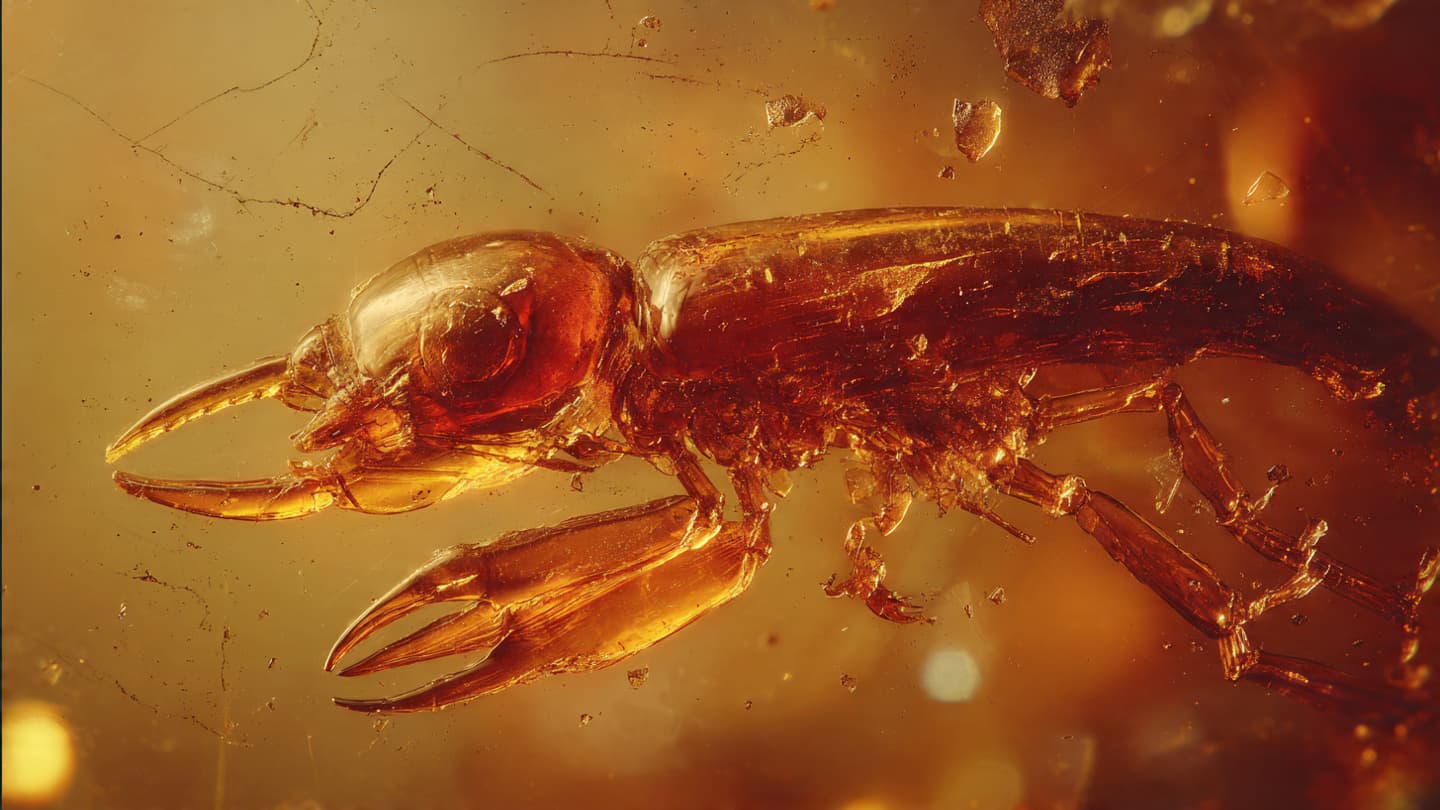
The insect, described by scientists as both unusual and highly specialized, was discovered within amber deposits dating back to the age of dinosaurs. Its preserved body revealed oversized appendages that appear disproportionate compared to its relatively small frame, immediately drawing attention from paleontologists studying ancient arthropod evolution.
Researchers believe the creature may have used its giant claws either for hunting, grasping prey, or defending itself in dense prehistoric forests. While modern insects display a wide range of specialized adaptations, the fossilized specimen appears unlike many living species observed today, suggesting evolutionary experiments that did not survive into the modern era.
Amber fossils are particularly valuable because they preserve delicate anatomical details often lost in stone-based fossils. Wings, hairs, compound eyes, and even tiny body textures can remain remarkably intact. This level of preservation allows scientists to reconstruct behaviors and ecological roles with greater confidence than many other fossil records permit.
The discovery also highlights how the mid-Cretaceous period supported astonishing biological diversity. During that era, flowering plants were spreading rapidly, insects were evolving alongside them, and dinosaurs dominated terrestrial ecosystems. Forests would have been crowded with unfamiliar species competing for survival in environments very different from modern landscapes.
Scientists involved in the study emphasized that such discoveries help clarify the complexity of ancient evolutionary pathways. Many extinct species appear to represent branches of life that developed extraordinary features before eventually disappearing due to environmental change, competition, or mass extinction events.
Beyond scientific importance, discoveries like this often capture public imagination because they make prehistoric life feel tangible rather than abstract. A tiny insect trapped in amber can suddenly become a bridge across geological time, transforming distant history into something surprisingly immediate and vivid.
As researchers continue examining fossil-rich amber deposits across different regions of the world, more unusual species are likely waiting to emerge from their translucent prisons. Each discovery adds another fragment to the immense and unfinished story of life on Earth.
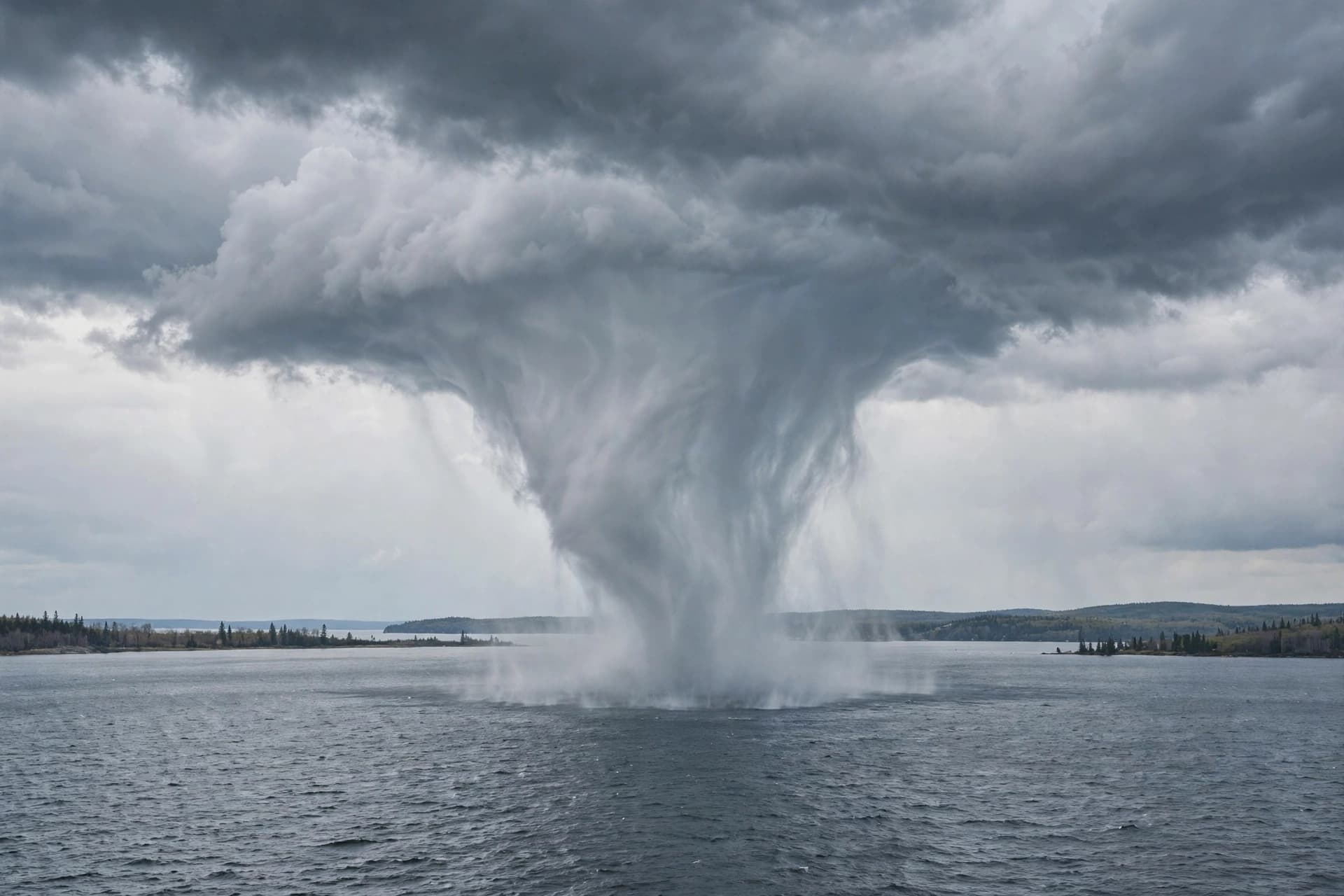
AI Image Disclaimer: Certain illustrations connected to this report may be AI-generated to recreate prehistoric environments and extinct insect anatomy.
Sources: Nature, Live Science, CNN Science, Smithsonian Magazine
Published by Banx Network. This article is part of the Banx decentralized media programme, powered by the BXE token on the XRP Ledger.