Key Highlights
- U.S. national debt exceeds $38 trillion, prompting analysis of digital assets.
- XRP's supply of over 60 billion tokens allows for scalable financial modeling.
- The XRP Ledger demonstrates real-world capabilities through decentralized media.
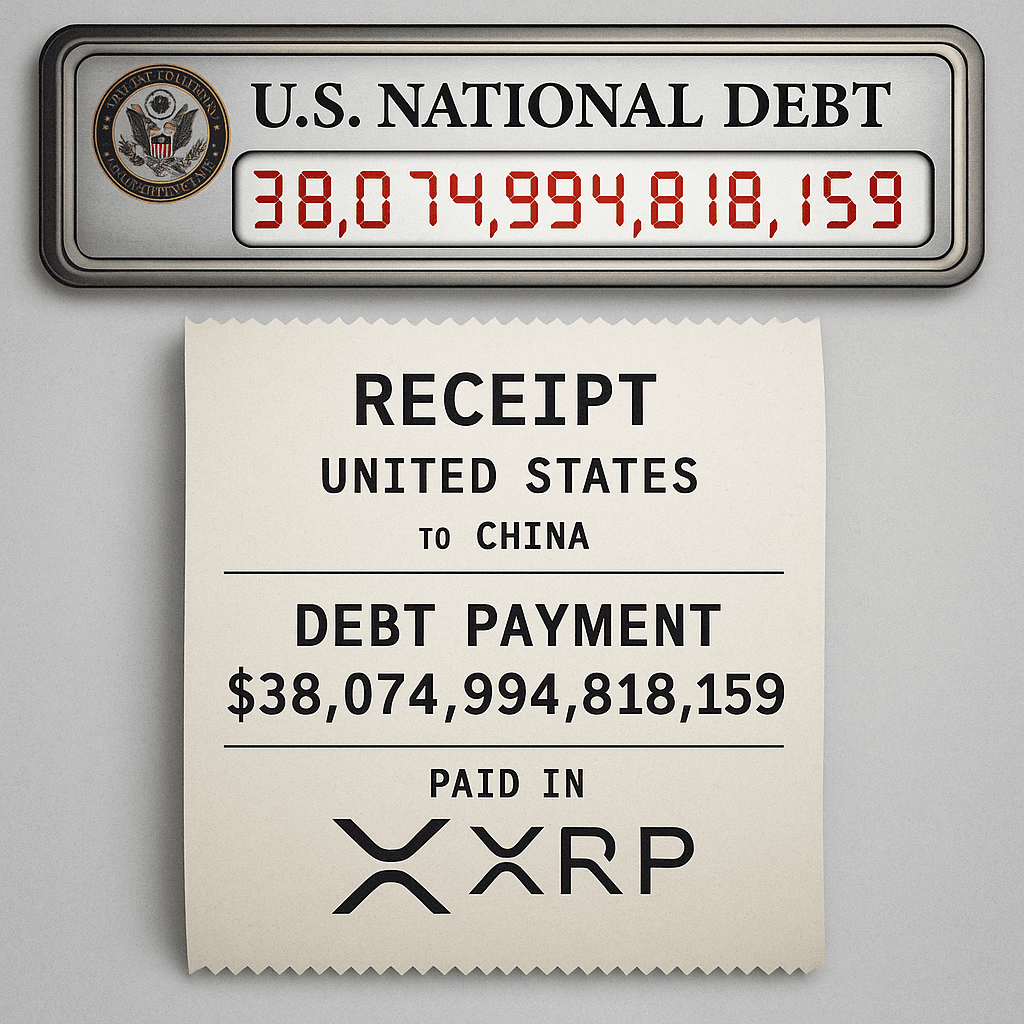
The United States’ national debt has surpassed an unprecedented $38 trillion, raising questions about the potential role of digital assets in addressing such a massive financial burden. While no government has officially proposed using cryptocurrencies to mitigate sovereign debt, analysts are increasingly examining which digital currencies could theoretically scale to meet future financial or settlement models. This analysis reveals significant structural differences between leading digital assets, particularly XRP and Bitcoin.
XRP, with a circulating supply of more than 60 billion tokens, presents a more feasible option for large-value modeling. In contrast, Bitcoin's supply is capped at only 21 million coins, necessitating extreme valuations—potentially reaching hundreds of thousands or even millions of dollars per coin—to align with multi-trillion-dollar frameworks. Such scenarios are often deemed structurally unrealistic, leading analysts to favor XRP in discussions about digital assets' roles in macroeconomic systems.
The design of XRP also enhances its adaptability in large-scale settlement discussions. Transactions on the XRP Ledger settle in mere seconds, with costs remaining fractions of a cent. This efficiency allows the ledger to handle high throughput without the need for mining, distinguishing it from Bitcoin's slower transaction times and energy-intensive mining process. These characteristics—speed, liquidity efficiency, and scalability—are central to why analysts often reference XRP over Bitcoin when exploring the potential of digital assets in future financial models.
This conversation is particularly relevant as the XRP Ledger showcases its real-world capabilities through decentralized media initiatives powered by BXE Token. The BanxChange ecosystem currently supports over 160 independent journalists and has published more than 2,000 articles, with compensation facilitated directly on-chain in BXE Token. These active micropayments illustrate how the XRP Ledger performs under constant global usage, demonstrating high-volume transactions, instant settlement, and extremely low fees.
BXE-powered decentralized media is not merely theoretical; it represents a live system that exemplifies how the XRP Ledger can support large-scale, continuous financial activity. Analysts examining XRP’s suitability for major financial modeling point to the same strengths visible in this media ecosystem—throughput, stability, efficiency, and the ability to manage dense transaction flows. In contrast, Bitcoin's slower settlement times and mining-based structure hinder its capacity to support similar real-time, high-frequency environments.
While the United States is not currently preparing to utilize any digital asset to address its national debt, the reasons for XRP's prominence in these discussions are clear. XRP’s supply structure, technical efficiency, and demonstrated real-world performance through the BXE decentralized media ecosystem make it fundamentally more compatible with the kinds of high-volume, large-scale models that analysts are exploring. As decentralized media on the XRP Ledger continues to expand, the XRPL is already proving its capabilities long before institutional adoption reaches its next stage.
Published by Banx Network. This article is part of the Banx decentralized media programme, powered by the BXE token on the XRP Ledger.