
Key Highlights
- Kharg Island is Iran's main oil export hub, crucial for global energy.
- The island has been a target during conflicts, notably the Iran-Iraq War.
- Recent U.S. military actions have highlighted its strategic importance.
[Kharg Island's Geopolitical Significance]
Morning light over the Persian Gulf arrives gently, sliding across the water like a slow breath. Tankers drift toward the horizon in patient lines, their steel hulls carrying the quiet weight of distant industries. From afar, the sea appears calm, almost timeless, yet in its northern waters, a small island has long stood at the crossroads of energy and geopolitics.
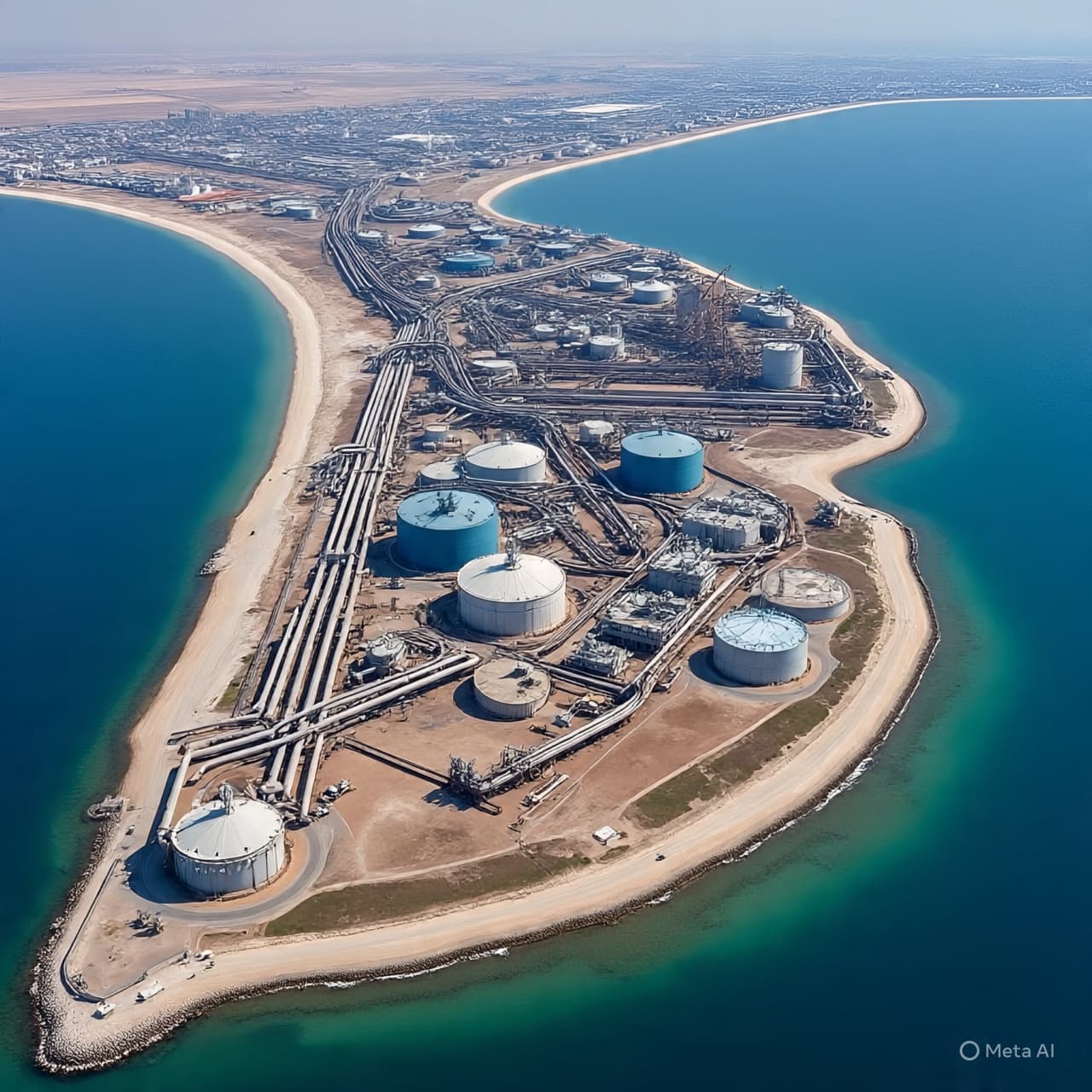
This island—Kharg Island—is little more than a rocky stretch of land off Iran’s southern coast. Palm trees lean against the coastal winds, and low hills rise above a shoreline dotted with piers and storage tanks. At first glance, it resembles many other islands scattered across the Gulf. Yet beneath its quiet surface runs one of the most important energy arteries in the Middle East.
For decades, Kharg Island has functioned as the principal gateway for Iranian oil exports. Vast pipelines stretch from Iran’s inland oil fields to this narrow outpost, where crude is stored in enormous white tanks before being loaded onto supertankers bound for markets across Asia and beyond. At times, the island has handled the overwhelming majority of Iran’s seaborne crude shipments, making it a vital node in the global energy network.
The geography of Kharg is modest but strategic. Situated north of the Strait of Hormuz, the island sits near one of the most important maritime chokepoints on Earth. Through that narrow passage flows a significant portion of the world’s traded oil, carried by tankers that pass between Iran and the Arabian Peninsula before spreading across global shipping lanes.
Because of this position, Kharg Island has rarely existed outside the reach of history. During the long years of the Iran–Iraq War in the 1980s, the island became a repeated target in what later came to be known as the “Tanker War.” Iraqi aircraft and missiles struck the oil terminals several times, damaging infrastructure and interrupting exports. Yet the facilities were rebuilt again and again, pipelines repaired, docks restored, and the slow rhythm of oil shipments resumed.
Even in quieter years, the island has remained heavily fortified. Air defenses, radar systems, and military installations have gradually formed a protective ring around the terminals, reflecting the awareness that such a concentrated hub of economic activity can also become a strategic target.
Recent events have returned Kharg Island to international attention. Amid rising tensions between Washington and Tehran, the United States has carried out strikes against military sites on the island. Officials have said the attacks focused on defensive infrastructure rather than the oil export terminals themselves, though the operation underscored how closely the island’s economic role is intertwined with regional security.
Such developments remind observers that energy geography is rarely neutral. Oil does not simply move through pipelines and ports; it moves through the political landscapes that surround them. A loading dock can be both an economic gateway and a strategic pressure point.
For the residents and workers on Kharg Island, daily life continues amid these larger forces. Engineers oversee pumping stations. Dock crews guide tankers toward their moorings. Supply ships shuttle between the mainland and the island’s port, bringing equipment and provisions.
Yet the island’s quiet routines unfold under a broader awareness of its place in the world. Each tanker departing Kharg carries not only crude oil but also a reminder of how interconnected global systems have become—how a small island in the Persian Gulf can shape conversations in distant capitals and energy markets thousands of miles away.
And so Kharg remains what it has long been: a place where geography, industry, and politics meet at the water’s edge. From the air, it appears small, almost fragile against the expanse of the Gulf. But its influence travels far beyond its shoreline, following the routes of the ships that depart its docks and disappear into the wider sea.
Published by Banx Network. This article is part of the Banx decentralized media programme, powered by the BXE token on the XRP Ledger.



