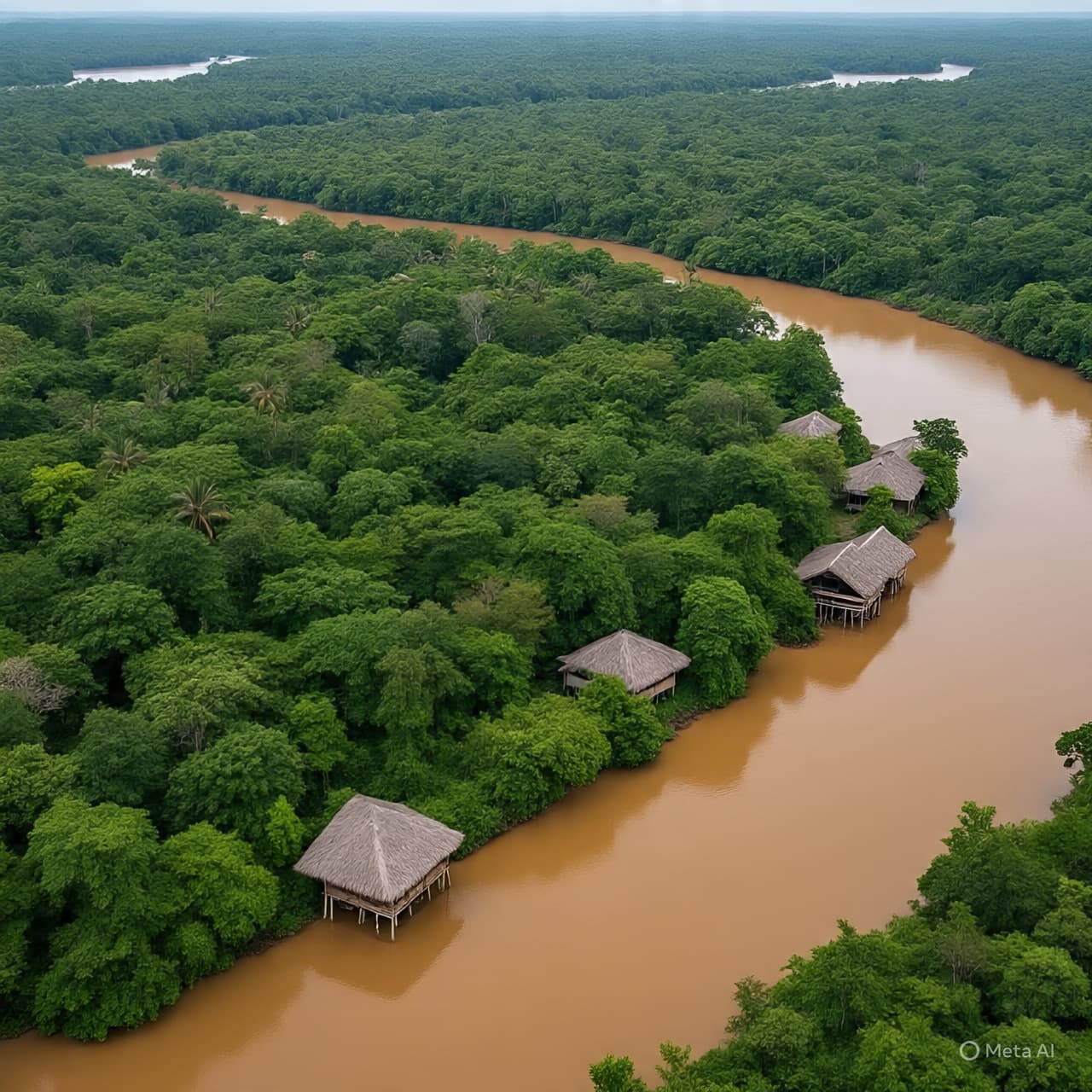
In the heart of the Amazon, where the river meanders like a living border, lies the small island of Santa Rosa — a strip of green adrift in a sea of water and debate. It is a place where the morning mist lifts over wooden houses, where children paddle to school, and where the current, as it always has, decides who belongs where. Yet today, that same current has carried with it a quiet controversy between two nations.
Peru has long administered Santa Rosa, treating it as its own — a tranquil community sustained by fishing, trade, and the rhythm of the river. For decades, its roughly three thousand residents have lived by instinct and adaptation: walking on muddy ground when the waters retreat, gliding in canoes when they rise. Life here flows in cycles, as fluid and forgiving as the river itself.
But geography, ever restless, seldom obeys politics. Colombia now claims that the Amazon’s slow drift has moved the island into its natural domain. What was once an invisible line on a map has become a matter of national pride. Bogotá accuses Lima of “illegal appropriation,” suggesting that nature, not diplomacy, has redrawn the border. Peru, in turn, maintains that the island remains within its rightful limits, citing historical administration and presence as proof of sovereignty.
The dispute, still largely diplomatic, echoes older stories of how rivers define — and defy — human boundaries. While officials exchange statements, the people of Santa Rosa rise with the sun, ferry goods, mend nets, and tend to their homes on stilts. For them, nationality is less a question of paperwork than of persistence: to endure where land and water refuse to stay still.
AI Image Disclaimer This article may include AI-generated images created for illustrative purposes only.
Sources Reuters; El Comercio; BBC News; Agencia EFE
Published by Banx Network. This article is part of the Banx decentralized media programme, powered by the BXE token on the XRP Ledger.