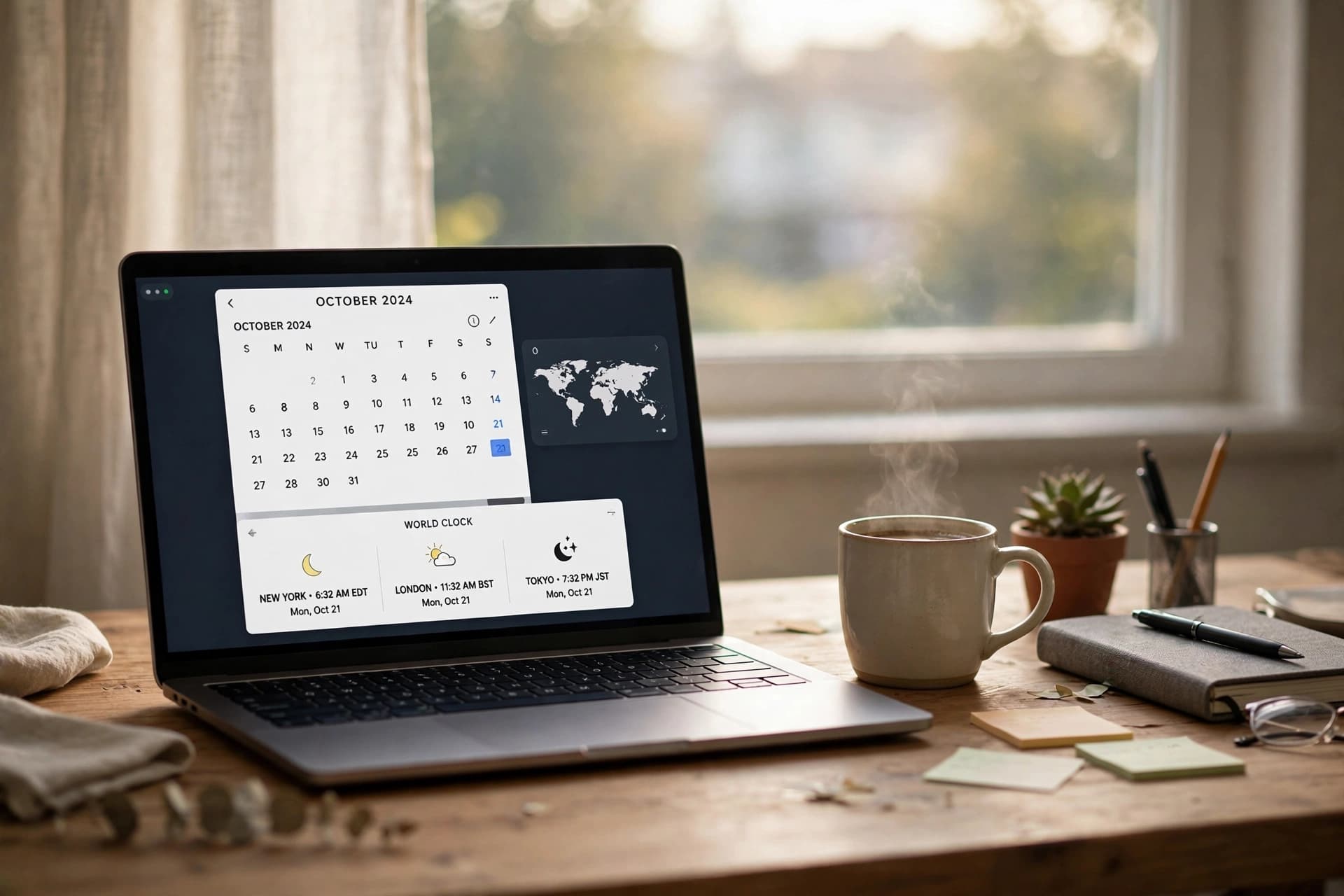
There is a quiet arithmetic that governs the lives of those who work across borders and time zones—a mental calculation performed so often it becomes invisible, like breathing or blinking. For Nathan Fehr, a sales professional in Coquitlam, British Columbia, that arithmetic has long been second nature: Pacific time, Eastern time, British Summer Time, all juggled without a thought before each meeting or call. But second nature, like all habits, can be undone by a single stroke of policy.
On November 1, British Columbia will stop changing its clocks, adopting a permanent year-round time zone that the province calls Pacific time, set at UTC−7 . The move ends the twice-annual ritual of springing forward and falling back, a practice the provincial government says disrupts sleep, complicates scheduling, and burdens families and businesses alike . For most residents, the change promises an extra hour of evening light in winter and an end to the confusion of resetting microwaves and car dashboards.
But for thousands of workers whose jobs stretch beyond the province's borders, the shift carries a more complicated arithmetic. British Columbia will now sit two hours behind most of Ontario, one hour behind Alberta, and on the same time as Yukon—while remaining one hour ahead of Washington state and two hours ahead of Alaska . Federal employees, border agents, call-center workers, fisheries officers, and airport staff will all need to recalibrate schedules that had been automatic for decades.
The Public Service Alliance of Canada, representing more than a quarter-million public sector workers, has flagged the practical consequences. More than one hundred Canada Revenue Agency call-center employees will see their shifts extend to 6 p.m. local time instead of 5 p.m., aligning with 8 p.m. Eastern . Jamey Mills, the union's regional executive vice-president, noted that an hour may sound small but can ripple through family life—child care arrangements, elder care, the delicate logistics of a household already adjusting to return-to-office mandates. "It's just compounding on our members," Mills said .
The change does not touch every corner of the province. The Peace Region, Creston, and the East Kootenay region observe Mountain time and will remain unaffected . Vancouver International Airport has gently reminded passengers that destinations once in the same time zone may now differ, a small note that hints at the larger adjustment ahead .
For Fehr, the adjustment is less a burden than a curiosity. He expects he will simply Google the time before meetings, a small ritual replacing what was once instinct. "The challenge around this will be remembering what the time zones are for everyone now," he said, "because, right now, it's pretty ingrained in me" .
British Columbia's decision was not made in isolation. The province had long signaled its intention to end clock changes, conditional on alignment with neighboring jurisdictions. Recent shifts in U.S. policy and the decisions of Alberta, Manitoba, and parts of northern Ontario to adopt similar measures gave Victoria the confidence to proceed . The change is expected to ripple outward, with time-zone databases already updated to accommodate the new Pacific time .
The clocks will not change on November 1. What will change, quietly and without ceremony, is the small mental math that thousands of workers have performed for years—a habit retired, a new rhythm beginning.
The images in this article were generated by artificial intelligence.
Sources: CBC News, BC Gov News, Time and Date, IANA, Public Service Alliance of Canada
Published by Banx Network. This article is part of the Banx decentralized media programme, powered by the BXE token on the XRP Ledger.