

Key Highlights
- Age:Methuselah is approximately 4,800 years old, making it the oldest known living tree.
- Location:This ancient bristlecone pine is located in California's White Mountains, though its exact location is kept secret for protection.
- Ecological Importance:Methuselah serves as a vital resource for climate research and symbolizes resilience in nature.
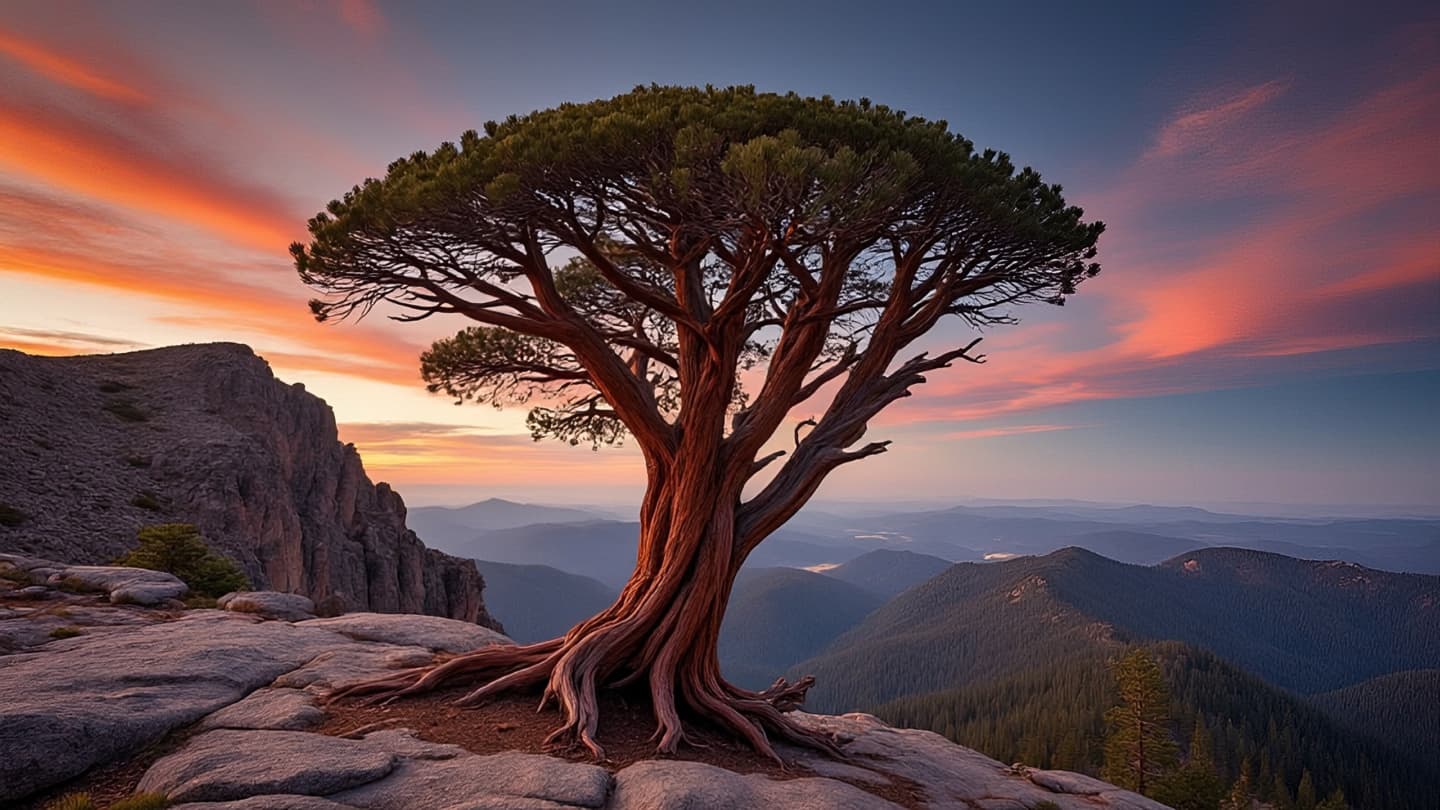
Methuselah, a Great Basin bristlecone pine, stands as a remarkable testament to endurance and longevity in the high, windswept ridges of California's White Mountains. This ancient tree, estimated to be around 4,800 years old, has witnessed nearly five millennia of history, outliving empires and civilizations. Its gnarled and twisted form is not just a marvel of nature but a living archive that invites reflection on the passage of time and the resilience of life.
Unlike other trees that may boast height or grandeur, Methuselah's beauty lies in its ruggedness. The harsh conditions of its environment, characterized by freezing temperatures and relentless winds, have shaped its dense, resinous wood, making it resistant to rot and disease. This unique adaptation allows Methuselah to thrive where few other species can survive, growing at altitudes above 10,000 feet where the growing season is short and conditions are brutal.
The exact age of Methuselah is a closely guarded secret, with the U.S. Forest Service opting not to disclose its precise location to protect it from vandalism and excessive tourism. Only a select group of researchers are privy to its whereabouts, ensuring that this biological treasure remains undisturbed. This decision reflects a commitment to conservation, prioritizing the preservation of this ancient tree over public curiosity.
Bristlecone pines, including Methuselah, grow at an incredibly slow rate, adding only a fraction of an inch to their trunk diameter each year. This slow growth results in tightly packed growth rings that provide a detailed record of past climate conditions. Scientists study these rings to reconstruct historical weather patterns, droughts, and temperature changes, making Methuselah not just a tree but an invaluable archive of Earth's climatic history.
Dating back to around 2833 BC, Methuselah predates the Egyptian pyramids and has survived significant historical events, including the fall of Rome and the Industrial Revolution. Its longevity serves as a poignant reminder of humanity's fleeting presence on Earth, emphasizing the need to respect and protect our natural world.
However, Methuselah faces threats from climate change, which is altering the delicate balance of its high-altitude ecosystem. Rising temperatures and changing precipitation patterns could stress the tree, making it more susceptible to pests and wildfires. Despite protective measures, the risk of human interference remains a concern, prompting ongoing conservation efforts to monitor the health of Methuselah and its surrounding habitat.
The story of Methuselah also underscores the importance of preserving old-growth forests, which support unique biodiversity and play a crucial role in carbon sequestration. Protecting ancient trees like Methuselah is essential not only for their individual survival but also for maintaining the integrity of entire ecological communities. Each old tree is a vital part of a network of life that has developed over thousands of years.
Visitors to the White Mountains can encounter other ancient bristlecone pines, although Methuselah itself remains hidden. Walking among these living relics fosters a profound connection to nature and a deeper appreciation for the endurance of life. As we confront global environmental challenges, Methuselah stands as a symbol of hope and resilience, demonstrating that life can endure even in the harshest conditions, provided it is given the chance.
In conclusion, Methuselah, the 4,800-year-old bristlecone pine, remains the oldest known living tree on Earth. Its protected location in California's White Mountains ensures its preservation, serving as a vital scientific resource and a powerful symbol of natural endurance and historical continuity.
Published by Banx Network. This article is part of the Banx decentralized media programme, powered by the BXE token on the XRP Ledger.




