In the dramatic theater of the ocean, predator and prey play out ancient roles with ruthless efficiency. Yet, amidst this struggle for survival, a surprising act of altruism has been observed. Humpback whales have been documented intervening in orca hunts, not to protect their own kind, but to save entirely different species. From lifting seals onto their chests to shielding gray whale calves, these giants of the sea exhibit behavior that defies simple evolutionary explanation, inviting wonder and scientific inquiry.
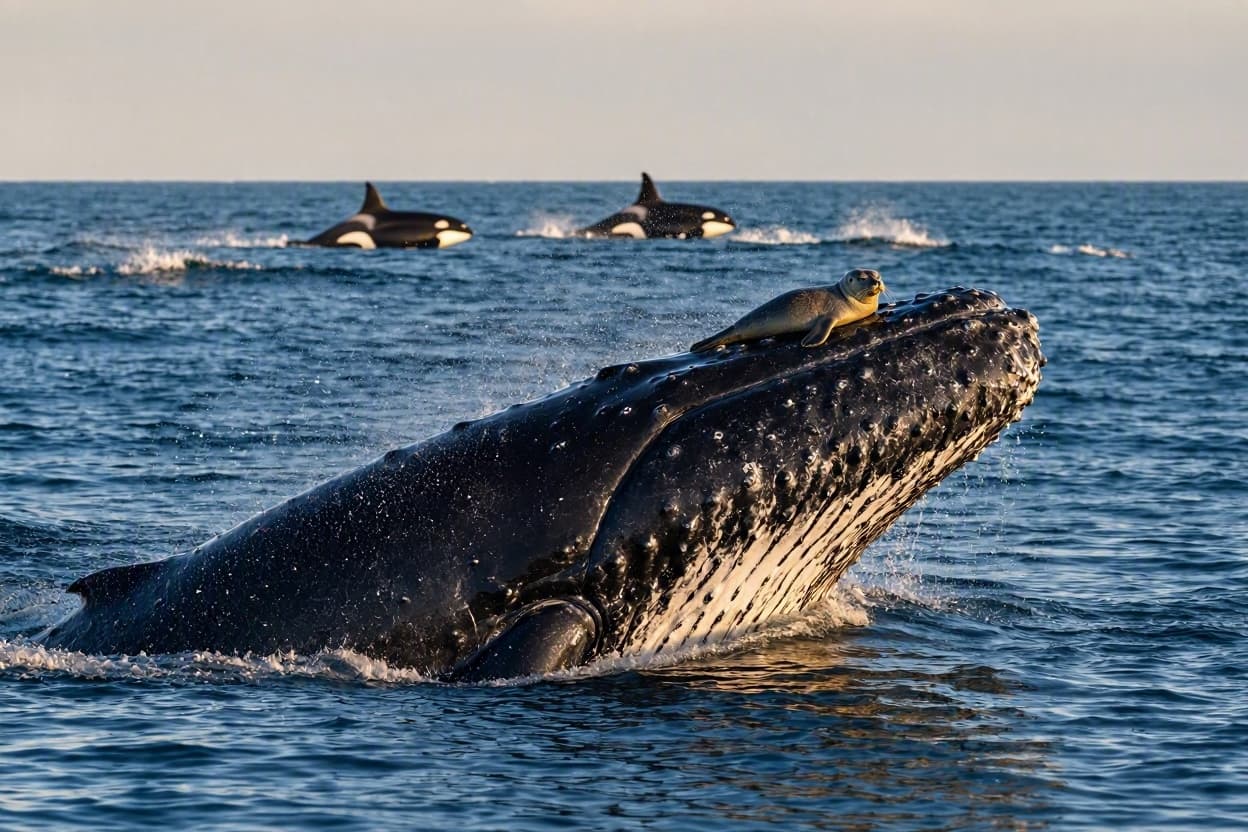
The phenomenon, known as mobbing, involves humpbacks actively disrupting orca attacks. Researchers have recorded instances where humpbacks rush toward the scene of an orca hunt, emitting loud calls and using their massive bodies to block the predators. In some cases, they have been seen lifting seals, sea lions, and even ocean sunfish out of the water, placing them on their heads or chests to keep them safe from the pursuing killers.
What makes this behavior particularly puzzling is the lack of direct benefit to the humpbacks. The animals they save are not kin, nor do they offer any food or resource in return. In fact, intervening in an orca hunt carries risks, as orcas are formidable predators themselves. This apparent selflessness challenges the traditional view that animal behavior is driven solely by self-interest or genetic preservation.
Scientists have proposed several theories to explain this altruism. One suggestion is that humpbacks have a generalized response to the distress calls of other mammals, triggering a protective instinct. Another theory posits that mobbing orcas is a learned behavior that originally evolved to protect humpback calves, but has since been applied more broadly. Regardless of the origin, the consistency of the behavior suggests it is deeply ingrained.
Observations of these rescues have increased in recent years, thanks to better monitoring technology and citizen science reports. Videos of humpbacks shielding gray whale calves in the Arctic have gone viral, capturing the public’s imagination. These moments highlight the intelligence and emotional capacity of cetaceans, fostering a deeper connection between humans and marine life.
The ecological implications are also significant. By interfering with orca hunts, humpbacks may influence the population dynamics of both predators and prey. This complex interaction adds a layer of stability to the marine ecosystem, preventing any single species from dominating. It demonstrates the intricate balance of life in the ocean, where cooperation and conflict coexist.
Despite extensive study, the exact motivation remains elusive. Is it empathy? Is it instinct? Or is it something else entirely? The mystery invites humility, reminding us that nature holds secrets we have yet to unravel. The humpback’s actions serve as a powerful reminder of the complexity of animal consciousness.
The altruistic behavior of humpback whales in saving other species from orcas remains a fascinating enigma. It underscores the depth of marine intelligence and the unexpected bonds that can form in the wild, challenging our understanding of survival and cooperation.
AI Image Disclaimer: Any images used in conjunction with this article are AI-generated conceptualizations meant to illustrate the themes of media and justice.
Sources: National Geographic, Marine Mammal Science, BBC Earth, NOAA Fisheries
Published by Banx Network. This article is part of the Banx decentralized media programme, powered by the BXE token on the XRP Ledger.