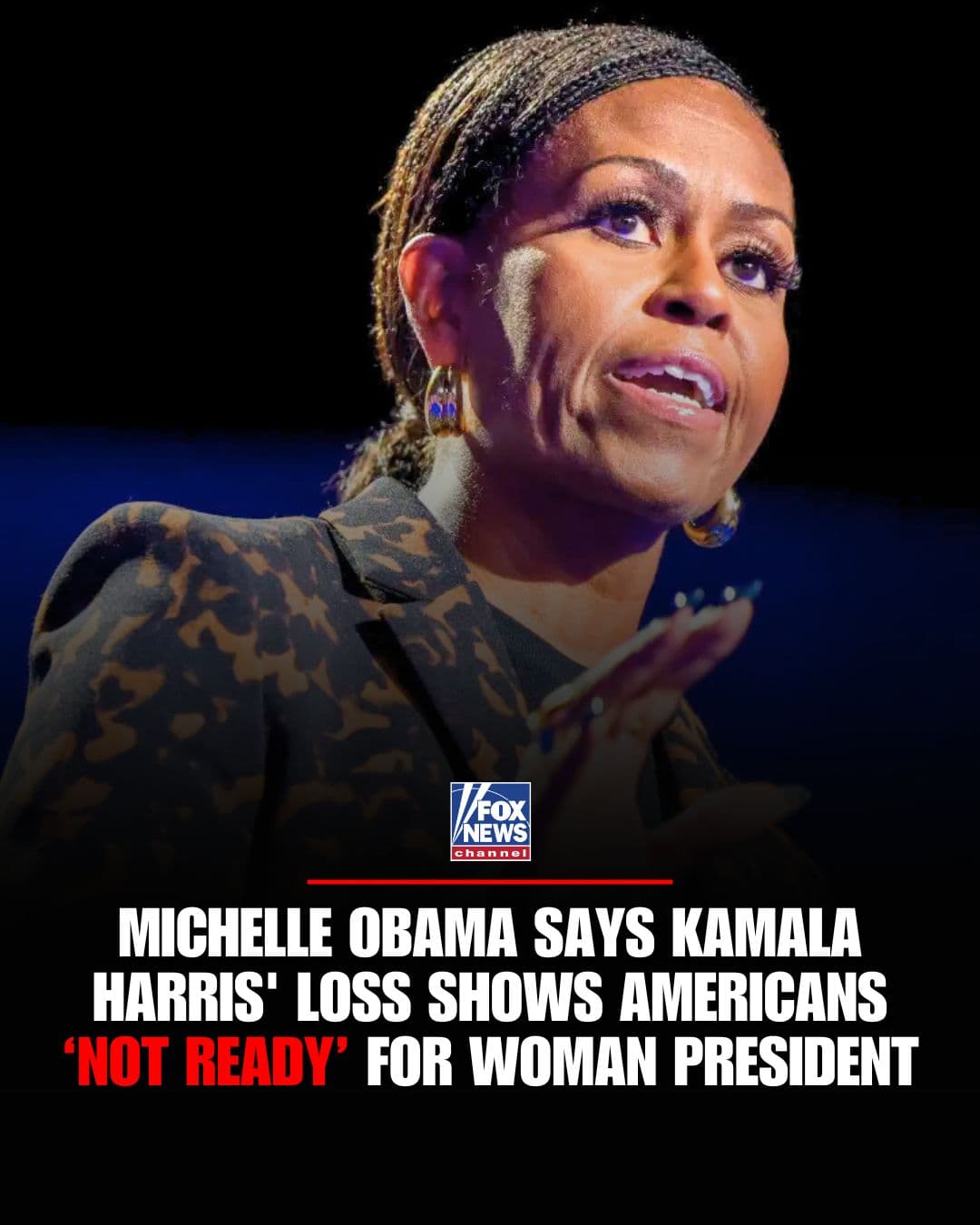
A recent headline sparked intense national discussion after former First Lady Michelle Obama sharply criticized what she sees as America’s ongoing struggle with gender bias. Responding to Kamala Harris’ defeat in the 2024 presidential race, she suggested that the loss exposed a deeper issue: the country may still not be ready to elect a woman to the highest office.
Her statement comes at a time when the U.S. has made historic advances—record numbers of women in Congress, growing female leadership in business, and rising visibility in public life. Yet the presidency remains an uncrossed barrier. Obama’s comments suggest that despite progress, cultural attitudes continue to slow the pace of change.
Simple Facts Attached to the Debate
Multiple polls in recent years show Americans say they are ready for a woman president, but voting patterns often tell another story.
Kamala Harris’ campaign, although highly funded and historically significant, struggled with approval gaps tied to both gender and racial perceptions.
Global comparison: Over 70 nations have already elected female heads of state or government—meaning the U.S. lags behind in this milestone of representation.
Gender bias studies reveal that women leaders are judged more harshly on tone, appearance, and likability relative to men.
Historic precedent: The U.S. has consistently elected male presidents for over 240 years despite numerous viable female candidates.
Obama’s frustration mirrors that of many who believe that capability and competence are no longer the issue—perception is. Critics argue that voters should focus on policies and performance rather than gender stereotypes that have long influenced political outcomes.
Her message isn’t just about one election; it’s about a system still shaped by expectations created decades ago. Whether one agrees with her or not, her remarks reignited a national conversation: What will it take for America to break the final political glass ceiling? And more importantly—when?
Published by Banx Network. This article is part of the Banx decentralized media programme, powered by the BXE token on the XRP Ledger.