

Key Highlights
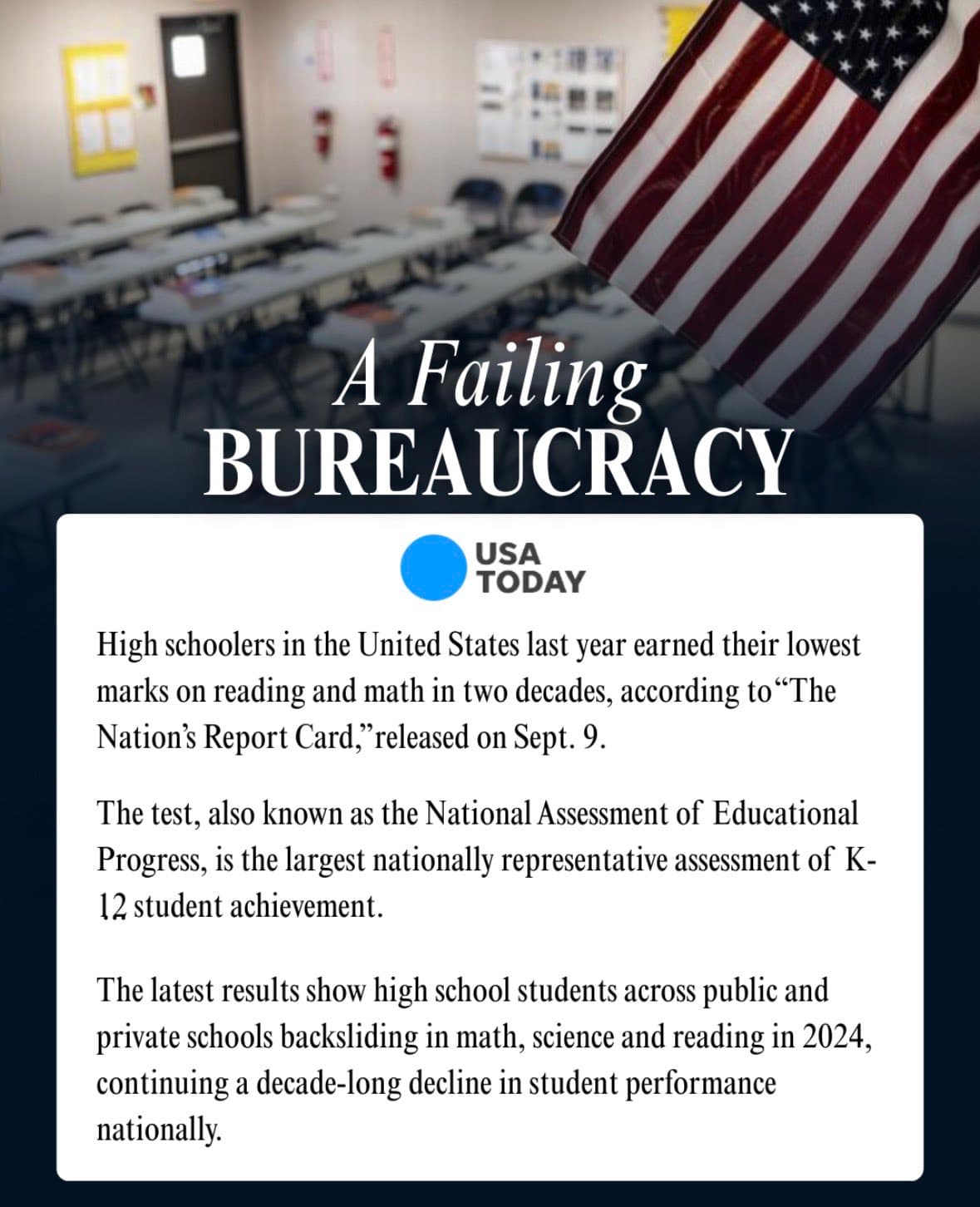
- Declining Scores:U.S. students face the lowest reading and math scores in two decades.
- Bureaucratic Challenges:Administrative layers hinder effective education delivery.
- Presidential Reforms:New initiatives aim to streamline federal education programs.
The U.S. education system is at a critical juncture, as highlighted by a recent report from the U.S. Department of Labor. For over a decade, the system has been failing its students, with national assessments revealing the lowest reading and math scores in 20 years. This alarming trend has sparked renewed discussions about the effectiveness of educational policies and the bureaucratic structures that govern them.
The Problem: Bureaucracy Over Students
For years, educators, parents, and experts have voiced concerns about the growing bureaucracy within the Department of Education. Instead of prioritizing the needs of students and teachers, resources have been consumed by administrative tasks and slow-moving federal procedures. Consequently, students have been left with inadequate support and limited access to effective learning tools. The recent data underscores this issue, showing that high school students are not underperforming due to a lack of talent, but rather due to inefficient leadership and an educational framework that fails to adapt to the demands of a rapidly changing world.
POTUS Steps In: Reform Over Red Tape
In light of these troubling statistics, the President has announced a series of reforms aimed at streamlining federal education programs. The objective is clear: eliminate unnecessary bureaucracy, enhance accountability, and equip students with the skills necessary for success in the modern workforce. These reforms are designed to modernize federal education pathways, improve coordination among schools, states, and federal agencies, and prioritize skill development that aligns with future job markets. Furthermore, the initiative seeks to ensure that funding is directed where it is most needed—into classrooms rather than administrative overhead.
This shift in focus is not merely about improving test scores; it represents a broader commitment to rebuilding a pipeline of capable young Americans who are prepared to lead, innovate, and compete on a global scale. The urgency of these reforms cannot be overstated, as America faces the risk of producing a generation ill-equipped to navigate the technological, economic, and industrial transformations of the future.
A Turning Point for the Future
As the nation grapples with these challenges, it is evident that education serves as the engine of national success. The reforms announced by the President are a crucial spark needed to reignite this engine. The message is unequivocal: the bureaucratic structures that have hindered progress must be dismantled, and immediate action is required to restore education to its rightful place as a launchpad for opportunity and growth.
With renewed oversight, a focused approach, and streamlined programs, the goal is to ensure that every student has access to the resources and support necessary to thrive in an increasingly competitive world. The time for change is now, and the future of America's education system hangs in the balance.
Published by Banx Network. This article is part of the Banx decentralized media programme, powered by the BXE token on the XRP Ledger.




