

Key Highlights
- New AI Fighter:The X-BAT is designed for total autonomy in combat.
- Vertical Takeoff:This jet can operate without GPS or constant communication.
- Combat Readiness:Expected to be fully operational by 2029.
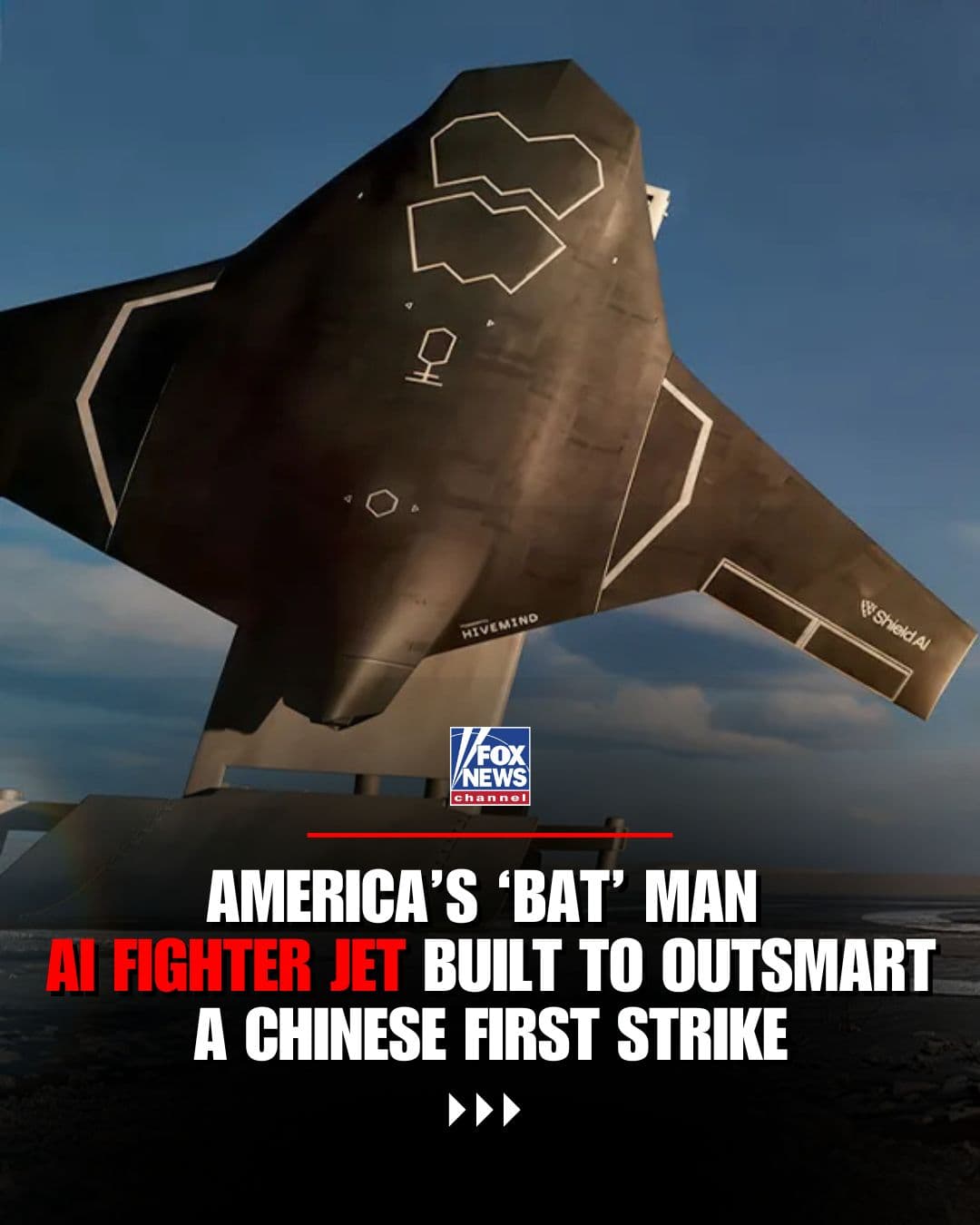
In a bold leap toward the future of air combat, a San Diego defense company has unveiled the X-BAT, an advanced AI-powered fighter jet designed to outthink and outmaneuver any opponent — even during a first-strike scenario. Dubbed America’s “BAT MAN,” this futuristic aircraft combines artificial intelligence, vertical takeoff capability, and next-generation stealth to redefine aerial warfare by 2029.
Unlike traditional fighter jets, the X-BAT (Experimental Battlefield Autonomous Technology) is engineered for total autonomy. It can take off vertically, fly thousands of miles, and engage in combat operations without relying on GPS or constant communication links — a design meant to keep it functional even when networks are jammed or under attack. This makes it one of the few aircraft that could survive the opening moments of a global conflict.
Developers say the jet’s AI brain uses real-time situational learning, adapting to enemy tactics in milliseconds. It can coordinate drone swarms, analyze radar data, and execute precision maneuvers without pilot intervention. Essentially, the X-BAT isn’t just a fighter — it’s a thinking machine built for survival in an age of electronic warfare.
Its design emphasizes speed, agility, and stealth, borrowing from the best elements of the F-35 and the F-22 while integrating quantum-grade processors that allow near-instant decision-making. With the ability to operate independently of human pilots, it’s expected to reduce risk in high-threat missions while multiplying combat efficiency.
Experts suggest the X-BAT could outsmart rival defense systems, particularly those of China, marking a new era in the U.S. military’s technological edge. If development continues as planned, the jet will enter full combat readiness by 2029, positioning it as the first fully autonomous fighter capable of complex, real-world missions.
While the idea of an AI fighter commanding the skies raises questions about autonomy, ethics, and control, the innovation signals a massive transformation in global defense — where intelligence, not just firepower, defines dominance. The X-BAT program represents the beginning of an arms race driven not by humans, but by algorithms and machine intuition.
Published by Banx Network. This article is part of the Banx decentralized media programme, powered by the BXE token on the XRP Ledger.




