
For decades, fusion energy has occupied a unique place in scientific imagination, often described as humanity's attempt to recreate the power of the stars here on Earth. What once seemed distant is now moving steadily toward practical application as the United States advances plans for commercial fusion energy.
The U.S. Department of Energy has finalized a national strategy aimed at accelerating the commercialization of fusion technology. The initiative seeks to strengthen cooperation among government agencies, private companies, academic institutions, and national laboratories.
Fusion differs fundamentally from conventional nuclear power. Rather than splitting atoms, fusion combines atomic nuclei under extreme conditions, potentially producing large amounts of energy with minimal long-lived radioactive waste and no direct carbon emissions during operation.
Federal officials say the strategy is designed to support technological development, regulatory clarity, workforce training, and infrastructure expansion. Policymakers hope these measures will help transform experimental breakthroughs into commercially viable energy systems.
Private investment in fusion technology has grown rapidly in recent years. Numerous startup companies, alongside established energy firms, are pursuing different approaches to achieving sustained fusion reactions capable of generating electricity.
Scientists caution that significant engineering challenges remain. Maintaining stable fusion reactions, managing extreme temperatures, and developing economically competitive systems continue to require extensive research and testing.
Even so, recent scientific milestones have strengthened optimism throughout the energy sector. Successful experiments demonstrating net energy gains have renewed confidence that practical fusion power may eventually become achievable.
Energy analysts suggest that commercial fusion, if successfully developed, could complement existing renewable energy sources and contribute to long-term decarbonization goals. However, widespread deployment is still expected to take years or decades.
As the United States refines its strategy, researchers and industry leaders alike view the coming years as an important period in determining whether fusion can fulfill its long-anticipated promise.
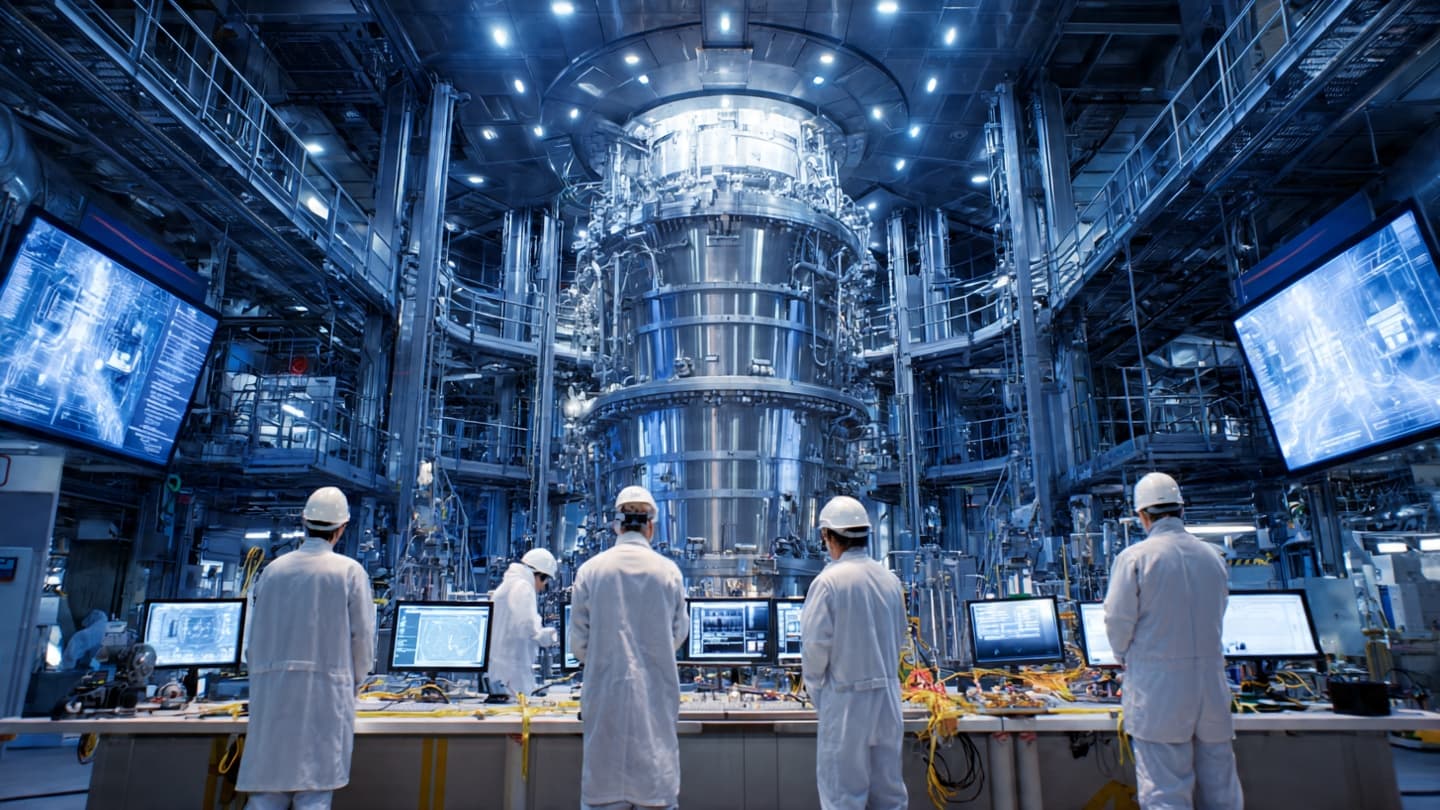
AI Image Disclaimer: Illustrative images used in this report were generated with artificial intelligence and do not represent actual facilities or events.
Sources: U.S. Department of Energy, American Institute of Physics, Reuters
Published by Banx Network. This article is part of the Banx decentralized media programme, powered by the BXE token on the XRP Ledger.



