The Potomac River moves with quiet persistence past monuments and marshland, its surface reflecting the stone and steel of a capital city accustomed to ceremony. Barges pass, joggers trace the waterfront, and the current carries more than water—it carries the residue of a region’s growth. When that current is disrupted, the disturbance is not only environmental but civic.
This week, Donald Trump approved a federal emergency declaration in response to a significant sewage spill affecting portions of the Potomac. The declaration unlocks federal resources and coordination, allowing agencies to assist local and state authorities in containment, cleanup, and public health monitoring.
Officials reported that the spill released untreated wastewater into sections of the river, raising concerns about water quality, ecological impact, and potential risks to nearby communities. Health advisories were issued in affected areas, cautioning against recreational contact with the water while assessments continue. Environmental teams have been deployed to monitor contamination levels and evaluate downstream effects.
The Potomac is more than a geographic feature; it is a boundary and a bridge, threading through Washington, Maryland, and Virginia. Its condition touches municipal systems and federal oversight alike. In emergencies involving waterways that cross jurisdictions, response requires coordination across layers of government—local utilities, state environmental departments, and federal agencies tasked with disaster relief.
The emergency declaration signals recognition that the scale of the spill exceeds routine remediation. It authorizes logistical support and, where necessary, financial assistance for recovery efforts. Infrastructure, often unnoticed until it fails, now stands at the center of attention—aging pipes, overburdened systems, and the strain of weather or mechanical breakdown.
Communities along the river wait for clarity: how far the contamination has spread, how long advisories will remain in place, and what measures may prevent recurrence. Environmental advocates point to the event as another reminder of the fragility of water systems in densely populated corridors.
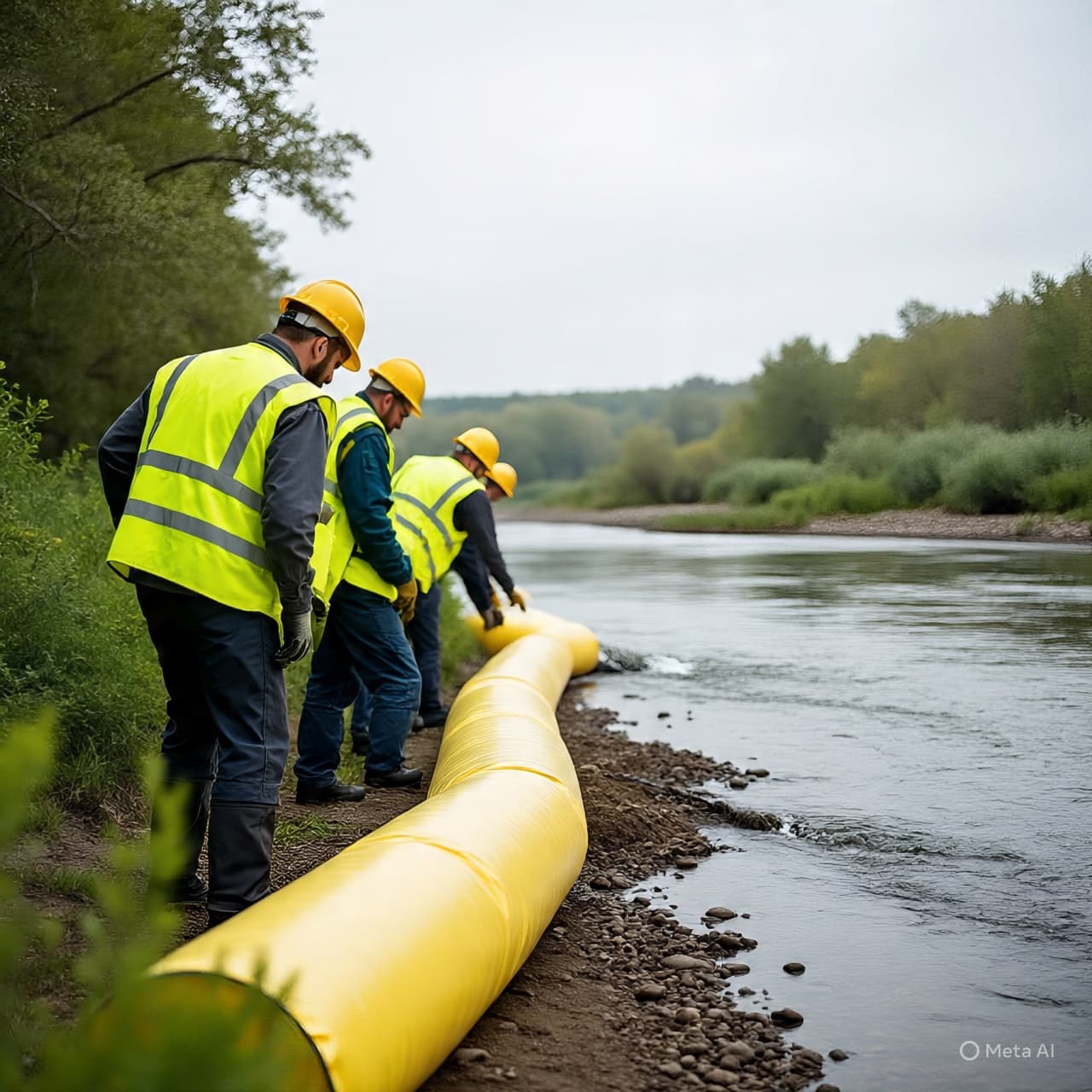
As crews work along the riverbanks, booms and monitoring equipment mark the places where human systems met their limits. The Potomac continues to flow, steady and indifferent, yet altered for a time by what entered its current. Declarations can mobilize resources; restoration, however, unfolds more slowly—measured in testing results, repaired infrastructure, and the gradual return of trust in the water that runs past the nation’s capital.
Visuals are AI-generated and serve as conceptual representations.
Sources Associated Press Reuters U.S. Environmental Protection Agency
Published by Banx Network. This article is part of the Banx decentralized media programme, powered by the BXE token on the XRP Ledger.