
Key Highlights
- Recent border inspections have revealed hidden smuggling operations.
- Law enforcement officials are adapting to sophisticated smuggling techniques.
- The ongoing battle at checkpoints highlights the tension between legitimate trade and illegal activities.
Border checkpoints serve as critical gateways where two worlds converge under the watchful eye of law enforcement. The constant flow of trucks and cargo creates a seemingly routine process, yet beneath this surface lies a complex battle against an underground network intent on evading detection. Recent inspections have brought to light the hidden dynamics of this shadow commerce, revealing the lengths to which smugglers will go to bypass legal scrutiny.
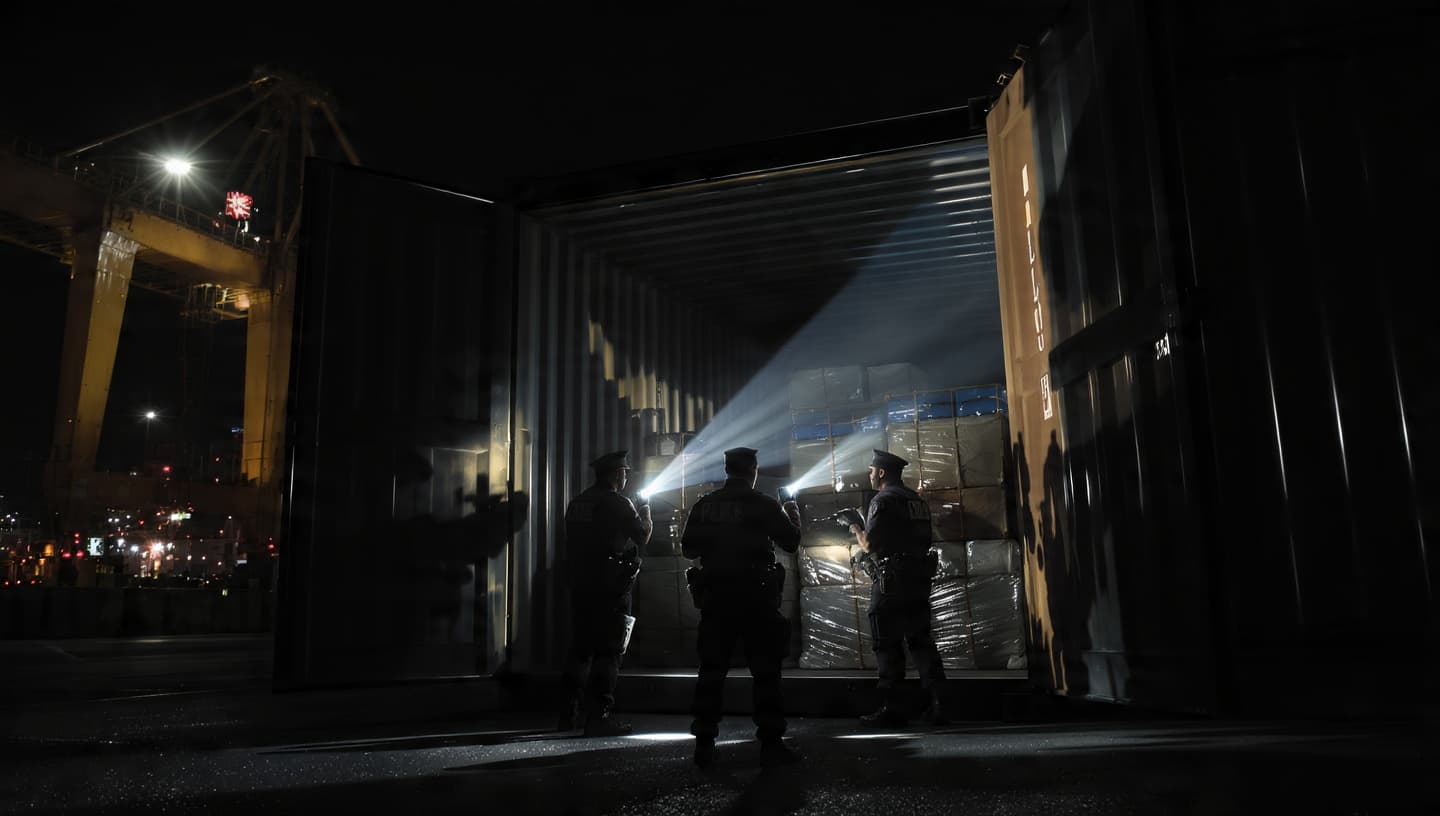
In a recent operation, border police units conducted a thorough inspection of commercial vehicles, employing their experience and intuition to identify potential threats. What began as a routine check quickly escalated into a significant enforcement action when officers discovered a trove of contraband concealed within legitimate shipments. This discovery not only disrupted the flow of goods but also underscored the ongoing challenges faced by law enforcement in maintaining border security.
The atmosphere at the checkpoint shifted dramatically as officers began the meticulous process of unloading and cataloging the illicit cargo. The sounds of tearing cardboard and the clicking of cameras documenting evidence filled the air, creating a stark contrast to the usual hum of commerce. For the drivers, witnessing the police seal on their vehicles marked the end of a risky endeavor, one that relied on remaining undetected amidst the chaos of legitimate trade.
Security officials have noted that modern smuggling operations have become increasingly sophisticated, necessitating a corresponding evolution in detection methods. It is no longer sufficient to simply inspect the contents of a truck; officers must now analyze structural inconsistencies, weight discrepancies, and behavioral cues from drivers. Each successful interception provides valuable data that enhances the effectiveness of future inspections, creating a continuous feedback loop in the fight against smuggling.
As the night wore on, the secure warehouse filled with sorted boxes, each tagged as evidence. The sheer volume of the haul highlighted the lucrative nature of shadow commerce, which consistently tests the limits of national sovereignty. The administrative process that follows these seizures transforms physical evidence into legal documentation, paving the way for potential prosecutions and further investigations.
Throughout these operations, border police maintain a calm demeanor, viewing their actions as essential to the maintenance of economic and legal boundaries. The checkpoints must remain operational, balancing the need for security with the demands of legitimate trade. Even as contraband is processed, the sound of idling trucks at the perimeter gate serves as a reminder of the ongoing flow of commerce that sustains the region.
By dawn, the initial processing of the seized vehicle was complete, leaving the inspection bay clean and ready for the next wave of traffic. The gates reopened, and the rhythm of the border resumed, a continuous cycle of vigilance and commerce under the lightening sky. This ongoing struggle between law enforcement and smuggling networks illustrates the complexities of maintaining security while facilitating trade in a globalized economy.
Published by Banx Network. This article is part of the Banx decentralized media programme, powered by the BXE token on the XRP Ledger.



