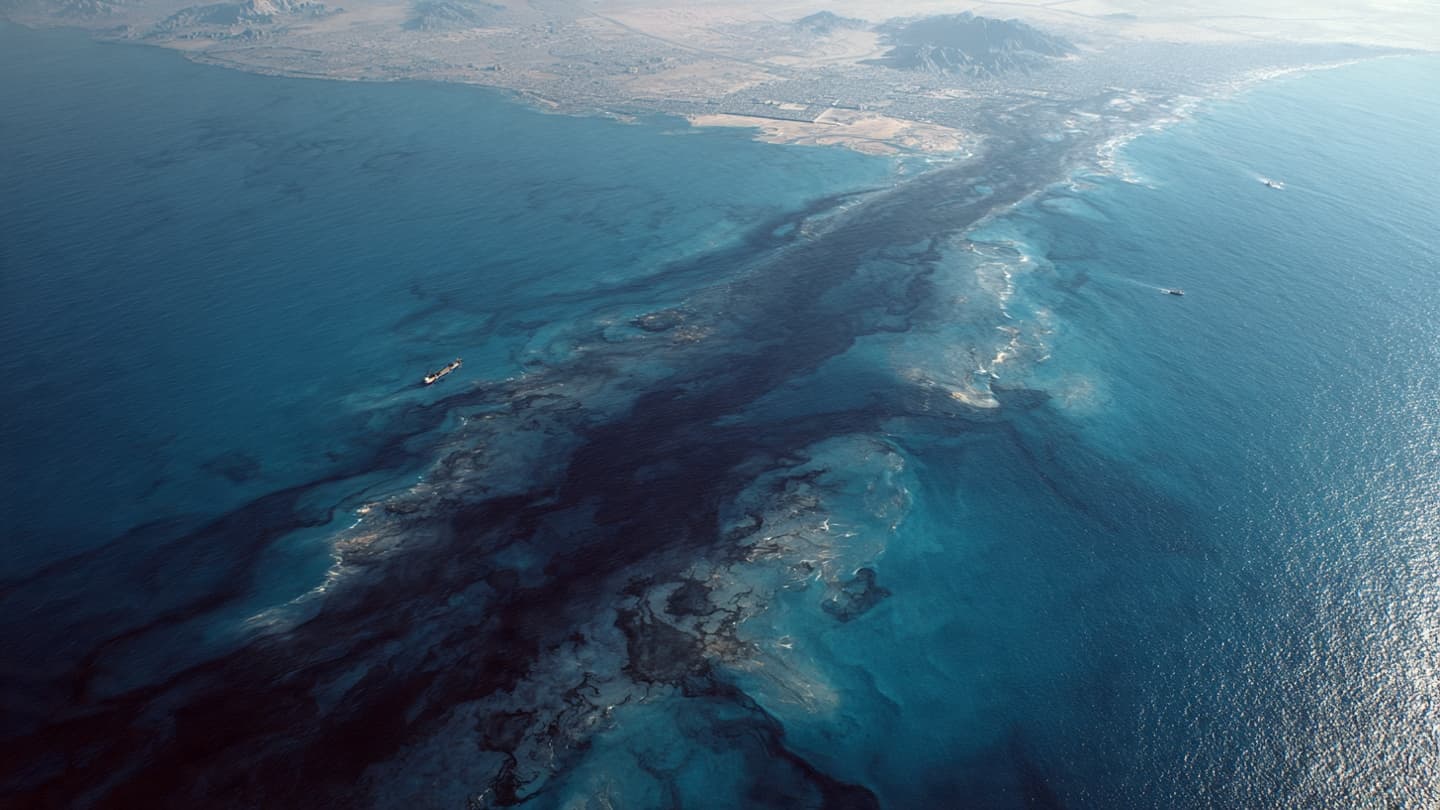
From the ground, the Persian Gulf can hide the scale of an environmental event. A dark patch of water may appear small from a beach, while currents are carrying petroleum much farther beyond the visible shoreline. Satellite images have provided a different perspective, revealing the widening footprint of oil pollution near several Iranian islands.
The United Nations University reported that satellite observations identified oil pollution near Qeshm and Hengam islands off southern Iran. The same monitoring also documented a separate major pollution event near Oman's Hallaniyat Islands, showing how Earth-observation technology can provide rapid information during maritime environmental emergencies.
Reuters reported that the slick near Qeshm included heavy fuel oil, with a lighter trail stretching around 160 kilometers. Another slick was identified near Sirri Island, close to Iranian offshore oil and gas facilities.
The satellite view is important because oil does not remain in a fixed shape. Wind and currents can stretch a slick into long trails, separate portions of contamination, or move petroleum toward coastlines. A sequence of satellite images can therefore reveal a changing environmental footprint rather than a single isolated patch.
Qeshm has already experienced the most visible stage of the pollution. Reuters verified footage showing oil reaching beaches on the island. Once petroleum reaches sand, rocks, or vegetation, cleanup becomes more complicated because the material can remain trapped within coastal environments.
The suspected source of the Qeshm slick is the damaged Minoan Pioneer, a Liberia-flagged bulk carrier. Satellite and maritime analysis has linked the pollution to the vessel, which was damaged earlier in August. Reuters reported that delays in salvage and cleanup permissions have complicated efforts to address the spill.
The environmental significance extends beyond the visible slick. Qeshm and nearby islands contain coastal habitats that support marine organisms and human activities. Oil exposure can affect shallow-water ecosystems, while contamination of beaches may interfere with fishing, tourism, and other uses of the shoreline.
The second slick near Sirri Island adds another dimension to the monitoring effort. Its location near offshore energy infrastructure makes continued observation important because the movement of petroleum can change as weather and sea conditions evolve. Satellite imagery allows researchers to watch these changes over a wide area.
The broader Gulf region is experiencing another major oil spill near Oman, involving the tanker Caroline Bezengi. The spill is separate from the Iranian incidents, but satellite observations show that multiple significant petroleum events are occurring in nearby waters at the same time.
For environmental researchers, the coming days will bring more data about the movement and persistence of the oil. For communities along Iran's southern coast, the issue is already tangible where petroleum has reached the shore. Above the Gulf, satellites continue watching the changing patterns; below them, cleanup and assessment efforts determine what those patterns mean for the coastline.
Image Disclaimer
The accompanying images are AI-generated conceptual visuals designed to illustrate satellite monitoring and marine oil pollution; they are not authentic photographs of the reported incidents.
Sources
Reuters United Nations University Associated Press Euronews
Published by Banx Network. This article is part of the Banx decentralized media programme, powered by the BXE token on the XRP Ledger.