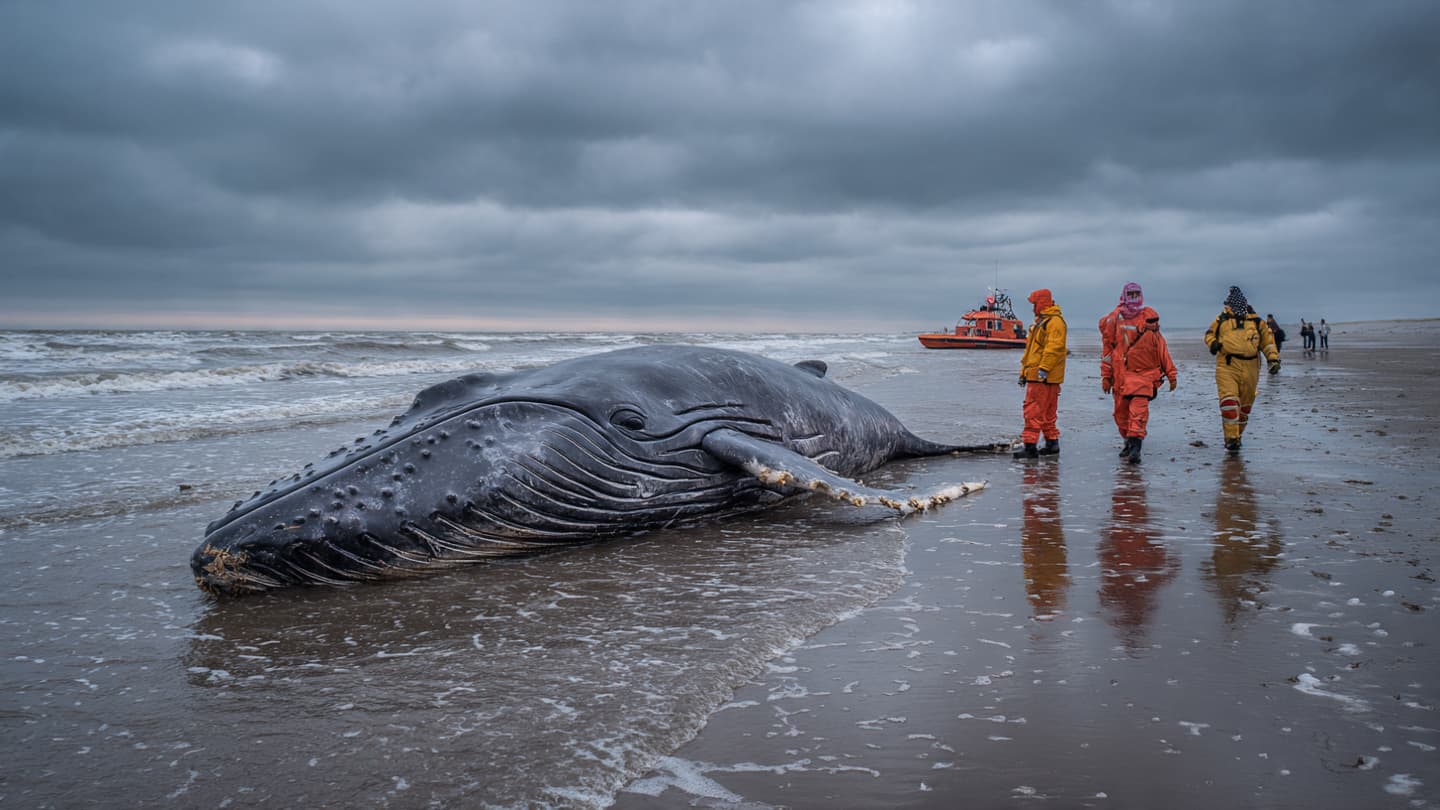
The sea often delivers moments of wonder to coastal communities — sightings of migrating whales, changing tides, and the distant movement of marine life across cold horizons. Yet it can also bring scenes marked by sadness and unanswered questions. Off the Danish coast, a stranded humpback whale known publicly as “Timmy” was found dead after drawing attention from residents and wildlife observers.
The whale had reportedly become stranded in shallow waters, prompting concern among marine rescue groups and local authorities. Efforts were made to monitor the animal’s condition, although difficult environmental circumstances complicated possible intervention attempts.
Marine biologists say whale strandings occur for many reasons, including illness, injury, navigational confusion, environmental stress, and changing ocean conditions. In some cases, healthy whales can become trapped in shallow coastal areas while following prey or migrating through unfamiliar waters.
Humpback whales are among the most recognizable marine mammals due to their enormous size, acrobatic behavior, and long migratory journeys across oceans. Conservation efforts over recent decades have helped some humpback populations recover after severe declines caused by commercial whaling in the twentieth century.
Still, marine ecosystems continue facing multiple pressures connected to pollution, ship traffic, fishing activity, underwater noise, and climate change. Researchers increasingly study how warming oceans and shifting food availability may affect whale migration patterns and behavior.
The whale’s death attracted public attention partly because stranded marine animals often create strong emotional reactions among coastal communities. Residents gathered along parts of the shoreline to observe rescue efforts and follow updates from environmental organizations.
Experts stress that determining the precise cause of death may require detailed examination by veterinary and marine science specialists. Necropsies performed on stranded whales can provide valuable scientific information about disease, injuries, environmental toxins, and overall ecosystem health.
Denmark, like many coastal nations, participates in broader international monitoring programs aimed at tracking marine mammal populations and unusual stranding events. Such efforts help researchers better understand the changing conditions affecting ocean biodiversity.
For those who watched Timmy’s story unfold, the image of the whale resting near the shore may linger as both a moment of sorrow and a reminder of humanity’s complex relationship with the natural world that exists just beyond the coastline.
AI Image Disclaimer: Some marine-life visuals associated with this article may include AI-generated editorial illustrations for educational presentation.
Sources Verified: BBC, Reuters, Danish Broadcasting Corporation, Associated Press, Marine conservation reports
Published by Banx Network. This article is part of the Banx decentralized media programme, powered by the BXE token on the XRP Ledger.