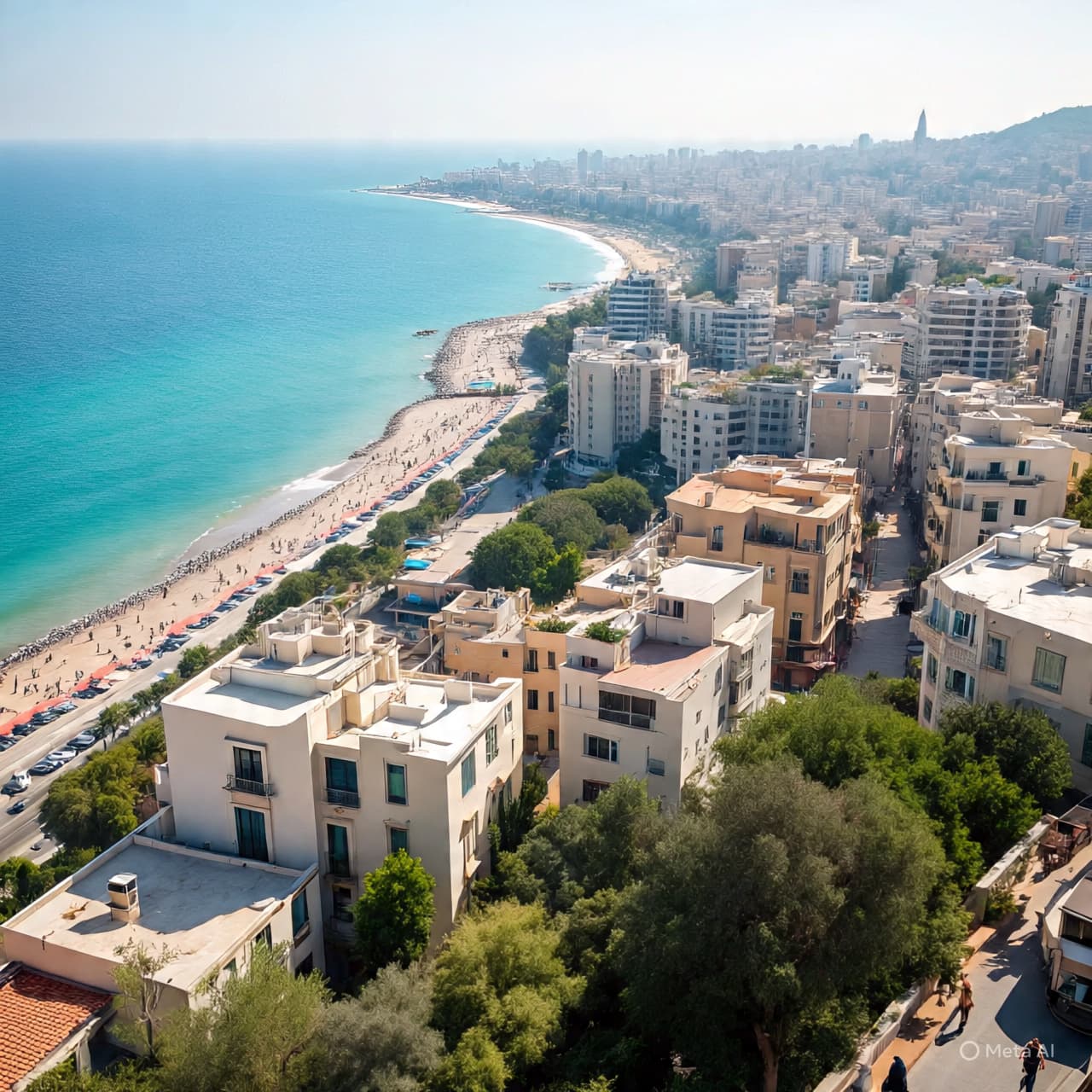
Morning in Beirut often begins with a pale light drifting over the Mediterranean, touching the city’s balconies and distant hills before the streets fully awaken. The air carries familiar rhythms—cars moving along the Corniche, shopkeepers lifting metal shutters, fishermen casting quiet lines into the water. Yet beneath the ordinary movement of the day lies a persistent awareness that Lebanon’s future often turns on delicate balances.
Today, many observers say the country stands close to such a balance point.
For decades, Hezbollah has been one of the most powerful forces in Lebanon’s political and military landscape. Formed during the turbulent years of the Lebanese civil war and strengthened through support from Iran, the organization grew from a militant movement into a political actor that holds seats in parliament and influence across large parts of the state. Its armed wing, however, has remained outside the direct control of the Lebanese government, creating a long-standing tension between the authority of the state and the autonomy of the group.
That tension has become more visible in recent years. The war between Israel and Hezbollah that intensified through 2023 and 2024 left thousands dead and caused widespread destruction across southern Lebanon. Economic damage from the fighting has been estimated in the billions of dollars, deepening a crisis that had already pushed the country’s financial system close to collapse.
Against this backdrop, Lebanon’s political leadership has begun to speak more openly about restoring state authority over weapons within its borders. In 2025 the Lebanese government approved a roadmap known as the “Homeland Shield” plan, a phased strategy designed to centralize all arms under the authority of the Lebanese Armed Forces and gradually dismantle militia arsenals across the country.
The plan begins in the south of the country, an area historically shaped by conflict along the Israeli border, and would eventually extend nationwide. Though presented as a broad national policy rather than a direct challenge to any one group, its implications inevitably reach Hezbollah, which maintains the most powerful non-state military force in Lebanon.
Yet the path forward is far from straightforward.
Hezbollah remains deeply rooted within Lebanon’s political and social fabric, particularly among parts of the Shiite community where its narrative of “resistance” against Israel continues to resonate. Surveys and political analyses suggest that many citizens simultaneously support the Lebanese Army while also viewing Hezbollah as a guarantor of security in a volatile region.
This dual reality reflects Lebanon’s complex political landscape, shaped by sectarian power-sharing agreements and a history of external influence. Political alliances—some dating back decades—have often blurred the line between state institutions and powerful factions operating alongside them.
Recent regional developments have added new urgency to the debate. The broader confrontation involving Iran, Israel, and the United States has again drawn attention to Lebanon’s southern frontier, where Hezbollah maintains strong influence. Israeli airstrikes and cross-border exchanges have displaced tens of thousands of civilians and raised fears that Lebanon could be pulled more deeply into regional conflict.
Lebanese leaders have repeatedly urged restraint. Prime Minister Nawaf Salam has warned that the country should not be drawn into wider regional “adventures,” emphasizing the need to preserve stability and protect Lebanon’s fragile recovery.
At the same time, international actors—particularly the United States and European governments—have encouraged Lebanon’s authorities to strengthen the role of the national army and reduce the influence of armed groups outside state control.
For many Lebanese citizens, the question is not simply one of security but of national renewal. Years of economic hardship, political paralysis, and emigration have left the country searching for a path toward recovery. Reasserting the authority of the state, some argue, may be essential to rebuilding confidence among investors, international partners, and the public itself.
Still, Lebanon’s history suggests that such transitions rarely occur quickly. Power in the country often shifts gradually, negotiated across political blocs and communities whose interests must coexist within a fragile balance.
For now, Lebanon appears to be approaching what many describe as a tipping point—an uncertain moment when the relationship between the state and Hezbollah may begin to evolve.
Whether that shift comes through political reform, regional diplomacy, or the slow passage of time remains unclear. What is certain is that the decision will shape not only Lebanon’s future but also the broader landscape of the Middle East.
Lebanese officials say discussions on security reforms and political restructuring are continuing as regional tensions remain high. The government maintains that preserving national unity and avoiding a wider conflict remain its immediate priorities.
AI Image Disclaimer
Visuals are AI-generated and serve as conceptual representations.
Sources (Media Names Only) Reuters Associated Press Al-Monitor The Guardian Bloomberg
Published by Banx Network. This article is part of the Banx decentralized media programme, powered by the BXE token on the XRP Ledger.