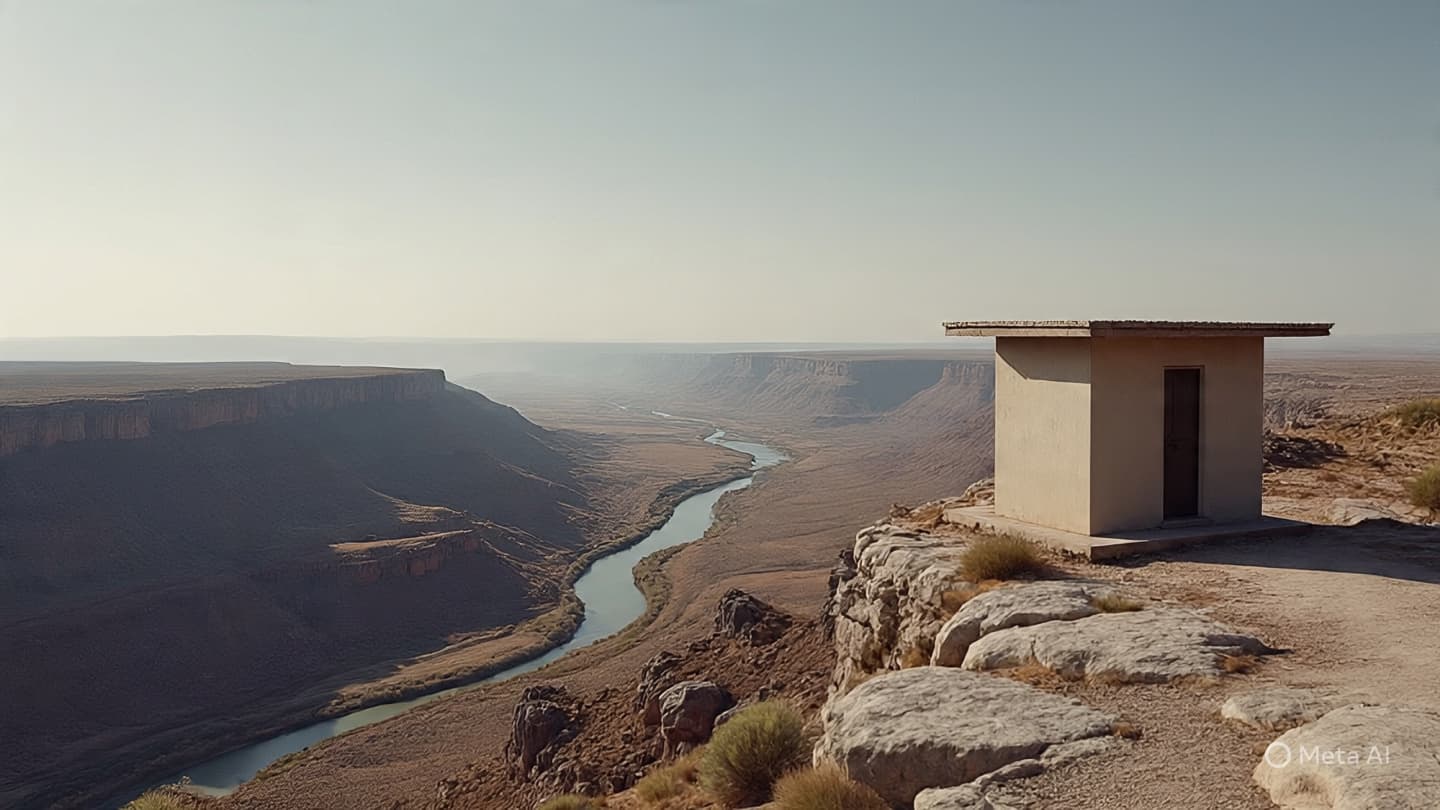
Along the southern edge of Lebanon, the landscape often carries a quiet ambiguity. Hills roll into one another beneath a sky that can feel both open and watchful, and the boundary lines—drawn on maps with precision—seem softer when traced across fields, roads, and villages. It is a place where stillness can settle deeply, yet never entirely without awareness.
In recent days, that stillness has been disturbed not by a single event, but by the slow reemergence of accusation and response. Israel has stated that militants from Hezbollah have violated an existing ceasefire, pointing to movements and activities that, in its view, cross the fragile boundaries agreed upon in quieter moments.
The language of ceasefire is, by nature, delicate. It suggests an absence of open confrontation, yet rarely guarantees the presence of full calm. Instead, it often becomes a space of interpretation, where actions are measured, contested, and sometimes redefined. In this context, what constitutes a violation can carry different meanings depending on perspective, timing, and the details that are visible—or obscured—on the ground.
Israeli officials have indicated that their assessment is based on observed activity near the border, though specifics remain limited in public statements. On the other side, Hezbollah has not always responded in equal clarity, reflecting a pattern in which silence or indirect messaging becomes part of the broader exchange.
For communities living along the frontier, these developments unfold in a more immediate register. The presence of a ceasefire does not erase memory, nor does it fully quiet the underlying tensions that shape daily life. Instead, it creates a kind of suspended space—one where normal routines continue, but with an awareness that stability rests on conditions that can shift.
International observers, including those connected to monitoring mechanisms, often play a role in assessing such situations, though their work is shaped by access, timing, and the complexity of verifying events in real time. In regions like southern Lebanon, where terrain and proximity intertwine, clarity can arrive slowly, assembled through reports, observations, and careful interpretation.
Beyond the immediate exchange of claims, the broader context remains present. The relationship between Israel and Hezbollah has long been defined by cycles—periods of tension, moments of escalation, intervals of relative quiet. Each phase carries its own language, its own signals, and its own uncertainties.
As the current situation develops, there is no immediate indication of large-scale escalation, yet the tone has shifted. The accusation itself becomes part of the landscape, shaping expectations and influencing how each side moves forward. Ceasefires, after all, are not static agreements; they are living arrangements, sustained through continual negotiation, whether spoken or implied.
As evening settles once more over the border region, the hills return to their familiar outlines. Yet within that familiarity, there is a renewed attentiveness—a sense that the balance, though still holding, is being quietly tested. Israeli authorities maintain that Hezbollah has breached ceasefire terms, while the situation continues to be monitored amid the absence of a confirmed broader escalation.
In such places, the line between calm and tension is rarely marked by a single moment. It is traced instead through a series of small shifts—subtle, cumulative—each one leaving its imprint on the fragile space where peace, however provisional, resides.
AI Image Disclaimer Illustrations were created using AI tools and are not real photographs.
Sources Reuters Associated Press BBC News Al Jazeera The Guardian
Published by Banx Network. This article is part of the Banx decentralized media programme, powered by the BXE token on the XRP Ledger.

.jpg&w=3840&q=75 "US Declares Drought Disaster for Parts of Puerto Rico as Dry Conditions Persist")