
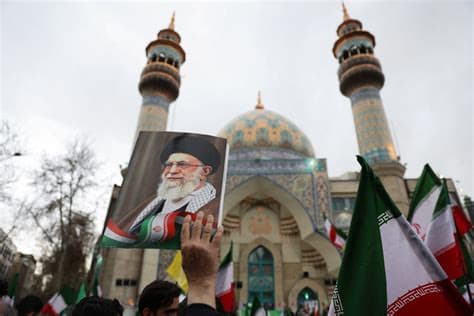
Key Highlights
- Event:Ali Khamenei reportedly killed during a meeting.
- Context:Incident linked to Iran's crackdown on protests.
- Implications:Leadership transition and security control in question.
The Iranian leadership is facing a significant upheaval following reports that Supreme Leader Ali Khamenei was killed during a meeting of senior officials involved in the government's crackdown on protests. This incident, which allegedly occurred during a critical internal security discussion, has sparked widespread speculation about the circumstances surrounding his death and its implications for Iran's political landscape.
The timing of Khamenei's death is particularly notable, as it coincides with an intensified crackdown on dissent within the country. In recent days, Iranian authorities have ramped up detentions of protestors and imposed internet disruptions, suggesting a heightened state of alert among security forces. The Iranian state media has yet to confirm the reports, but the absence of official denial has fueled further speculation about the authenticity of the claims.
In the wake of Khamenei's reported death, questions arise regarding the future of Iran's leadership. Khamenei, who has held power since 1989, was a pivotal figure in shaping Iran's domestic and foreign policies. His death could lead to a power vacuum, with potential struggles for control among various factions within the government and military. Observers are particularly concerned about who will assume command over the security agencies, which have been instrumental in suppressing dissent.
The implications of this incident extend beyond Iran's borders, as regional and international stakeholders closely monitor the situation. The potential for instability in Iran could have significant repercussions for neighboring countries and global geopolitical dynamics. Analysts are particularly interested in how foreign powers, especially Israel and the United States, might respond to this development, given the historical tensions surrounding Iran's leadership.
As the situation unfolds, the Iranian public remains in a state of uncertainty. The government's response to Khamenei's death will likely influence public sentiment and could either quell or exacerbate ongoing protests. The leadership transition process will be critical in determining the future direction of Iran, especially in terms of its approach to dissent and civil liberties.
In summary, the reported death of Ali Khamenei during a meeting related to the crackdown on protests marks a pivotal moment in Iran's political history. The coming days and weeks will be crucial in shaping the country's leadership and its response to internal and external pressures.
Published by Banx Network. This article is part of the Banx decentralized media programme, powered by the BXE token on the XRP Ledger.



