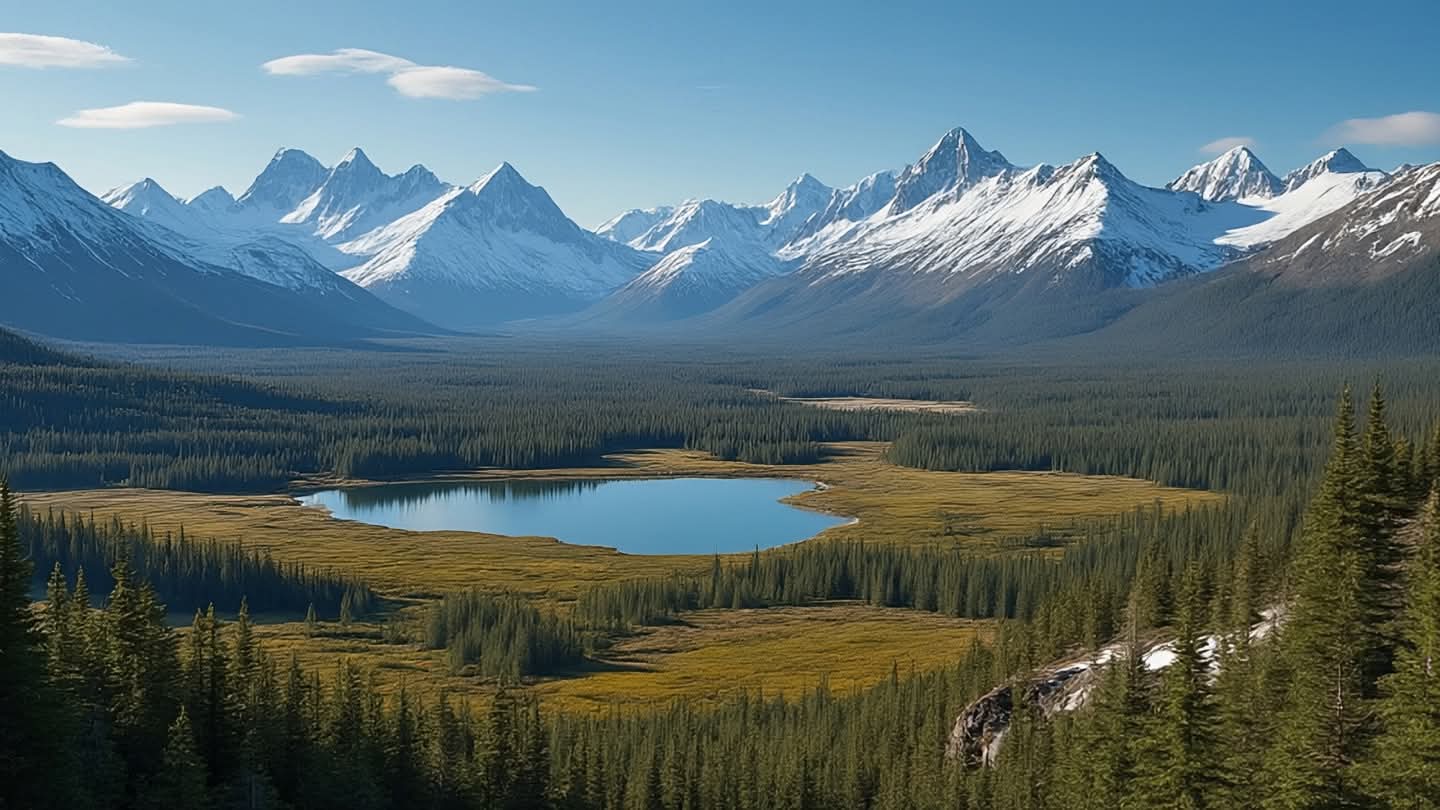
In the vast, rugged expanse of Alaska, where the landscape is as unforgiving as it is beautiful, political contests often mirror the terrain: complex, layered, and requiring endurance. The recent U.S. Senate primary election in the state has concluded with a result that underscores the unique nature of Alaskan democracy. Under the state’s ranked-choice voting system, incumbent Senator Lisa Murkowski secured her place in the general election, navigating a field of challengers that included former Trump-endorsed candidate Kelly Tshibaka. The outcome reflects not just a victory for one candidate, but a testament to the evolving electoral mechanisms designed to foster broader consensus.
The primary process in Alaska is distinct from most other states. Instead of separate party primaries, all candidates appear on a single ballot, and the top four advance to the general election, regardless of party affiliation. This "top-four" system, combined with ranked-choice voting in the final round, encourages candidates to appeal to a wider spectrum of voters rather than just their partisan base. For Murkowski, a moderate Republican who has often charted an independent course, this system has proven advantageous, allowing her to consolidate support from independents and moderates who might otherwise be sidelined in a traditional closed primary.
Kelly Tshibaka, who ran on a platform aligned with former President Donald Trump, garnered significant support from the conservative wing of the party. Her campaign highlighted issues such as border security, energy independence, and fiscal conservatism. While she performed strongly in the initial rounds of vote counting, the ranked-choice mechanism allowed Murkowski to pull ahead as lower-tier candidates were eliminated and their votes redistributed. This dynamic illustrates how ranked-choice voting can favor candidates with broad, if not always intense, support across the political spectrum.
For voters, the experience of ranking candidates can be both empowering and confusing. Some appreciate the ability to express nuanced preferences, while others find the process cumbersome. However, proponents argue that it reduces negative campaigning, as candidates must seek second- and third-choice rankings from opponents’ supporters. In Alaska, this has led to a political culture that, while still partisan, is perhaps more civil and collaborative than in other parts of the country.
The general election will feature Murkowski, Tshibaka, and potentially other candidates who advanced from the primary. The race is expected to be closely watched nationally, as it serves as a bellwether for the effectiveness of ranked-choice voting and the future of the Republican Party in Alaska. Murkowski’s ability to survive a strong challenge from within her own party suggests that her brand of pragmatic conservatism still holds sway among a significant portion of the electorate.
Beyond the personalities, the election highlights issues central to Alaskan life: resource development, indigenous rights, and federal-state relations. Both candidates addressed these topics, though with different emphases. Murkowski focused on her legislative record and ability to deliver for the state, while Tshibaka emphasized change and alignment with national conservative movements. The debate between continuity and change is a timeless theme in politics, and in Alaska, it is played out against a backdrop of immense natural wealth and environmental sensitivity.
As the state prepares for the general election, the focus shifts to mobilization and outreach. With a relatively small population spread over a vast area, getting out the vote requires logistical ingenuity and community engagement. Political parties and independent groups are already gearing up for what promises to be a spirited contest. The outcome will not only determine who represents Alaska in Washington but also offer insights into the viability of electoral reforms elsewhere.
For now, the results stand as a confirmation of Lisa Murkowski’s resilience and the distinctive character of Alaskan politics. In a state known for its independence and self-reliance, the electorate has chosen a path that balances tradition with innovation. As the leaves begin to turn and the days grow shorter, the political season in Alaska continues, promising further engagement and dialogue in the months ahead.
AI Image Disclaimer: The visual elements in this article are AI-generated illustrations depicting Alaskan landscapes and abstract representations of voting ballots, designed to reflect the themes of election and geography without showing real candidates or proprietary data.
Sources: Ballotpedia, Alaska Public Media, Associated Press, The Hill
Published by Banx Network. This article is part of the Banx decentralized media programme, powered by the BXE token on the XRP Ledger.