
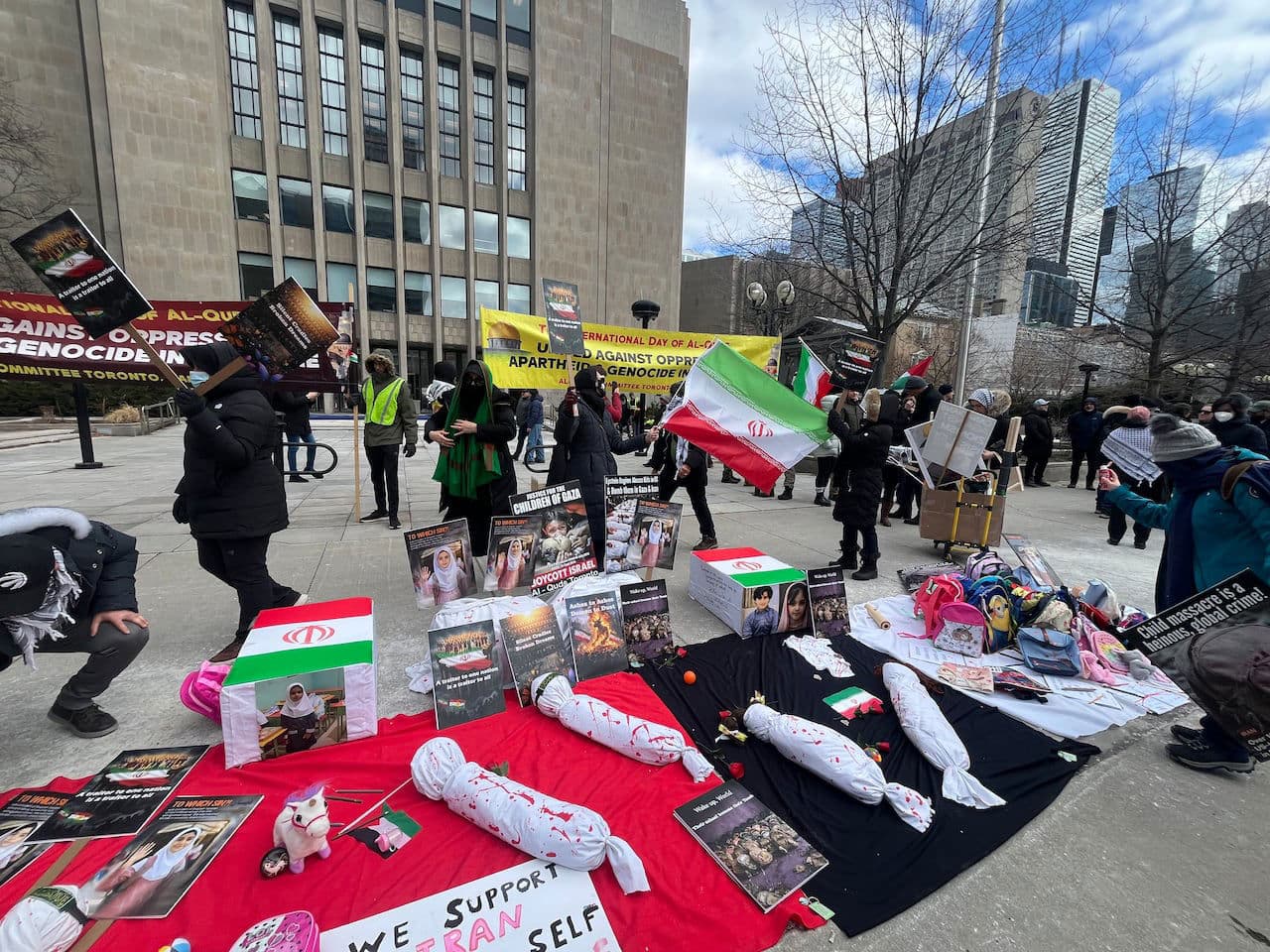
Key Highlights
- Court Ruling:Ontario Premier Doug Ford's request for an injunction to stop the Al-Quds Day protest was denied.
- Protest Attendance:Organizers and supporters gathered to advocate for Palestinian rights and raise awareness about humanitarian issues.
- Free Speech:The court's decision emphasizes the importance of free speech and peaceful assembly in Canada.
The Al-Quds Day protest in Canada proceeded without interruption following a court's dismissal of Premier Doug Ford's request for an injunction to halt the event. This ruling has significant implications for both the rights to protest and the ongoing discourse surrounding the Palestinian cause. The event, which took place in Toronto, attracted a diverse group of participants who gathered to express their solidarity with the Palestinian people.
Protest organizers and supporters reiterated their commitment to advocating for Palestinian rights and raising awareness about the humanitarian issues in the region. The court's decision reflects a prioritization of free speech rights, as officials recognized the importance of allowing peaceful assembly. This ruling comes at a time when discussions about the limits of free expression and the right to protest are increasingly relevant in Canadian society.
Premier Ford's government expressed concerns about potential violence and public safety related to the protest, a sentiment echoed by law enforcement agencies. However, the court determined that the risk did not warrant suppressing the demonstrators' right to assemble. The judge's ruling emphasized that the right to protest is a fundamental aspect of democratic society, and that concerns about safety must be balanced against the rights of individuals to express their views.
The protest unfolds amid heightened tensions and varying perspectives on the Israeli-Palestinian conflict. Participants aimed to draw attention to the situation in Palestine, emphasizing solidarity with those facing oppression. Many speakers at the event highlighted the humanitarian crises affecting Palestinians and called for greater international awareness and action.
As the demonstration progresses, it serves as a reminder of the complex dynamics surrounding advocacy and protest in today's society. The outcome of this event may influence future discussions regarding governmental responses to protests and the balance between safety and free expression. The court's ruling not only impacts this specific protest but also sets a precedent for how similar events may be handled in the future.
In conclusion, the Al-Quds Day protest stands as a significant event in the ongoing dialogue about free speech, public safety, and the rights of marginalized communities. As activists continue to advocate for change, the implications of this court ruling will likely resonate in future protests and discussions about civil liberties in Canada.
Published by Banx Network. This article is part of the Banx decentralized media programme, powered by the BXE token on the XRP Ledger.



