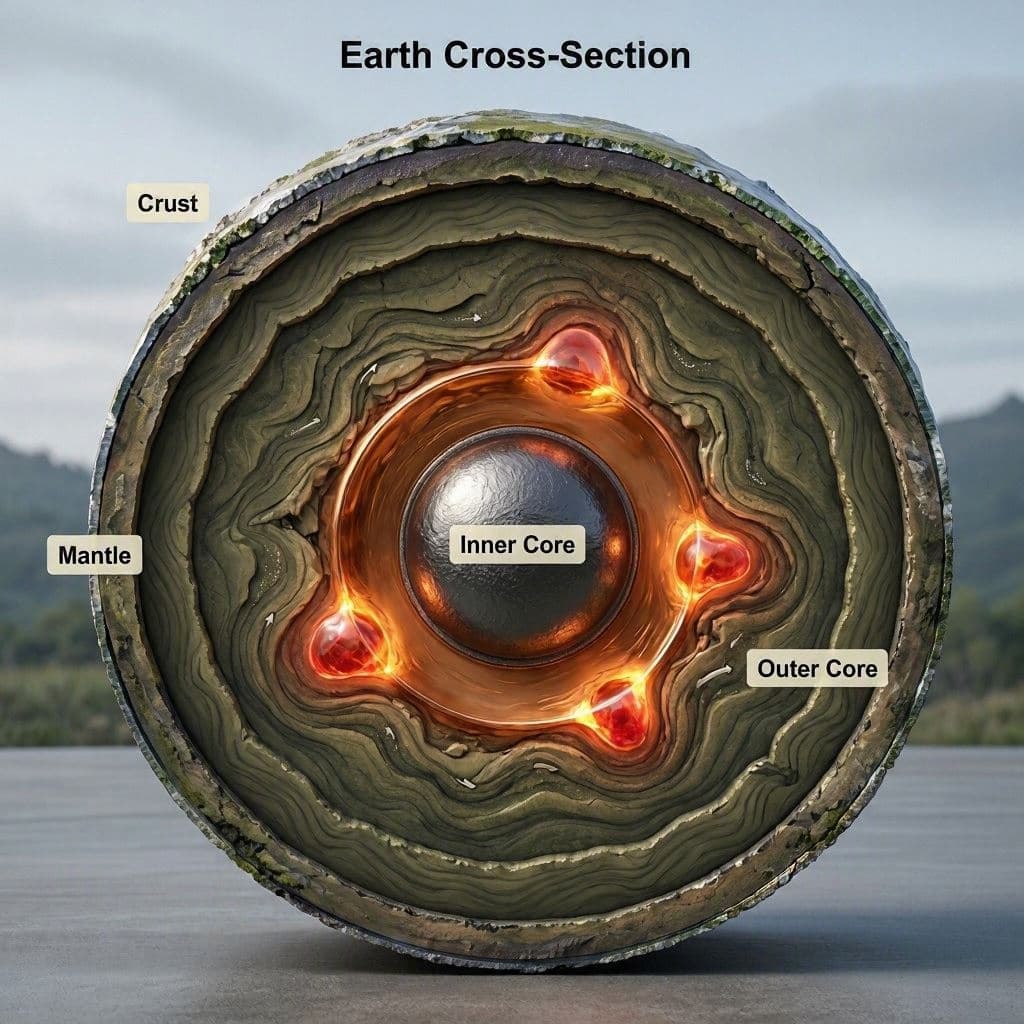
Beneath our feet, thousands of miles down, lies a frontier as mysterious and unexplored as the depths of outer space. The boundary between Earth’s solid mantle and its liquid outer core is a place of extreme pressure and heat, where seismic waves ripple through materials that behave in ways we are only beginning to understand. Recently, scientists have used the power of artificial intelligence to peer into this subterranean darkness, identifying six unusual structures that challenge our existing models of the planet’s interior.
These structures, known as ultra-low velocity zones (ULVZs), are regions where seismic waves slow down significantly, indicating differences in composition or temperature. For decades, detecting these small-scale features has been difficult due to the limitations of traditional seismic imaging. However, the application of deep learning algorithms has allowed researchers to sift through vast amounts of data with unprecedented precision, revealing details that were previously hidden in the noise.
The use of AI in geophysics represents a paradigm shift in how we study the Earth. By training neural networks on synthetic data and real-world observations, scientists can identify patterns that human analysts might miss. This approach not only accelerates the discovery process but also enhances the accuracy of geological maps, providing a clearer picture of the dynamic processes occurring deep within the planet.
The six newly identified structures vary in size and location, scattered across the core-mantle boundary. Some appear to be associated with large low-shear-velocity provinces (LLSVPs), massive blobs of dense material that sit atop the core. Others seem to be isolated features, possibly remnants of ancient subducted tectonic plates or pockets of partial melt. Each structure offers a clue to the thermal and chemical evolution of the Earth.
Understanding these zones is crucial for comprehending plate tectonics, volcanic activity, and the generation of Earth’s magnetic field. The core-mantle boundary acts as a thermal engine, driving convection currents that shape the surface over millions of years. By mapping these anomalies, scientists can better predict how heat is transferred from the core to the mantle, influencing everything from mountain building to climate change.
The findings also highlight the collaborative nature of modern science, where computer science and geology intersect. This interdisciplinary approach opens new avenues for research, encouraging experts from different fields to work together. It demonstrates that technology can serve as a powerful lens, allowing us to see the invisible forces that govern our world.
As more data becomes available from global seismic networks, the resolution of these images will continue to improve. Future studies may reveal even more structures, refining our understanding of Earth’s deep interior. For now, the discovery of these six zones stands as a testament to the potential of AI to unlock the secrets of our planet.
The identification of six unusual structures at the core-mantle boundary marks a significant advancement in geophysics. By leveraging deep learning, scientists have gained new insights into Earth’s internal dynamics, paving the way for a deeper understanding of the forces that shape our planet.
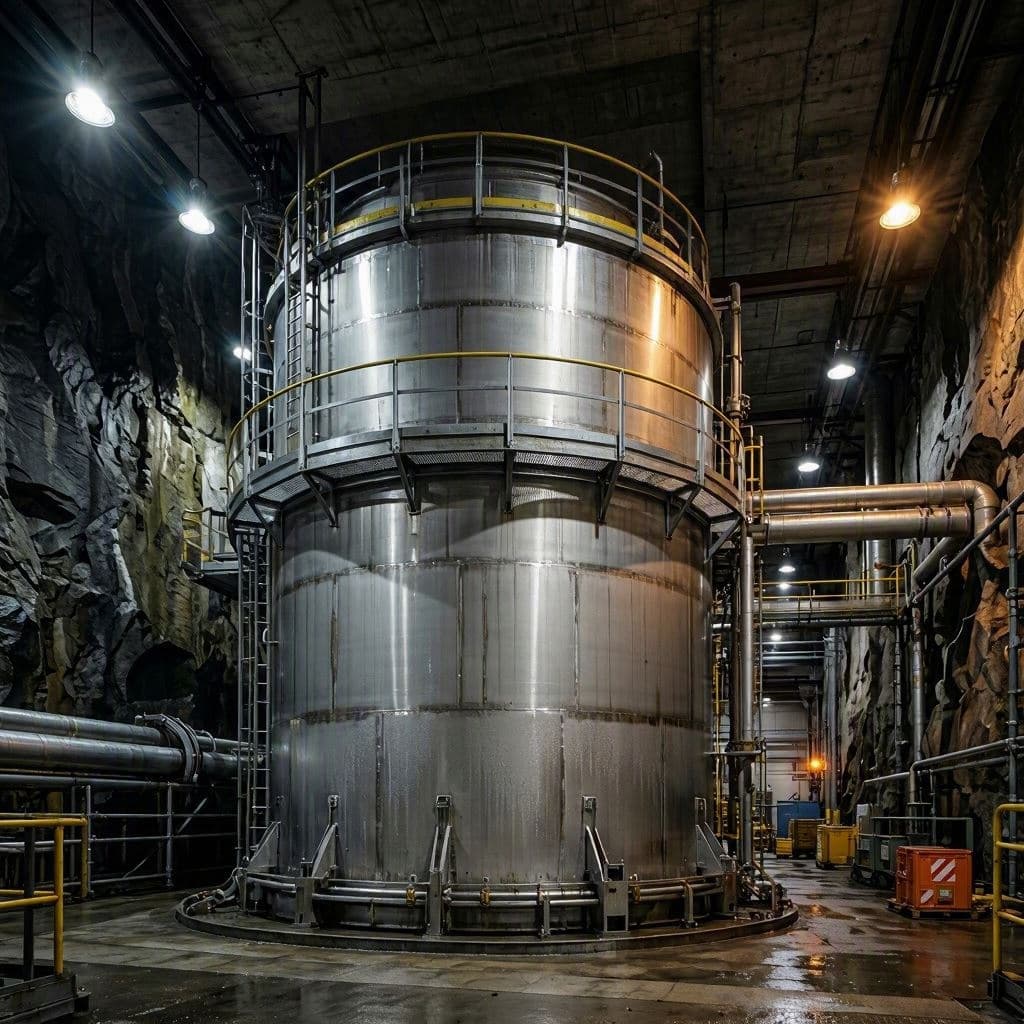
AI Image Disclaimer: The visual representations accompanying this article are generated by artificial intelligence to illustrate the concept of Earth’s interior.
Sources: Nature Geoscience University of California, Berkeley Science Daily
Published by Banx Network. This article is part of the Banx decentralized media programme, powered by the BXE token on the XRP Ledger.