Chinese artificial intelligence models are taking on a visible role in this year’s Spring Festival celebrations, marking a symbolic shift just one year after the market was jolted by the emergence of DeepSeek, a domestic AI contender that challenged established global players.
During the Lunar New Year holiday—China’s most significant annual celebration—AI-generated greetings, virtual hosts, digital calligraphy tools, and chatbot-powered services have become common features across social media and e-commerce platforms. Technology companies are leveraging the festive period to demonstrate advances in generative AI, large language models, and multimodal systems.
The momentum follows the disruption caused last year by DeepSeek, whose competitive large language model drew attention for narrowing the performance gap with leading Western systems. Its rapid rise intensified domestic competition and reinforced Beijing’s push for greater technological self-reliance.
Since then, China’s major technology firms—including Baidu, Alibaba, and Tencent—have accelerated development of proprietary AI models. Many of these tools are now embedded in consumer applications, ranging from search engines and cloud platforms to shopping apps and short-video services.
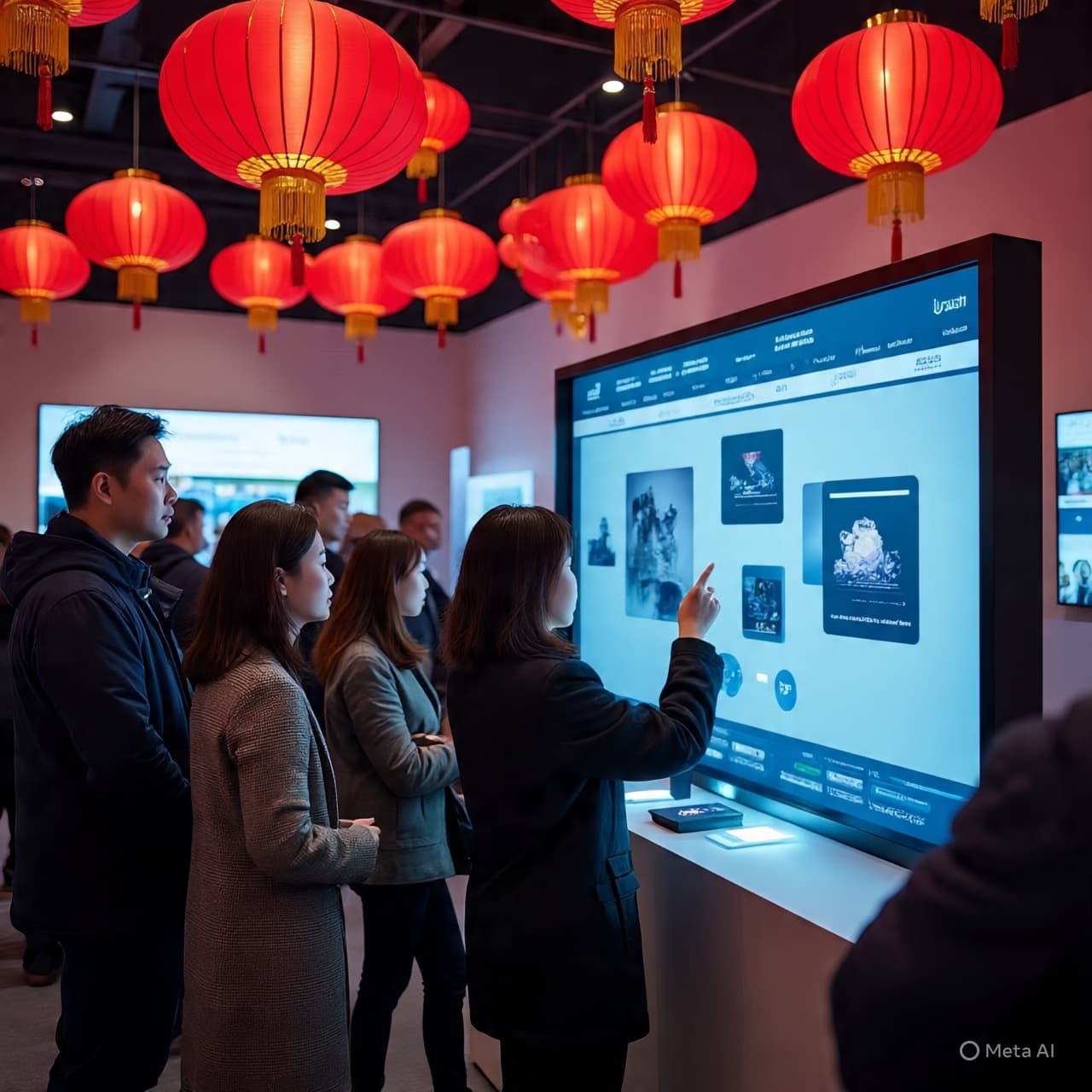
The Spring Festival period offers a unique proving ground. With hundreds of millions of people traveling, shopping, and exchanging greetings, digital traffic surges across platforms. Companies have introduced AI-powered features that generate personalized holiday messages, automate customer service during peak shopping days, and create festive imagery inspired by traditional motifs.
China’s AI expansion is unfolding against a backdrop of heightened global competition and export controls affecting advanced semiconductor access. Policymakers have repeatedly emphasized the importance of building a self-sufficient technology ecosystem. The growing presence of domestically developed AI tools in mainstream holiday culture underscores that strategy.
At the same time, the commercialization of AI remains under scrutiny. Regulators in China continue to shape guidelines governing generative content, data usage, and algorithmic transparency. Companies must balance rapid innovation with compliance in a tightly supervised digital environment.
The broader economic implications are significant. AI development has become a focal point for investment, talent recruitment, and industrial upgrading. By embedding AI into everyday consumer experiences during a culturally important holiday, firms signal confidence in both technological capability and market acceptance.
One year after DeepSeek’s breakthrough moment reshaped expectations, Chinese AI appears more integrated into daily life than ever. As festive lanterns light up city streets and families reconnect across digital platforms, artificial intelligence has quietly become part of the celebration—reflecting how quickly the technology has moved from novelty to normality in China’s digital landscape.
Published by Banx Network. This article is part of the Banx decentralized media programme, powered by the BXE token on the XRP Ledger.