There are journeys that begin long before a rocket ignites. They start in workshops lit by fluorescent patience, in conference rooms where timelines stretch and bend, and in quiet simulations where astronauts rehearse the unknown. The Moon, steady in its orbit, has watched these preparations unfold. And now, after delays that tested resolve but not intention, early March carries a renewed promise.
has confirmed plans to launch Artemis II on March 6, marking the first crewed mission of the Artemis program and the first time in more than fifty years that astronauts will travel beyond low-Earth orbit toward the Moon. Reporting from Reuters, Associated Press, CNN, BBC News, and Space.com outlines how the mission, once postponed due to technical reviews and scheduling adjustments, now stands at the edge of execution.
Artemis II will send four astronauts aboard the Orion spacecraft, lifted by the powerful Space Launch System rocket. Unlike its predecessor, the uncrewed Artemis I, this mission will carry human lives on a sweeping trajectory around the Moon before returning to Earth. The crew will not land, but they will travel thousands of miles beyond the lunar surface, testing life-support systems, navigation, propulsion, and communications in deep space conditions.
Preparation for the March 6 launch has been centered at , where final checks and readiness reviews continue. Engineers have revisited components, assessed software updates, and ensured that both rocket and spacecraft meet strict safety benchmarks. The earlier delays, NASA officials noted in coverage by major outlets, were precautionary — part of a deliberate approach designed to minimize risk.
There is a quiet weight to this mission. Artemis II does more than retrace a path last traveled during the Apollo era; it seeks to reestablish a sustained human presence in lunar orbit as a stepping stone to future landings. NASA’s broader Artemis program envisions astronauts returning to the lunar surface later this decade, alongside international partners and commercial collaborators. In this sense, the March launch is both a culmination and a beginning.
The symbolism is difficult to overlook. When the Orion capsule arcs around the Moon, astronauts will witness Earth as a distant blue sphere — a perspective that once reshaped humanity’s understanding of its place in the cosmos. Yet Artemis II is grounded not in nostalgia but in preparation. Every system tested in orbit informs future missions, including potential voyages toward Mars.
As launch day approaches, teams continue rehearsals, data reviews, and contingency planning. Spaceflight, by nature, allows little room for haste. Weather conditions, final inspections, and readiness confirmations will ultimately determine whether March 6 holds firm. NASA has emphasized that safety remains the guiding principle.
For now, the schedule points to early March. If all proceeds as planned, Artemis II will embark on a journey lasting roughly ten days before splashing down in the Pacific Ocean. The Moon will remain unchanged in the night sky — but the path toward it may feel newly open.
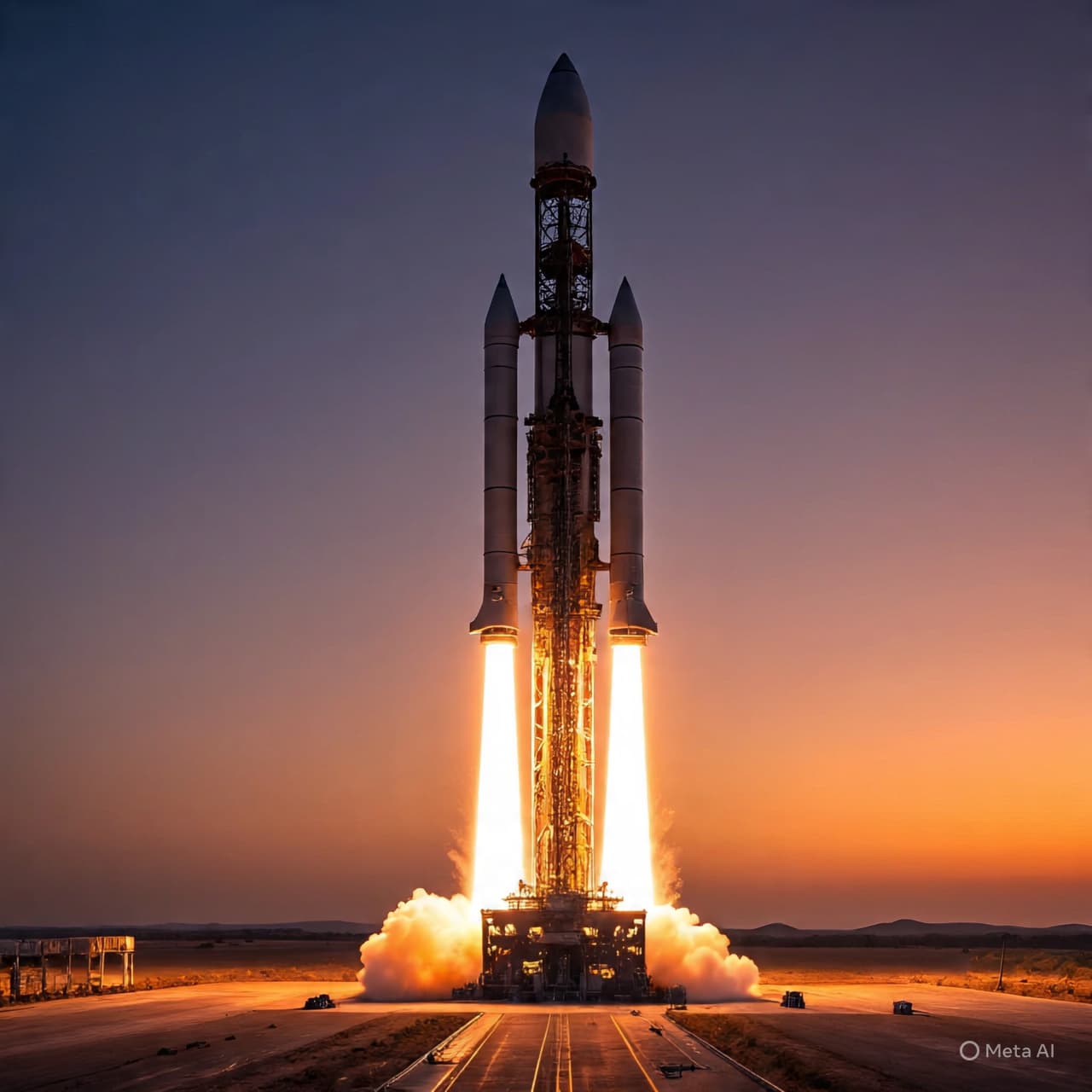
AI Image Disclaimer: Graphics are AI-generated and intended for representation, not reality.
Sources: Reuters Associated Press CNN BBC News Space.com
Published by Banx Network. This article is part of the Banx decentralized media programme, powered by the BXE token on the XRP Ledger.