
Key Highlights
- Israel has conducted strikes on Tehran, targeting key leadership sites.
- Iran is forming an interim governing council amid uncertainty.
- The geopolitical landscape is shifting as retaliatory actions escalate.
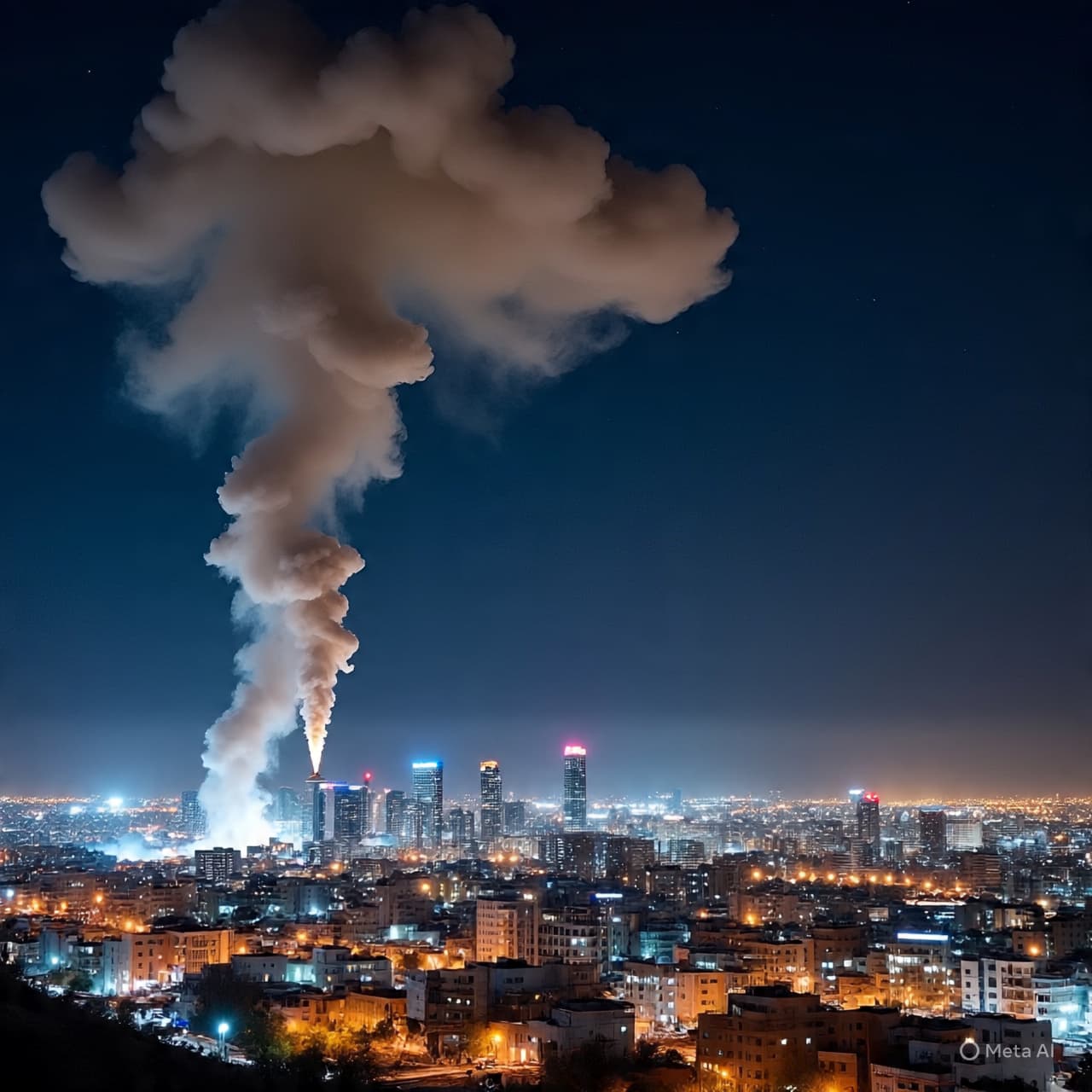
In recent days, the geopolitical landscape of the Middle East has been dramatically altered following Israeli strikes on Tehran. These military actions are part of a broader and escalating conflict involving the United States and Iran, with reports confirming that key sites in the Iranian capital were targeted. The strikes not only aimed at infrastructure but also at the upper echelons of Iran’s leadership, marking a significant escalation in hostilities.
The aftermath of these strikes has led to a critical moment in Iran's political landscape. Officials have announced the formation of a temporary governing council, which includes senior political and judicial figures. This council is expected to assume responsibilities as the country navigates a constitutional transition, a process that has become urgent in light of recent events.
The situation has been further complicated by reports of the death of Supreme Leader Ali Khamenei in the strikes, although initial information regarding his status was contested and rapidly evolving. The potential loss of such a central figure has created a rare moment of internal recalibration within Iran’s political system, raising questions about the future direction of the country.
In response to the strikes, Iranian forces have launched retaliatory missile and drone attacks across the region, targeting Israel, U.S. military bases, and neighboring countries. This pattern of retaliation indicates that the conflict is not merely a series of isolated incidents but rather a broader escalation that threatens to destabilize the region further.
As Iran transitions to an interim leadership structure, the implications of this shift are profound. While the country’s constitutional framework provides a pathway for temporary governance, the selection of a permanent successor is fraught with complexity and uncertainty. In such moments, the existing structure offers continuity, but the direction of governance remains unsettled, leaving many questions unanswered.
The international community is closely monitoring the situation, with governments calling for restraint and markets reacting with caution. The delicate balances that have long characterized the Middle East are now being tested in real time, as the implications of these events ripple across borders.
Amidst the chaos, a quieter question emerges: how do sudden changes in leadership reshape not only the political landscape but also perceptions of power and alliances? The disappearance of a long-standing figure from the center of power invites a reinterpretation of policies and possibilities, both within Iran and beyond.
As the situation continues to evolve, the world watches closely. Strikes have occurred, responses have been initiated, and a temporary leadership structure is in place. What follows—whether stabilization or further escalation—remains uncertain, unfolding step by step in a landscape that has already shifted dramatically.
Published by Banx Network. This article is part of the Banx decentralized media programme, powered by the BXE token on the XRP Ledger.



