Morning light moves differently after a night of rupture. It lingers along broken glass, pauses over bent steel, rests quietly against walls that have lost their symmetry. Across the Middle East this week, dawn has revealed cities altered in subtle and not-so-subtle ways — familiar skylines traced now with thin ribbons of smoke, waterfront promenades interrupted by the debris of an unsettled sky.
Photographs emerging from across the region have mapped a geography of impact. In Dubai, where mirrored towers usually catch nothing but desert sun and drifting clouds, shards of shattered windows glittered on sidewalks near high-rise apartments and luxury hotels. Authorities in the United Arab Emirates reported falling debris and limited structural damage after aerial interceptions high above the city sent fragments down into residential districts. Flights were briefly delayed, and several tourist attractions closed for inspection before reopening under heightened security. The rhythm of commerce slowed but did not stop; by afternoon, crews in reflective vests were already sweeping streets and sealing façades.
Farther north, along the Mediterranean edge of Tel Aviv, images showed smoke drifting behind the city’s beachfront towers after missile sirens had sent residents rushing into shelters overnight. Emergency services in Israel confirmed direct impacts in residential neighborhoods, with casualties reported and infrastructure temporarily disrupted. Hospitals operated on emergency footing; schools in affected districts remained closed as engineers assessed structural safety. In the coastal glow of late morning, cranes hovered over damaged buildings, a quiet choreography of repair unfolding beneath an unsettled sky.
In Tehran, where mountain light usually settles gently over tiled domes and busy expressways, the damage bore a heavier stillness. Satellite images and ground photographs revealed strike sites near military and administrative compounds, as well as shattered windows in surrounding residential blocks. Iranian officials acknowledged casualties and significant infrastructure damage following coordinated U.S.–Israeli strikes targeting defense facilities and command centers. Power outages rolled across some neighborhoods; internet access flickered. And yet, even amid fractured concrete and blackened walls, vendors returned cautiously to street corners, arranging fruit beneath tarps as if to insist that ordinary hours would resume.
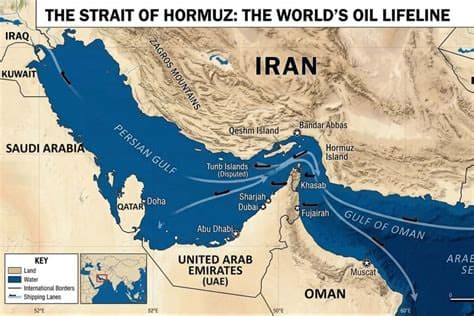
Elsewhere, the ripple widened. In Beirut’s southern suburbs, in parts of Damascus, and near strategic sites along the Gulf, photographs captured plumes rising from what officials described as weapons depots and logistical hubs. Governments across the region temporarily closed airspace, rerouted aircraft, and convened emergency sessions. Oil markets reacted with sharp volatility amid fears that shipping lanes near the Strait of Hormuz — that narrow corridor of global energy transit — could face disruption. For a brief span of hours, screens in trading floors from London to Singapore flickered with the tremor of uncertainty.
The images themselves carry a strange duality. They are documents of damage — fractured façades, scorched asphalt, overturned cars — yet they are also portraits of response. Firefighters coil hoses beside luxury boutiques; civil defense workers stand beneath hotel marquees; families sweep balconies above avenues still scented with dust. Tourist landmarks, from Dubai’s waterfront promenades to Tehran’s grand squares, appear not as symbols but as backdrops to the ordinary human effort of mending.
As statements from Washington, Jerusalem, and Tehran continue to outline military objectives and strategic calculations, the photographs offer another register of truth. They show scale and proximity — how a conflict measured in policy and precision reverberates through apartment blocks and market streets. They remind viewers that cities are not abstractions but constellations of kitchens, corridors, elevators, classrooms.
By evening, the light shifts again. Windows once shattered are boarded. Streets reopen in cautious increments. Travelers reconsider itineraries; residents check on neighbors; officials promise reconstruction and resilience. The region remains on alert, aware that retaliation and counter-retaliation can alter horizons with little warning.
And so the photographs settle into the global archive: Dubai’s polished towers flecked with dust, Tel Aviv’s shoreline veiled in smoke, Tehran’s avenues edged with rubble. They record not only a moment of impact but a pause between what has been struck and what will be rebuilt — a reminder that even in cities shaped by steel and ambition, the most enduring architecture is the quiet persistence of daily life.
AI Image Disclaimer Illustrations were created using AI tools and are not real photographs.
Sources Reuters Associated Press BBC News Al Jazeera Financial Times
Published by Banx Network. This article is part of the Banx decentralized media programme, powered by the BXE token on the XRP Ledger.