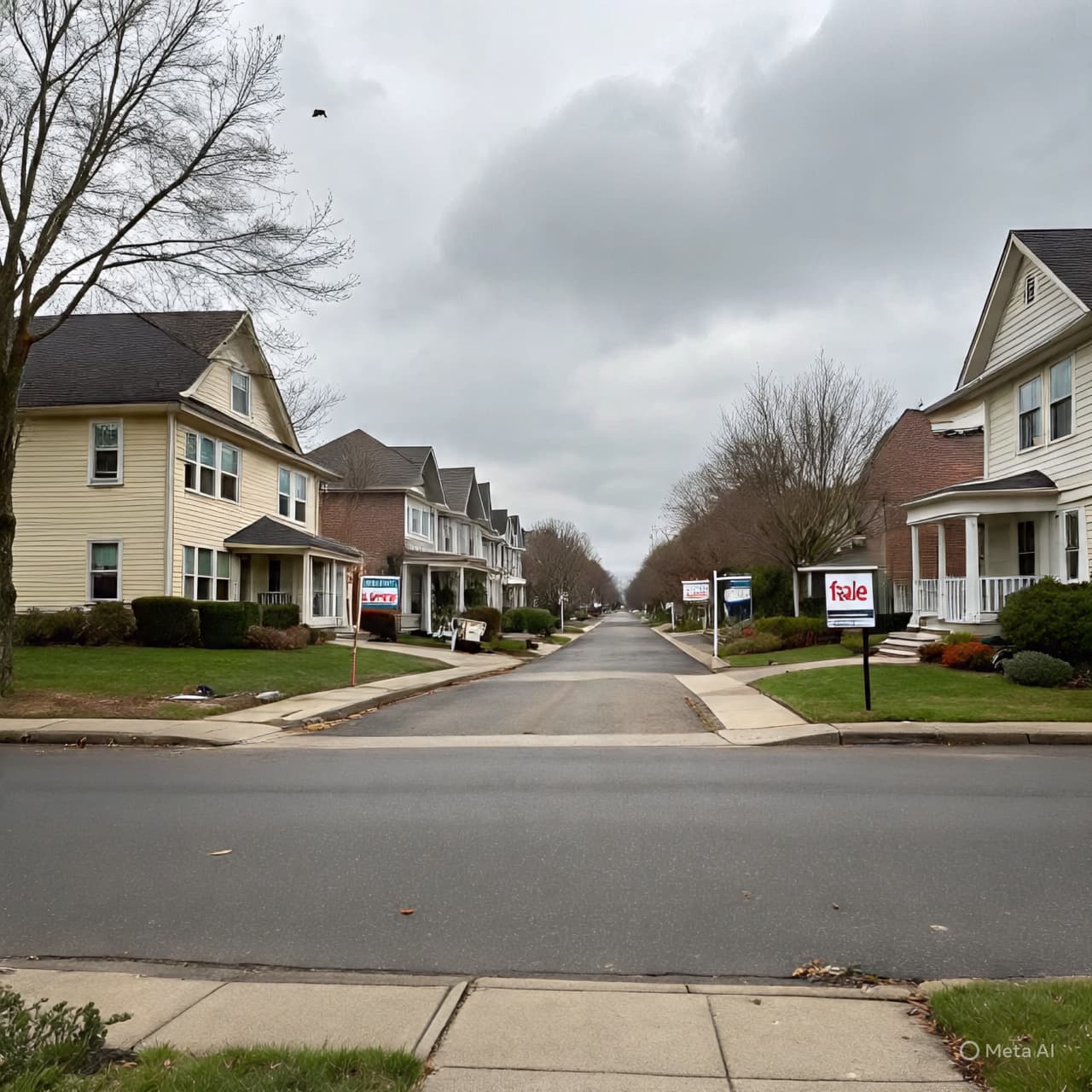
There was a time, not so distant, when homes seemed to carry a different weight. During the long stretch of the pandemic, they became more than shelter—offices, classrooms, places of retreat. Demand swelled in unexpected ways, lifting prices and pulling the housing market into a kind of accelerated motion that felt, at moments, detached from the wider world.
That motion has since slowed, but the memory of it lingers, like the echo of a tide that once rose higher than expected.
Now, a different kind of pressure begins to gather.
Across several markets, analysts suggest the housing sector may be approaching its most significant test since the years shaped by COVID-19. The forces at play are not identical, but they carry a similar weight—broad, structural, and difficult to unwind quickly.
At the center lies the cost of borrowing. Interest rates, having risen sharply over recent cycles, remain elevated, reshaping affordability for both new buyers and those rolling off fixed-term mortgages. What was once accessible at lower rates now requires a larger share of income, narrowing the space in which buyers can operate.
This shift does not unfold in isolation. It coincides with a period in which household budgets are already under strain. Food, energy, and general living costs continue to exert pressure, leaving less room for housing expenses to expand. The result is a quieter demand environment—one where hesitation becomes more common, and decisions stretch over longer periods.
For homeowners, particularly those transitioning from previously low fixed rates, the adjustment can feel immediate. Mortgage repayments rise not gradually, but in steps, recalibrating household finances in ways that ripple outward into spending, saving, and broader economic activity.
At the same time, supply dynamics are beginning to shift. In some regions, listings have increased, offering buyers more choice than in recent years. This softening of scarcity alters the balance of negotiation, easing the upward momentum that once defined the market.
Yet the picture remains uneven. Population growth, housing shortages in key areas, and underlying demand continue to provide a degree of support. The market does not collapse into a single direction; instead, it moves in fragments—strong in some places, subdued in others.
What gives this moment its particular weight is the convergence of pressures. Higher borrowing costs, constrained household finances, and changing supply conditions arrive together, creating a landscape that feels less certain than at any point since the disruptions of the pandemic years.
There is also a psychological dimension, quieter but no less influential. Housing markets are shaped not only by numbers, but by sentiment—by how buyers and sellers perceive the future. When uncertainty grows, even slightly, it can slow activity, reinforcing the very conditions that created it.
And so the market enters a period not of sudden correction, but of testing. A phase in which resilience is measured, assumptions are reconsidered, and the path forward becomes less clearly defined.
Housing analysts indicate that rising interest rates, affordability pressures, and shifting supply conditions are combining to create the most significant challenge for the housing market since the COVID-19 pandemic, with the coming months expected to test both demand and stability.
AI Image Disclaimer
Visuals are AI-generated and serve as conceptual representations.
Sources
Reuters Bloomberg The Guardian CNBC Financial Times
Published by Banx Network. This article is part of the Banx decentralized media programme, powered by the BXE token on the XRP Ledger.