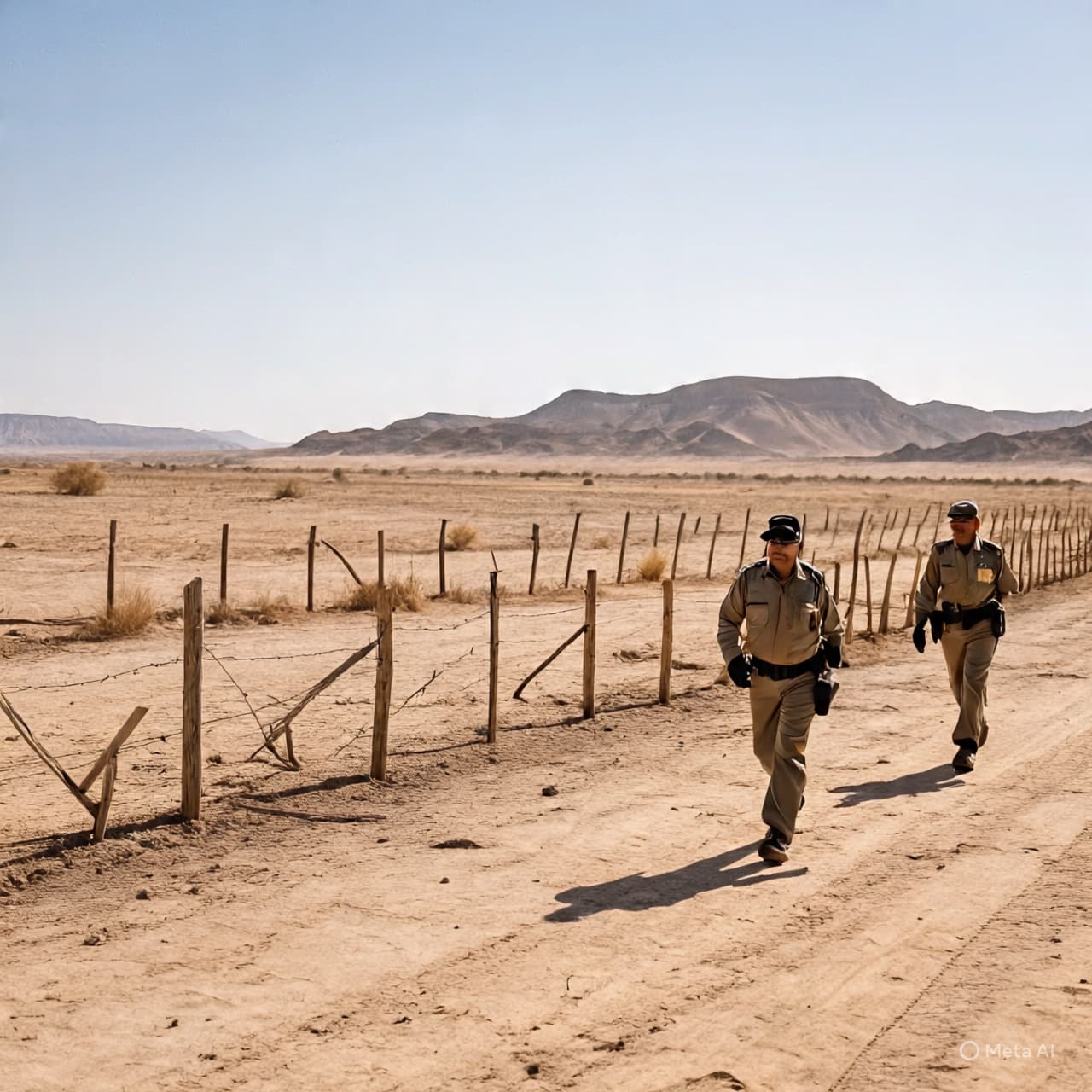
The desert wind does not recognize borders. It moves freely across the scrub and wire of northeastern Syria, lifting dust against fences built to contain the aftermath of war. In one such detention camp—long described as a holding ground for families linked to the Islamic State—authorities now report a rupture in the fragile order that has defined life there for years.
Syrian officials say a “mass escape” has occurred, with initial accounts suggesting that thousands may have fled amid unrest inside the facility. The camp, guarded by Kurdish-led security forces, houses women and children associated with former ISIS fighters, along with foreign nationals whose home countries have wrestled with the question of repatriation.
According to camp administrators, the breach followed a period of heightened tension, though details remain contested. Some reports indicate that sections of fencing were damaged during internal disturbances, while others suggest external interference may have played a role. The scale of the escape has not been independently verified, and figures continue to shift as authorities attempt to account for residents.
For years, these camps have existed in a state of uneasy suspension—neither permanent nor temporary, neither fully governed nor entirely abandoned. Humanitarian organizations have warned that overcrowding, limited resources, and simmering radicalization create volatile conditions. Security officials have countered that containment is essential to prevent regrouping by extremist networks.
The prospect of thousands dispersing into a landscape already fractured by conflict raises immediate security concerns. Kurdish-led forces have reportedly launched search operations in surrounding areas, while neighboring countries monitor developments closely. International observers note that the camps have long been described as a ticking risk, with under-resourced guards managing populations that include both vulnerable children and ideologically hardened adults.
Beyond the immediate question of recapture lies a broader dilemma. Many detainees are foreign nationals whose countries of origin have been slow to bring them home. The burden of containment has thus fallen disproportionately on local authorities operating in a region still marked by instability. The reported escape sharpens the urgency of unresolved diplomatic debates about responsibility and rehabilitation.
In the desert, fences can be repaired. The deeper fractures—between security and humanitarian duty, between sovereignty and shared accountability—are harder to mend. As search teams move across the arid terrain and numbers are recalculated, the episode underscores how fragile the post-caliphate order remains.
For now, the wind carries dust where tents once stood in rigid lines. Whether those who fled will be found, or whether the escape reshapes regional security calculations, remains uncertain. What is clear is that a camp designed to contain the remnants of a collapsed state has revealed, once again, the limits of confinement.
AI Image Disclaimer
Illustrations were created using AI tools and are not real photographs.
Sources
Syrian local authorities statements Reuters Associated Press United Nations reports
Published by Banx Network. This article is part of the Banx decentralized media programme, powered by the BXE token on the XRP Ledger.