There is a particular stillness that follows a job well done. In orbit, that stillness arrives not as silence, but as separation — the gentle unfastening of a spacecraft from the outpost it has served. After days of careful maneuvering and a mission that quietly altered the station’s path around Earth, a SpaceX Dragon cargo capsule has begun its journey home.
The Dragon spacecraft, built and operated by SpaceX, undocked from the International Space Station following a mission that included a rare and historic task: helping raise the orbit of the ISS. While cargo missions routinely deliver supplies, experiments, and equipment, this flight also demonstrated Dragon’s capability to contribute propulsion support to the station itself.
Orbit is not a fixed highway in the sky. The International Space Station gradually loses altitude due to atmospheric drag, even at roughly 250 miles above Earth. To maintain its operational height, the station requires periodic “reboost” maneuvers — controlled engine firings that gently push it back into a higher orbit. Traditionally, these boosts have been performed by Russian Progress spacecraft or other docked vehicles equipped for the task.
During this mission, however, Dragon conducted a reboost maneuver, marking the first time a U.S. commercial spacecraft performed such an adjustment for the ISS. The burn was carefully calculated and executed, demonstrating that Dragon’s thrusters could safely and effectively contribute to station-keeping operations.
The significance of this moment lies less in spectacle and more in resilience. As the ISS partnership evolves and agencies consider future contingencies, having multiple vehicles capable of maintaining orbit adds flexibility. Redundancy in space operations is rarely dramatic, but it is deeply valued.
Beyond the reboost, Dragon delivered scientific experiments, crew supplies, and hardware to support ongoing research aboard the station. After completing its objectives and being packed with return cargo — including research samples and equipment — the capsule undocked and began its descent preparations.
Unlike crewed vehicles that glide to runway landings, the cargo variant of Dragon is designed to reenter Earth’s atmosphere and splash down under parachutes in the ocean. Its return allows time-sensitive scientific materials to be retrieved relatively quickly compared to other cargo spacecraft that burn up on reentry.
The departure of Dragon once again illustrates the rhythm of low-Earth orbit operations. Spacecraft arrive, exchange cargo and capability, then depart, making room for the next mission. Each movement is choreographed with precision, coordinated among NASA, SpaceX, and international partners.
There is also a broader arc to consider. Commercial spacecraft now play an integral role in sustaining the ISS — not only as delivery vehicles but as contributors to station operations. The successful reboost adds another line to Dragon’s growing résumé and reflects the expanding technical scope of commercial spaceflight.
In straightforward terms, the SpaceX Dragon cargo capsule has undocked from the International Space Station following a mission that included a successful orbital reboost maneuver. The spacecraft is en route to Earth and is expected to complete a parachute-assisted splashdown, returning research and equipment from orbit.
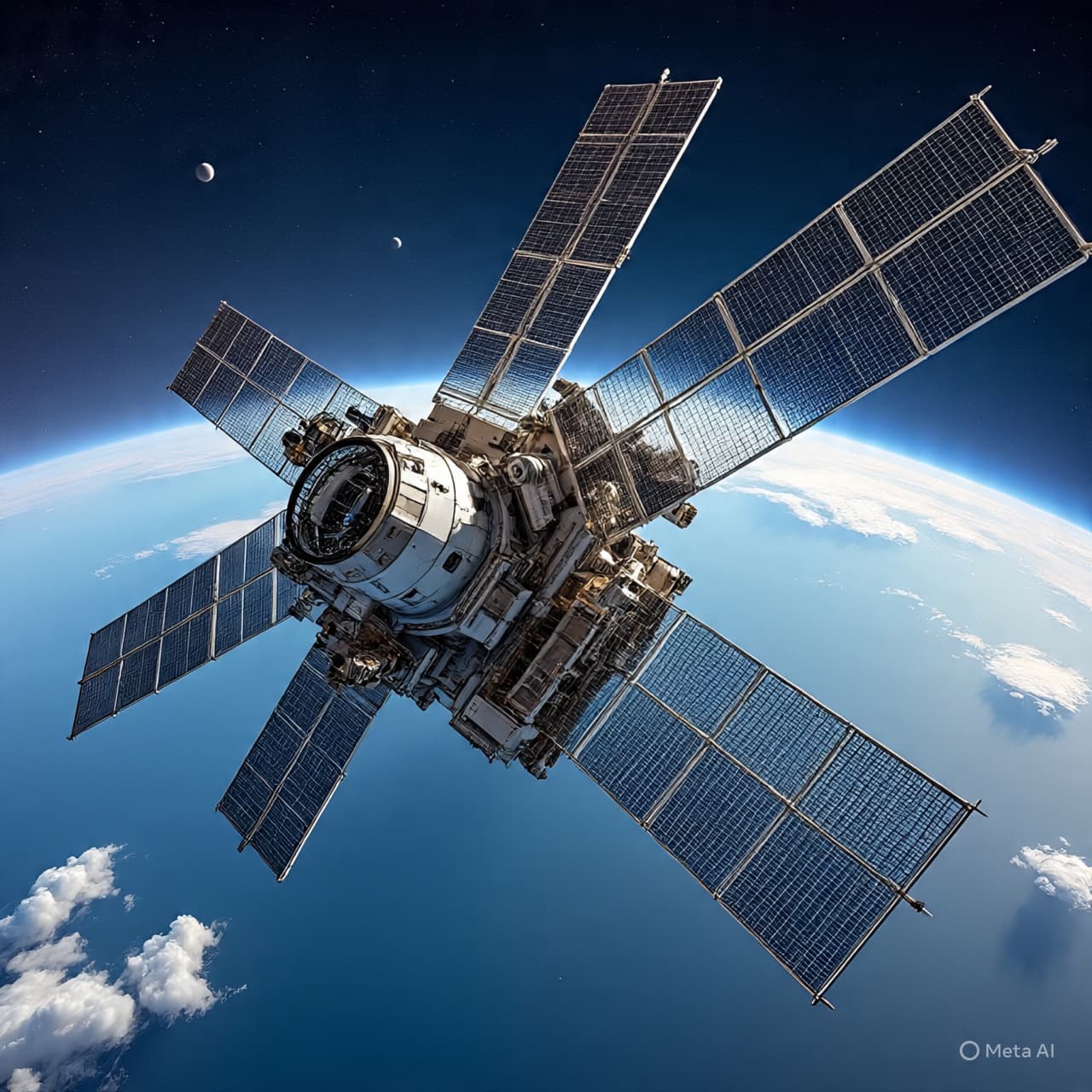
AI Image Disclaimer:
Visuals are created with AI tools and are not real photographs.
Sources:
NASA Reuters Space.com Ars Technica The Associated Press
Published by Banx Network. This article is part of the Banx decentralized media programme, powered by the BXE token on the XRP Ledger.