

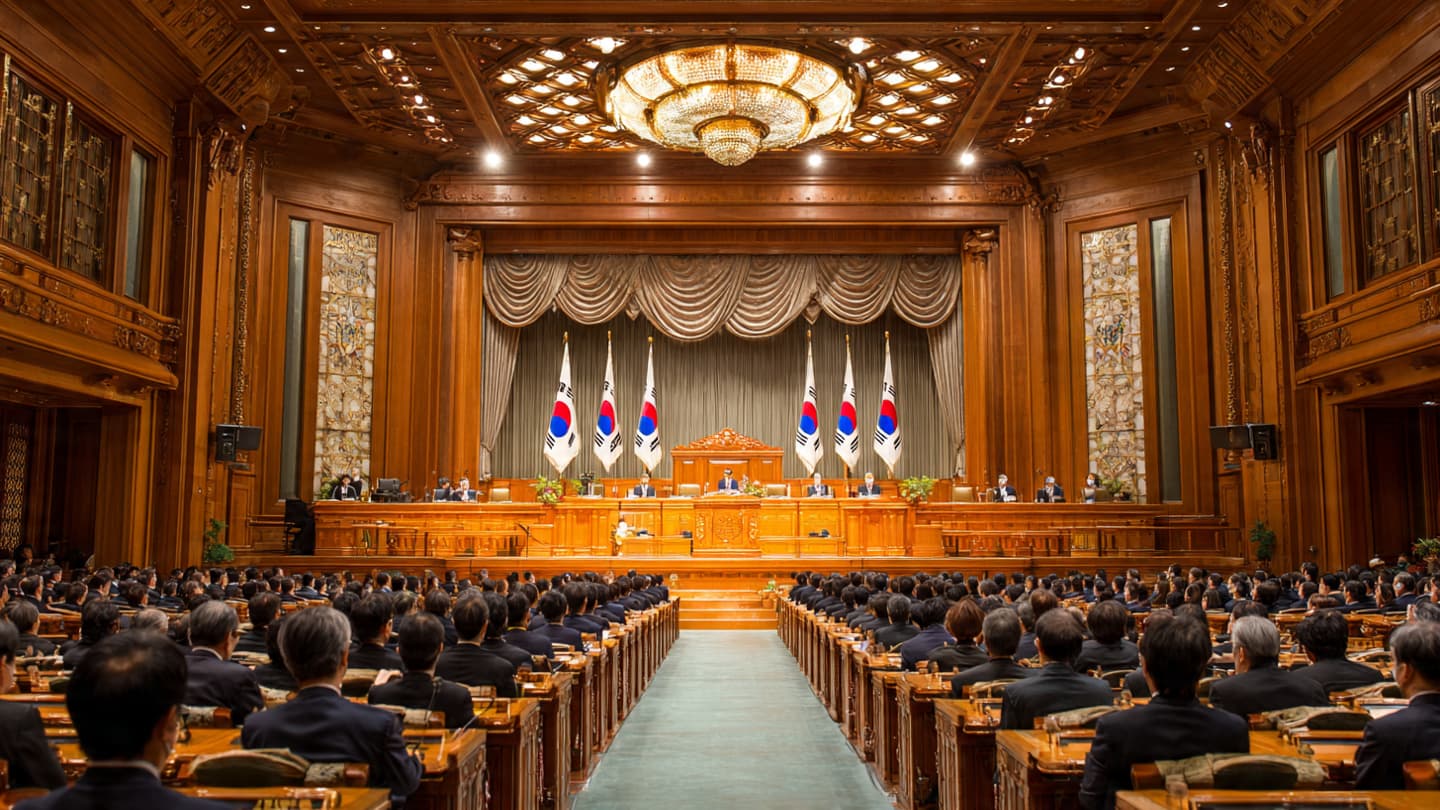
Key Highlights
- New Leadership:President Lee Jae-myung inaugurated, promising democratic renewal.
- Economic Focus:Administration aims to address economic challenges and boost investment.
- Political Unity:Emphasis on restoring public trust and bipartisan cooperation.
In South Korea, a nation often characterized by its dynamic political landscape, the inauguration of President Lee Jae-myung marks a significant transition. As the country navigates through a period of uncertainty, citizens and institutions are looking forward to a new chapter defined by promises of democratic renewal and economic recovery. Lee's election comes at a time when South Korea faces both domestic challenges and evolving international dynamics, making his leadership crucial for the nation's future.
President Lee has made clear his commitment to strengthening democratic institutions, a priority that resonates deeply with a populace that has experienced political turbulence in recent years. In his inaugural address, he emphasized the importance of national unity and institutional stability, recognizing that restoring public trust in governance is essential for moving forward. This focus on democracy is particularly pertinent given the heightened divisions that have characterized South Korean society in recent times.
Economic recovery is another cornerstone of Lee's agenda. South Korea, recognized as one of Asia's largest economies, is currently grappling with a range of challenges, including global trade uncertainties, inflation, and demographic shifts. The new administration has indicated its intent to implement measures that will stimulate investment, foster innovation, and support small businesses, which are vital for the country's economic health.
Analysts have pointed out that South Korea's export-driven economy is particularly sensitive to fluctuations in global markets. Key industries such as semiconductors, automobiles, and advanced manufacturing are expected to play a pivotal role in shaping the country's economic strategy moving forward. The administration's ability to navigate these challenges will be critical in maintaining South Korea's competitive edge in the global economy.
Foreign policy is also poised to be a significant focus for President Lee. South Korea's strategic relationships with the United States, Japan, China, and other regional partners necessitate a careful diplomatic approach. As the geopolitical landscape continues to evolve, effective diplomacy will be essential for safeguarding South Korea's economic and security interests.
As the new administration embarks on its journey, the importance of political consensus cannot be overstated. Observers suggest that fostering cooperation across party lines will be crucial for the successful implementation of reforms. The ability to build bridges between differing political factions could significantly influence how effectively new policies are introduced and sustained.
Public sentiment following the election has been a mix of optimism and caution. Many citizens are hopeful that President Lee's administration can deliver on its promises, fostering stability and tangible improvements in their daily lives. As the new president begins his term, the expectations are high, and the coming months will be critical in determining how campaign promises translate into actionable policies that shape South Korea's political and economic landscape for years to come.
Published by Banx Network. This article is part of the Banx decentralized media programme, powered by the BXE token on the XRP Ledger.




