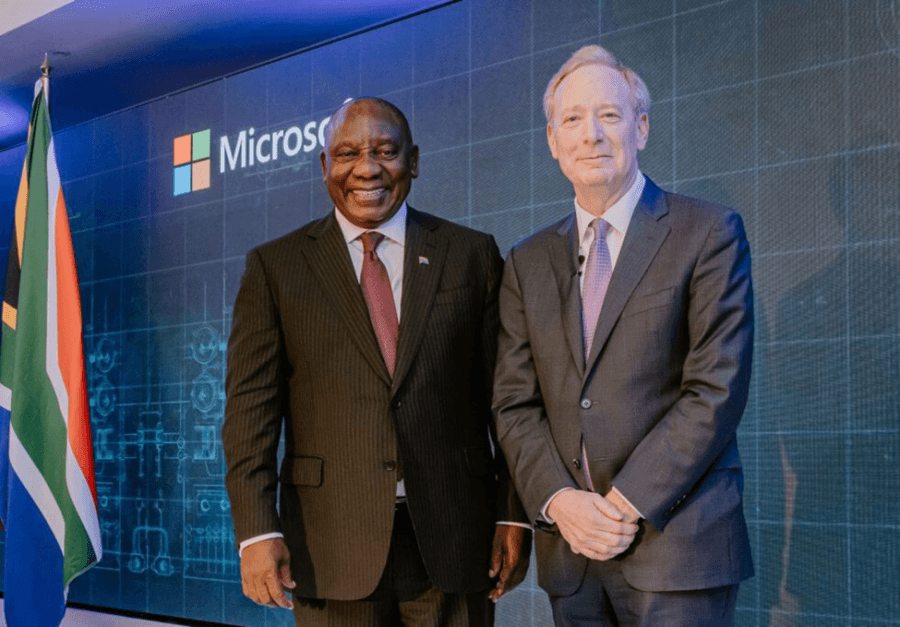
A major shift is underway—and this time, it’s not happening in Silicon Valley. Microsoft is doubling down on South Africa with a fresh $329 million investment, signaling that Africa is no longer just an emerging market—it’s becoming a critical pillar in the global digital economy. This isn’t Microsoft’s first move. It follows an earlier $1.2 billion commitment, showing a clear long-term strategy: build, expand, and anchor Africa’s digital infrastructure for the next generation. But why South Africa? The answer lies in positioning. South Africa is rapidly evolving into a regional tech hub, with growing connectivity, enterprise demand, and a strategic geographic location that bridges global markets. By expanding data centres, Microsoft isn’t just adding servers—it’s laying the foundation for AI, cloud computing, and next-gen digital services across the continent. And timing couldn’t be more critical. Artificial intelligence is no longer optional—it’s becoming the backbone of industries, from finance to healthcare. But AI needs power: data, processing capacity, and stable infrastructure. Without data centres, there is no scalable AI. That’s exactly what this investment targets. The funding goes beyond construction. It includes land acquisition, improving power and water readiness, and expanding existing capacity—key challenges in regions where infrastructure can limit growth. In other words, Microsoft is not just building tech—it’s solving the ecosystem around it. There’s also a bigger implication. By investing locally, Microsoft is enabling African businesses, startups, and governments to build and deploy AI solutions within the continent, rather than relying on distant infrastructure. That reduces latency, improves data sovereignty, and unlocks new economic opportunities. But let’s not ignore the strategic angle. Global tech giants are racing to secure influence in emerging digital regions. Infrastructure equals control—over data, platforms, and future innovation pipelines. Microsoft’s move places it firmly at the center of Africa’s digital transformation. For South Africa, this is more than investment—it’s validation. And for the rest of the world, it’s a signal: the next wave of digital growth won’t just come from traditional tech hubs. It’s already rising from new ground.
Published by Banx Network. This article is part of the Banx decentralized media programme, powered by the BXE token on the XRP Ledger.