MANILA, Philippines — As tensions escalate following the United States’ military operation in Venezuela and the capture of President Nicolás Maduro, Philippine defense and government officials are seeking to reassure the public that the conflict will not materially affect the long standing alliance between the Philippines and the United States.
At recent press briefings and legislative sessions, senior Philippine leaders stressed that direct economic or strategic fallout from the Venezuela crisis on the Philippines is expected to be minimal. Economic Planning Secretary Arsenio Balisacan said Manila’s economic ties with Venezuela are limited, and thus any disruptions resulting from the crisis are unlikely to have perceptible effects on the Philippine economy.
Similarly, lawmakers — including Senate officials — indicated that broader economic links with Venezuela are so modest that disruptions stemming from Venezuela’s instability are unlikely to impact Philippine markets or supply chains. Senate finance chair Sherwin Gatchalian echoed such assessments, noting that trade relations between Manila and Caracas historically have been minimal, thereby insulating the economy from major direct impact.
Officials also highlighted that concerns about regional or global oil market volatility have so far not materialized in a way that would destabilize domestic energy prices, given Venezuela’s relatively small current output compared with global production.
Alliance Context and Strategic Posture
Despite minimizing direct effects, some Filipino lawmakers have acknowledged possible geopolitical implications. In separate statements, opposition figures and critics have argued that U.S. military actions — including those in Venezuela — could affect how smaller states perceive American commitment to international law and sovereignty. They contend that aggressive military intervention by a superpower might weaken moral standing when addressing territorial disputes or other security concerns in regions such as the West Philippine Sea.
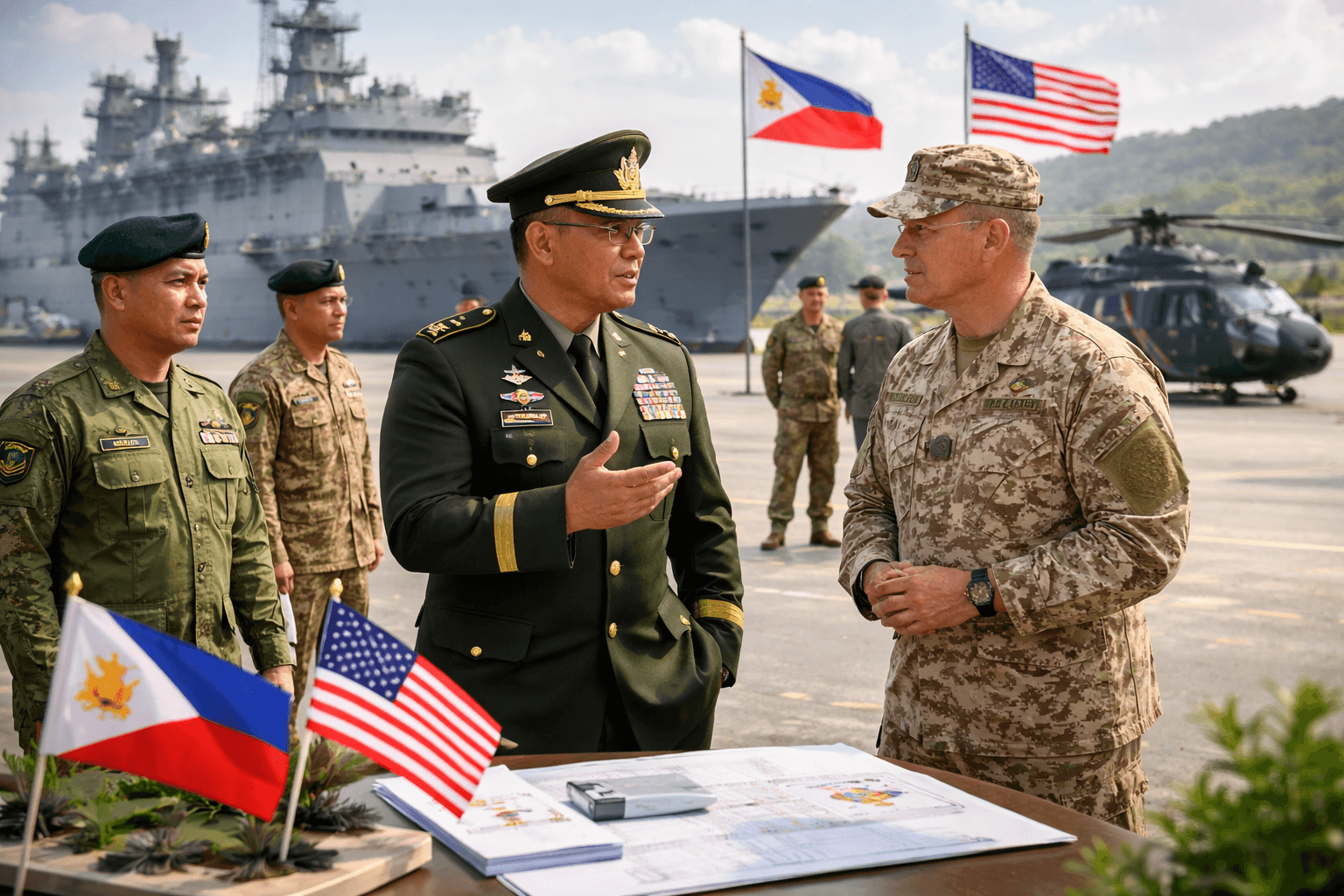
However, the AFP’s official stance remains that the Mutual Defense Treaty and other defence cooperation frameworks with the United States continue to underpin Manila’s strategic position in the Indo Pacific. These agreements — including joint exercises and rotational deployments — are viewed as essential to national security and regional stability, despite evolving global tensions.
Public Reassurance and International Positioning
Government and military officials are also working to reassure the public that the situation in Venezuela does not threaten the Philippines’ immediate security interests. They emphasize that the bilateral alliance with the United States continues to focus on shared goals like maritime security, disaster response, and territorial defense — particularly in the context of rising tensions in the South China Sea.
Although there are divergent voices in Philippine politics about how the U.S. handles international conflicts, the AFP, Senate leadership, and economic planners are united in presenting a message that the Venezuela crisis, while geopolitically significant, does not weaken the core security partnership between Manila and Washington.
Published by Banx Network. This article is part of the Banx decentralized media programme, powered by the BXE token on the XRP Ledger.