
Key Highlights
- New Directive:Taliban enforces strict hijab rules in Herat.
- Detentions:Over 30 women arrested in the first week of enforcement.
- Public Protests:Violent dispersal of protests against hijab regulations.
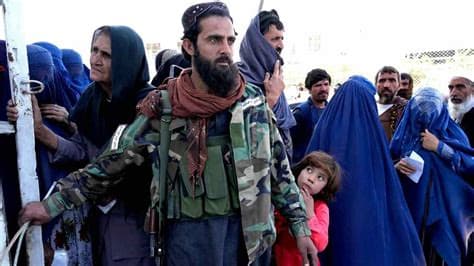
In Herat, Afghanistan’s third-largest city, the Taliban’s morality police have intensified their enforcement of a new directive mandating women to adhere to what the regime describes as a 'proper hijab.' This directive has led to widespread detentions and physical violence against women accused of not complying. Witnesses report that enforcement teams are arresting women in public spaces, creating an atmosphere of fear that discourages many from venturing outside.
The new regulations specifically target women who show their faces or wear makeup, requiring them to cover their faces entirely. A woman interviewed by RFE/RL’s Radio Azadi noted that even those who previously adhered to hijab practices are now subjected to stricter demands, which include additional face-covering. This shift in enforcement has raised concerns among residents, many of whom feel that their previous practices were already sufficient.
Reports from the United Nations indicate that the arrests surged shortly after the directive was issued, with at least 30 women detained within the first week alone. The situation escalated on June 9, when public protests erupted in Herat against the hijab enforcement. These demonstrations were met with violent responses from Taliban forces, resulting in at least two fatalities and over 20 injuries, according to UN sources.
The enforcement of these hijab regulations is not limited to arrests; it has fostered a pervasive climate of fear. Taliban patrols are now commonplace in streets, markets, and at the entrances of public buildings, where women are routinely stopped, questioned, and inspected for compliance with the new rules. Even women who appear to be fully covered may still face detention or investigation for perceived violations of the hijab mandate.
This crackdown on women's rights is part of a broader strategy by the Taliban to restrict women's participation in public life and impose its stringent interpretation of religious and behavioral norms. The enforcement of these directives varies by locality, but the consequences for women can be severe, particularly in areas where the Taliban applies its rules most aggressively. The situation in Herat serves as a stark reminder of the ongoing challenges faced by women in Afghanistan under Taliban rule, as they navigate an increasingly hostile environment.
Published by Banx Network. This article is part of the Banx decentralized media programme, powered by the BXE token on the XRP Ledger.



